
Things
New Year's Eve
New Year's Eve falls on December 31 only because Rome eventually fixed the year to start on January 1: the oldest recorded new-year festival, Babylon's Akitu, was held in spring, and for centuries medieval Europe began its year on March 25, December 25 or Easter instead.
At a Glance
- Oldest recorded festival
- Babylon's Akitu, from about 2000 BCE, held at the first new moon after the spring equinox and lasting 11 or 12 days
- Rome's move
- From 153 BCE the Roman official year began on January 1; Julius Caesar kept the date in his Julian calendar of 46 BCE
- Medieval rivals
- Much of Christian Europe began the year on March 25 (the Annunciation); Anglo-Saxon England used December 25, and some regions used Easter
- The restoration
- Pope Gregory XIII's Gregorian calendar of 1582 restored January 1; England followed in 1752 and Russia in 1918
- Scotland's word
- Hogmanay, the Scots celebration of the last day of the year, long outweighed Christmas in Scotland and centres on first-footing after midnight
- The modern ritual
- Fireworks over Sydney Harbour and the Thames in London, and the ball drop in New York's Times Square, watched worldwide
Introduction
New Year's Eve is the night of December 31, the last day of the Gregorian calendar year, and it is celebrated in almost every country on earth. Yet neither the date nor the party is ancient in its present form. The festival itself is among the oldest humans keep — Britannica traces the earliest known record of a new-year celebration to about 2000 BCE in Mesopotamia — but that festival belonged to spring, not midwinter, and the road from Babylon to a December 31 countdown runs through Roman politics, medieval religion and a sixteenth-century papal reform.
What has stayed constant is the mood Britannica describes in its account of new-year festivals: a mixture of regret for the year passing and anticipation of the year to come, marked with symbolic food, lucky first visitors, noise, light and promises. The modern night — fireworks in Sydney and London, a falling ball in New York, Auld Lang Syne sung in the West — is the latest layer on a four-thousand-year-old habit.
Origins: Babylon's Spring New Year
For the Babylonians, the new year began with the first new moon following the vernal equinox, the day in late March when daylight and darkness are equal. They marked it with Akitu, a massive religious festival derived from a Sumerian word for barley, which was cut in spring. HISTORY records that Akitu involved a different ritual on each of its 11 days; Britannica puts the Babylonian observance at 10 to 12 days. The festival retold the victory of the sky god Marduk over the sea goddess Tiamat, the power of chaos, and it did political work too: during Akitu a new king could be crowned, or the reigning king's divine mandate symbolically renewed.
Other ancient peoples pinned the year to other natural markers. In Egypt the year began with the annual flooding of the Nile, coinciding with the rising of the star Sirius. The Phoenicians and Egyptians began with the autumnal equinox, the Persians with the vernal equinox, and the early Greeks with the winter solstice. The pattern is consistent: the year started when the world visibly started again — a flood, a harvest, a sowing — not on an arbitrary winter date.
Rome Moves the Year, Then Europe Moves It Back
Rome broke the link with the seasons. The early Roman calendar began the year on March 1, at the equinox season, but after 153 BCE the official Roman date became January 1, the day the consuls took office. When Julius Caesar introduced the Julian calendar in 46 BCE he kept January 1 as the opening date, and Romans celebrated with sacrifices to Janus, the two-faced god of beginnings, exchanging gifts and decorating homes with laurel branches.
After Rome fell, Christian Europe drifted away from January 1. In early medieval times most of Christian Europe regarded March 25, the Feast of the Annunciation, as the beginning of the year; Anglo-Saxon England observed New Year's Day on December 25; and in parts of France the year was reckoned from Easter, a movable feast that made dating genuinely confusing. William the Conqueror decreed that England's year begin on January 1, but England later rejoined the rest of Christendom on March 25. Only in 1582, when the Roman Catholic Church adopted the Gregorian calendar, was January 1 restored as New Year's Day — and even then the change spread slowly: Scotland adopted the January start in 1600, England not until 1752, and Russia only in 1918.
Timeline
- c. 2000 BCE
The earliest known record of a new-year festival: Babylon's Akitu, beginning with the new moon after the spring equinox.
- 153 BCE
January 1 becomes the official start of the Roman year, as consuls begin taking office on that date.
- 46 BCE
Julius Caesar's Julian calendar retains January 1 as the first day of the year.
- Early Middle Ages
Most of Christian Europe begins the year on March 25, the Annunciation; Anglo-Saxon England uses December 25.
- 1582
The Gregorian calendar restores January 1 as New Year's Day in the Catholic states that adopt it.
- 1600
Scotland begins its year on January 1, while England keeps March 25 for another century and a half.
- 1752
England and its colonies adopt the Gregorian calendar and the January 1 year-start.
- 1904
The first great Times Square New Year's Eve celebration is held in New York, with fireworks from the new Times Tower.
- 1907
With fireworks banned, the first Times Square ball is lowered to mark the arrival of 1908.
- 1918
Russia adopts the Gregorian calendar, among the last major European states to do so.
Significance: Hogmanay and the Scottish New Year
Nowhere did December 31 matter more than in Scotland, where the last day of the year is Hogmanay. After the Reformation the Church of Scotland discouraged Christmas, and for centuries Hogmanay — not Christmas — was Scotland's great winter festival of visiting, gift-giving and feasting, a position it held until well into the twentieth century. The word's origin is genuinely obscure: French, Norse and Gaelic derivations have all been proposed, and none is proven.
Hogmanay's best-known custom is first-footing. The first guest to cross a household's threshold after midnight — the first foot — was believed to set the household's luck for the year, and traditionally arrived bearing symbolic gifts such as coal for warmth, shortbread or black bun for food, salt and whisky. Britannica notes that first-foot traditions are also observed on the Isle of Man and in parts of northern England, and that the favoured physical type of the visitor varied by locality. At midnight Scots and, following them, much of the English-speaking world sing Auld Lang Syne, the song Robert Burns set down in 1788 from older tradition.
The Modern Global Ritual
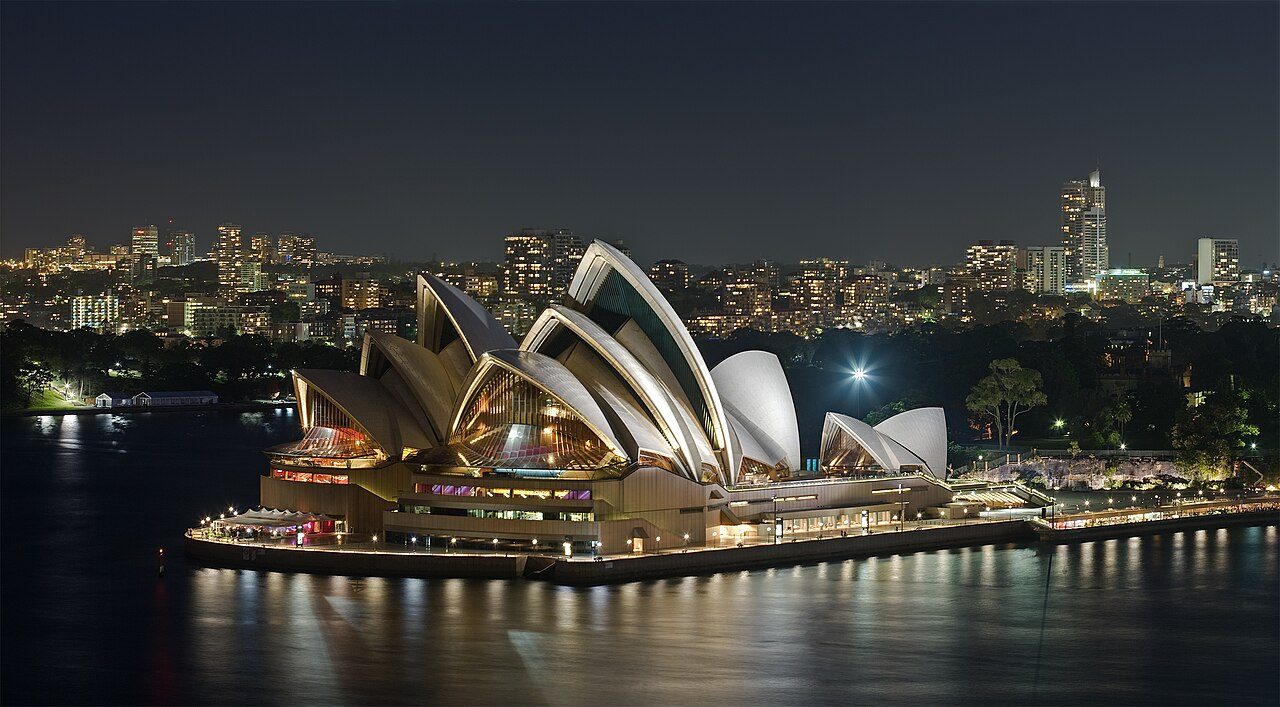
Television and then the internet turned separate local midnights into a single rolling world event. Because of its time zone, Sydney is among the first great cities to arrive: crowds gather around the harbour for fireworks launched from barges, the Opera House and the Harbour Bridge, and the pictures open news broadcasts everywhere else. London's celebration centres on the Thames, where fireworks rise around the London Eye as Big Ben strikes midnight — a tradition Britannica already noted in the crowds at Trafalgar Square. Hours later the sequence ends in New York, where the Times Square ball drop, televised worldwide, has become the closing image of the night.
Older customs run underneath the spectacle. Symbolic foods are eaten for luck — greens for prosperity in parts of Europe, black-eyed peas in the American South. Resolutions are made. And in many Black churches in the United States, Watch Night services on December 31 carry a double memory: the Methodist covenant-renewal tradition, and the night of December 31, 1862, when enslaved and free African Americans waited for the Emancipation Proclamation to take effect at midnight — remembered as Freedom's Eve.
Questions readers ask
Was New Year's Eve always on December 31? No. That date only makes sense once January 1 is the first day of the year, which was not settled in England until 1752 or in Russia until 1918. Many cultures still begin their year elsewhere: the Jewish year at Rosh Hashana in autumn, the Chinese New Year in late January or February, and Nowruz at the spring equinox — a direct survival of the ancient spring new year.
Why is the first visitor of the year supposed to be lucky or unlucky? Britannica traces the belief to the idea that what happens on the first day foretells the rest of the year, so the first guest across the threshold carried the household's fortune with them. The details — who made an ideal first foot, and what gifts they should bring — differed from place to place, which is why no single version of the custom is the original one.
Legacy
New Year's Eve is a palimpsest: a Babylonian spring rite of cosmic renewal, re-dated by Roman administrators, displaced by medieval piety, restored by a pope, kept warm by Scottish households when Christmas was frowned on, and finally broadcast to the whole planet at once. The countdown is modern. The feeling it organises — looking backward and forward at the same moment, exactly as Janus was said to do — is as old as the festival record itself.
Sources
- Encyclopaedia Britannica — New Year festival
- HISTORY — New Year's: Eve, Day, Traditions & Resolutions
- Encyclopaedia Britannica — Why Does the New Year Start on January 1?
- Encyclopaedia Britannica — Feast: The significance of seasonal renewal in ancient Mesopotamia
- Times Square Alliance — NYE History & Times Square Ball
The facts on this page were checked against these sources on 19 November 2026. The History Trail's permanent pages are researched and written for this site; the live profiles elsewhere on The History Trail are assembled automatically from Wikipedia and Wikidata.
About the Author
Researched and written by the The History Trail Editorial Team — the accountable editorial function behind this site's permanent story pages. The team works from the published sources cited on each page; it does not invent historians, reviewers or credentials, and it corrects errors openly.
Fact Check
Every load-bearing fact on this page traces to one of the sources listed above, and significant claims link to their source in the text. Our checking method is described on the methodology page; errors can be reported via the corrections page.
Sources & Citations
Cite this page as: The History Trail Editorial Team, The History Trail — this article's title, publication and update dates are shown beneath its headline. The full source list appears under Sources above; the site's source standards are on the sources page.