
On This Day
February 9 in History
On 9 February 1964 the Beatles made their live American television debut on The Ed Sullivan Show before an estimated 73 million viewers — the largest audience in television history to that point, and the moment Beatlemania conquered America. February 9 is also the day the House of Representatives chose a president in 1825 and the Normandie burned in New York Harbor.
Choose another date: open the On This Day calendar to browse events, births and deaths for any day of the year.
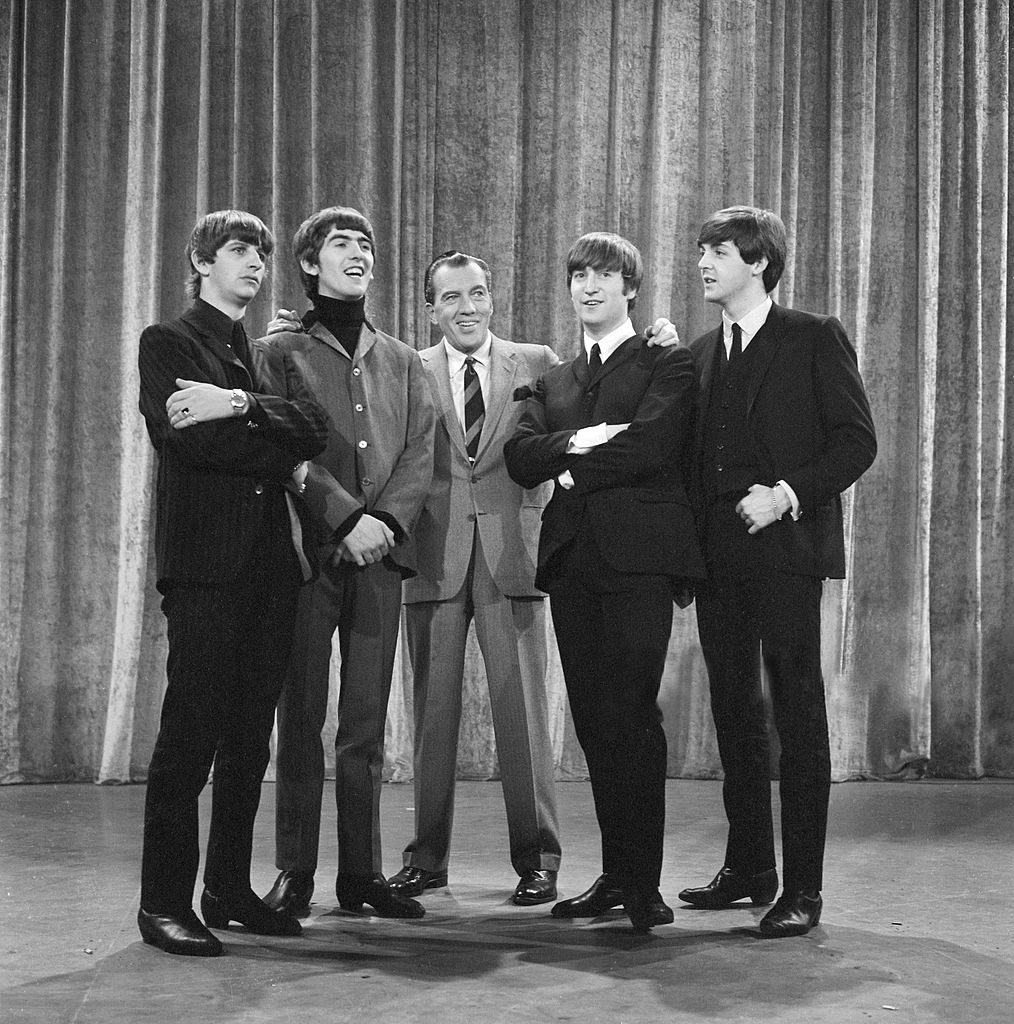
At a Glance
- The show
- The Ed Sullivan Show, CBS's Sunday-night variety institution, broadcast live from Studio 50 in New York
- The date
- Sunday 9 February 1964, two days after the band landed at Kennedy Airport
- The audience
- An estimated 73 million viewers — more than a third of the United States population
- The songs
- Five: 'All My Loving', 'Till There Was You', 'She Loves You', 'I Saw Her Standing There' and 'I Want to Hold Your Hand'
- The tickets
- Some 50,000 applications were made for the studio's 728 seats
- The fee
- The Beatles were paid a modest $10,000 in total for their three Sullivan appearances
Events on this day
- 1825With no candidate holding an electoral majority, the U.S. House of Representatives elects John Quincy Adams president over Andrew Jackson.
- 1861Jefferson Davis is elected provisional president of the Confederate States of America at Montgomery, Alabama.
- 1870Congress authorises the United States Weather Bureau, the ancestor of the National Weather Service.
- 1893Verdi's last opera, Falstaff, premieres at La Scala in Milan to acclaim, the composer aged seventy-nine.
- 1918Ukraine signs a separate peace with the Central Powers at Brest-Litovsk, the first peace treaty of the First World War.
- 1942The United States institutes daylight saving time — 'war time' — for the duration of the Second World War.
- 1942The French liner Normandie, the largest passenger ship of her age, catches fire and capsizes at her New York pier while being converted to a troopship.
- 1943The United States declares the Guadalcanal campaign ended in victory, the first major Allied offensive of the Pacific War.
- 1964The Beatles make their live American television debut on The Ed Sullivan Show before 73 million viewers — the featured story above.
- 1971The Sylmar earthquake, magnitude 6.6, strikes the San Fernando Valley near Los Angeles, killing more than sixty people.
- 1995NASA astronaut Bernard Harris becomes the first Black man to walk in space, from the shuttle Discovery.
- 2001The submarine USS Greeneville collides with the Japanese training ship Ehime Maru off Hawaii, killing nine people aboard the Japanese vessel.
Born on this day
- 1441Ali-Shir Nava'i — Turkic poet and statesman, the great literary figure of the Chagatai language.
- 1773William Henry Harrison — ninth president of the United States, whose thirty-one-day term remains the shortest in its history.
- 1909Carmen Miranda — Brazilian singer and actress, the 'Brazilian Bombshell' of Hollywood musicals.
- 1942Carole King — American singer-songwriter whose album Tapestry is one of the best-selling records of all time.
- 1960Peggy Whitson — American astronaut who has spent more time in space than any other American.
- 1981Tom Hiddleston — English actor, star of the Thor films and The Night Manager.
Died on this day
- 1981Bill Haley — American rock and roll pioneer of 'Rock Around the Clock', dead in Texas at 55.
- 1995J. William Fulbright — American senator who created the Fulbright international exchange programme, dead at 89.
- 2002Princess Margaret — sister of Elizabeth II, dead in London at 71 after a series of strokes.
- 2021Chick Corea — American jazz pianist and composer, one of the founders of jazz fusion, dead at 79.
The featured story: the Beatles on The Ed Sullivan Show, 9 February 1964
Ed Sullivan had seen the future at a London airport. In October 1963, waiting out a rain delay at Heathrow, he watched thousands of teenagers screaming for a departing pop group and asked who they were. Within weeks his show had booked the Beatles for three appearances the following February — before they had an American hit, a gamble by their manager Brian Epstein that traded a low fee for the biggest exposure in show business. By the time the band landed in New York on 7 February 1964, 'I Want to Hold Your Hand' was number one in America and the gamble had become a coronation waiting for its ceremony.
The ceremony came at eight o'clock on Sunday 9 February. Sullivan, stone-faced as ever, introduced 'a wonderful group of youngsters' — after reading out a telegram of good wishes from Elvis Presley and his manager, a passing of the torch arranged with care. The Beatles played twice in the hour: opening with 'All My Loving', 'Till There Was You' and 'She Loves You', and closing with 'I Saw Her Standing There' and 'I Want to Hold Your Hand'. During Paul McCartney's solo the cameras lingered on John Lennon while a caption, in the show's most famous accident of identification, informed America: 'Sorry girls, he's married.' The studio audience of 728 — chosen from some 50,000 ticket applications — screamed throughout.
The numbers still stagger. An estimated 73 million people watched, more than a third of the entire United States, the largest television audience ever recorded to that date; anecdote holds that crime rates dipped during the broadcast, a story too good to verify and too characteristic to discard. What is verifiable is the aftermath: a second Sullivan appearance from Miami a week later drew nearly as many, the Beatles occupied the whole top five of the singles chart in April, and the British Invasion — the Stones, the Animals, the Kinks, Herman's Hermits — poured through the breach. American teenagers bought guitars in unprecedented numbers; future stars from Tom Petty to Bruce Springsteen dated their vocations to that Sunday night.
Historians of the period return again and again to the timing. The broadcast came eleven weeks after the assassination of President Kennedy, into a country whose public mood had been funereal since November. The Beatles offered its youth something joyful, witty and entirely new, delivered live into the living room by the medium that now ruled American life. Sullivan himself, no rock and roll fan, understood exactly what he had done: he had introduced America to its next decade. The band would return to his stage in 1965 and dominate the decade's music; but no later appearance matched the first, when a whole civilisation of teenagers discovered, simultaneously, that they were not alone.
Why this date matters
February 9 is a day of mass audiences and mass decisions. Congress chose a president in 1825; a liner burned before crowds in 1942; an earthquake and a collision reminded two generations of nature's and machines' indifference. But the date belongs, overwhelmingly, to one hour of television in 1964, when 73 million people watched the same five songs at the same moment — perhaps the last time a single broadcast could unite a culture so completely. In an age of infinite channels, February 9 remembers what one channel, one stage and four young men could do.
Sources
- Encyclopaedia Britannica — On This Day: February 9
- HISTORY — What Happened on February 9
- Smithsonian Magazine — On This Day in 1964, 73 Million Americans Tuned in to Watch the Biggest Act in Music
- Encyclopaedia Britannica — On This Day: February 7
The facts on this page were checked against these sources on 19 November 2026. The History Trail's permanent pages are researched and written for this site; the live profiles elsewhere on The History Trail are assembled automatically from Wikipedia and Wikidata.
About the Author
Researched and written by the The History Trail Editorial Team — the accountable editorial function behind this site's permanent story pages. The team works from the published sources cited on each page; it does not invent historians, reviewers or credentials, and it corrects errors openly.
Fact Check
Every load-bearing fact on this page traces to one of the sources listed above, and significant claims link to their source in the text. Our checking method is described on the methodology page; errors can be reported via the corrections page.
Sources & Citations
Cite this page as: The History Trail Editorial Team, The History Trail — this article's title, publication and update dates are shown beneath its headline. The full source list appears under Sources above; the site's source standards are on the sources page.