
On This Day
February 10 in History
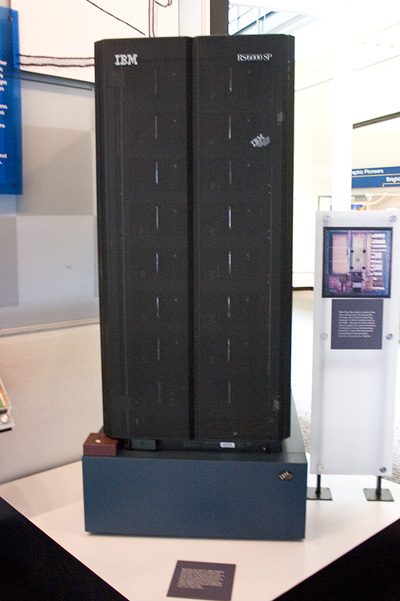
On 10 February 1996, in Philadelphia, IBM's supercomputer Deep Blue defeated the reigning world chess champion, Garry Kasparov, in the first game of their match — the first time a computer had beaten a world champion in a game under classical tournament conditions. February 10 is also the day the Mongols sacked Baghdad, Victoria married Albert, and the Treaty of Paris reshaped North America.
Choose another date: open the On This Day calendar to browse events, births and deaths for any day of the year.
At a Glance
- The match
- A six-game match in Philadelphia, 10–17 February 1996, under classical time controls
- The machine
- Deep Blue, an IBM supercomputer able to evaluate some 100 million positions per second
- The champion
- Garry Kasparov, world champion since 1985 and widely rated the greatest player in history
- The game
- Game one: Deep Blue, playing White, won in 37 moves after Kasparov's Sicilian Defence went wrong
- The result
- Kasparov recovered to win the match 4–2, with three wins and two draws
- The sequel
- In the May 1997 rematch an upgraded Deep Blue won the match 3½–2½, and was retired by IBM
Events on this day
- 1258Mongol forces under Hulagu sack Baghdad, destroying the Abbasid Caliphate's capital in one of the great catastrophes of the medieval world.
- 1355The St Scholastica Day riot erupts in Oxford between townspeople and university scholars, leaving dozens dead over two days.
- 1567Lord Darnley, husband of Mary, Queen of Scots, is found murdered after an explosion destroys his lodging at Kirk o' Field in Edinburgh.
- 1763The Treaty of Paris ends the Seven Years' War; France cedes Canada and its claims east of the Mississippi to Britain.
- 1840Queen Victoria marries Prince Albert of Saxe-Coburg and Gotha at St James's Palace, wearing a white dress that sets a bridal tradition.
- 1906HMS Dreadnought is launched, the revolutionary all-big-gun battleship that makes every other capital ship obsolete.
- 1931New Delhi is formally inaugurated as the capital of British India.
- 1962The United States and the Soviet Union exchange captured spies — U-2 pilot Francis Gary Powers for Rudolf Abel — on the Glienicke Bridge in Berlin.
- 1967The Twenty-fifth Amendment to the U.S. Constitution is ratified, settling presidential succession and disability.
- 1996IBM's Deep Blue defeats Garry Kasparov in the first game of their Philadelphia match — the featured story above.
Born on this day
- 1824Samuel Plimsoll — British politician and reformer whose load line, the Plimsoll mark, made overloaded ships illegal.
- 1890Boris Pasternak — Russian poet and novelist, author of Doctor Zhivago and Nobel laureate.
- 1894Harold Macmillan — British prime minister from 1957 to 1963, who warned Africa of the 'wind of change'.
- 1898Bertolt Brecht — German playwright of Mother Courage and The Threepenny Opera, a giant of twentieth-century theatre.
- 1950Mark Spitz — American swimmer who won seven gold medals at the 1972 Munich Olympics.
- 1967Laura Dern — American actress of Jurassic Park and Marriage Story.
Died on this day
- 1837Alexander Pushkin — Russia's national poet, dead in St Petersburg at 37 of wounds from a duel fought two days earlier.
- 1912Joseph Lister — British surgeon who pioneered antiseptic surgery, transforming the safety of operations.
- 2008Roy Scheider — American actor, the police chief of Jaws, dead at 75.
- 2014Shirley Temple — American child star of the 1930s and later diplomat, dead at 85 in California.
The featured story: Deep Blue beats Kasparov, 10 February 1996
Chess had been the chosen test of machine intelligence since the dawn of computing — the game at which, it was said, a computer would have to truly think. By the 1990s the thinking was mostly arithmetic at terrifying speed. Deep Blue, built by IBM from a Carnegie Mellon project and refined by a team including Feng-hsiung Hsu and Murray Campbell, working with grandmaster consultants, could evaluate around one hundred million chess positions every second, guided by an opening book and an evaluation function tuned over years. Its opponent in Philadelphia in February 1996 was the most formidable human the game has produced: Garry Kasparov, world champion for a decade, who had crushed Deep Blue's predecessor and arrived publicly confident.
The first game, on 10 February, began with Kasparov's Sicilian Defence steered into the Alapin Variation, away from his deepest preparation. Deep Blue played with a calm, positional patience that unsettled observers — this was not supposed to be what machines did — and when Kasparov's position deteriorated he resigned after thirty-seven moves, just over three hours into the game. It was the first time in history that a reigning world champion had lost to a computer under normal tournament conditions, with a full time control and the world watching: an estimated six million people followed the match online, a remarkable figure for the young web. Kasparov, to his credit, treated the loss as data. He adjusted, probed for the machine's blind spots, and won three of the remaining five games with two draws to take the match 4–2 and the $400,000 prize.
The story did not end there, which is why the 1996 game matters more than the match it opened. IBM upgraded Deep Blue massively — doubling its speed to some 200 million positions a second — and in May 1997, in New York, the machine won the rematch 3½–2½, becoming the first computer to defeat a reigning world champion in a match. Kasparov, stunned by a move in game two whose subtlety he believed no machine could find, accused IBM of human intervention; IBM declined a further rematch and retired Deep Blue to museums, where its two towers now stand in the Smithsonian and the Computer History Museum.
The argument about what Deep Blue proved has never quite closed. It did not think as humans think; it searched, at inhuman scale, a space humans navigate by intuition. But 10 February 1996 was the day the result stopped being hypothetical. Within two decades, programs running on ordinary hardware would surpass every human who ever lived at chess, and the question first posed in Philadelphia — what remains distinctly human when the machine wins? — had spread from chess to the whole economy of mind. It began with thirty-seven moves and a champion staring at a board, realising the future had arrived early.
Why this date matters
February 10 is a day when worlds change hands. Baghdad falls to the Mongols in 1258 and an age of learning ends in fire; Canada changes empires by treaty in 1763; spies are swapped on a Berlin bridge in 1962 at the height of another empire's contest. And in 1996 the oldest contest of intellect changed hands too, when a machine first beat the best human at the game humans had chosen to prove their minds. Even its love story is world-changing: Victoria's white wedding dress of 1840 is still being copied at weddings today. Few dates hold so many transfers of power.
Sources
- Encyclopaedia Britannica — On This Day: February 10
- HISTORY — World Chess Champion Garry Kasparov Loses Game to Computer
- Encyclopaedia Britannica — On This Day: February 10 (featured: Queen Victoria marries Prince Albert)
- Independent Digital Museum of Artificial Intelligence — Deep Blue Defeats Kasparov (exhibit)
The facts on this page were checked against these sources on 19 November 2026. The History Trail's permanent pages are researched and written for this site; the live profiles elsewhere on The History Trail are assembled automatically from Wikipedia and Wikidata.
About the Author
Researched and written by the The History Trail Editorial Team — the accountable editorial function behind this site's permanent story pages. The team works from the published sources cited on each page; it does not invent historians, reviewers or credentials, and it corrects errors openly.
Fact Check
Every load-bearing fact on this page traces to one of the sources listed above, and significant claims link to their source in the text. Our checking method is described on the methodology page; errors can be reported via the corrections page.
Sources & Citations
Cite this page as: The History Trail Editorial Team, The History Trail — this article's title, publication and update dates are shown beneath its headline. The full source list appears under Sources above; the site's source standards are on the sources page.