
On This Day
August 6 in History
At 8:15 on the morning of 6 August 1945, the American bomber Enola Gay dropped a single uranium bomb, nicknamed Little Boy, over the Japanese city of Hiroshima. An estimated 70,000 people were killed instantly, and by the end of the year the toll had passed 100,000. It was the first use of a nuclear weapon in warfare. August 6 is also the day the Voting Rights Act became law and the World Wide Web opened to the public.
Choose another date: open the On This Day calendar to browse events, births and deaths for any day of the year.
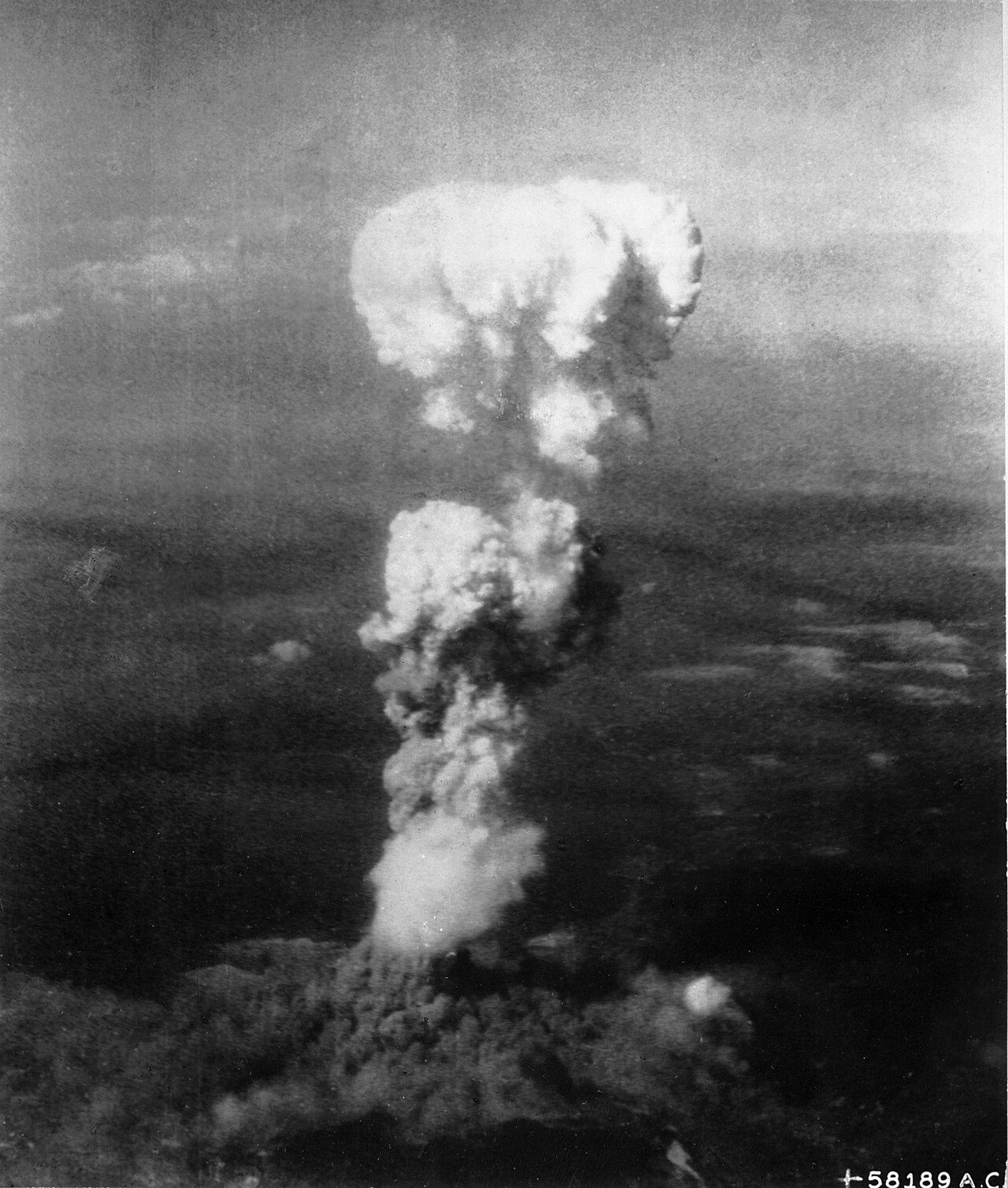
At a Glance
- The aircraft
- The B-29 bomber Enola Gay drops the bomb at about 8:15 in the morning, local time
- The weapon
- 'Little Boy', a uranium gun-type bomb with a yield of about 15,000 tons of TNT, exploding some 580 metres above the city
- The city
- Hiroshima, a city of about 343,000 people; roughly two-thirds of it is destroyed
- The immediate toll
- An estimated 70,000 people killed outright; the death toll passes 100,000 by the end of 1945
- The two bombs together
- With Nagasaki three days later, the bombings kill an estimated 210,000 people by the end of 1945
Events on this day
- 1806Emperor Francis II abdicates, bringing the Holy Roman Empire — the thousand-year framework of central Europe — to an end under pressure from Napoleon.
- 1825Bolivia declares its independence from Spain, taking its name from the liberator Simón Bolívar.
- 1890William Kemmler, a convicted murderer, becomes the first person executed in the electric chair, at Auburn Prison in New York.
- 1926Gertrude Ederle becomes the first woman to swim the English Channel, crossing in about fourteen and a half hours — faster than any man had yet done it.
- 1926Warner Bros. premieres Don Juan in New York, the first major feature film with a synchronised recorded score, opening the sound era in cinema.
- 1945The United States drops the first atomic bomb used in warfare on Hiroshima — the featured story above.
- 1962Jamaica becomes independent from Britain, the first of Britain's Caribbean colonies to do so after the war.
- 1965President Lyndon B. Johnson signs the Voting Rights Act, the law that finally enforced the right of Black Americans in the South to vote.
- 1991Tim Berners-Lee makes the World Wide Web publicly available, posting the first summary of the project he had built at CERN.
- 2012NASA's Curiosity rover lands in Gale Crater on Mars, beginning its long exploration of the planet's past habitability.
Born on this day
- 1775Daniel O'Connell — Irish political leader, 'the Liberator', who won Catholic emancipation and built mass peaceful politics.
- 1809Alfred, Lord Tennyson — Victorian Poet Laureate, author of In Memoriam and 'The Charge of the Light Brigade'.
- 1881Alexander Fleming — Scottish bacteriologist whose discovery of penicillin opened the antibiotic age.
- 1911Lucille Ball — American comedian and star of I Love Lucy, who went on to run a major television studio.
- 1928Andy Warhol — American artist, born Andrew Warhola, the leading figure of pop art.
Died on this day
- 1637Ben Jonson — English playwright and poet, Shakespeare's great contemporary and rival.
- 1660Diego Velázquez — Spanish painter of Las Meninas, the supreme artist of Spain's golden age.
- 1969Theodor W. Adorno — German philosopher of the Frankfurt School and theorist of the culture industry.
- 1973Fulgencio Batista — Cuban dictator overthrown by Fidel Castro's revolution, dead in exile.
- 1978Pope Paul VI — pope who carried the Second Vatican Council's reforms into the life of the Catholic Church.
- 2019Sushma Swaraj — Indian politician and former minister of external affairs.
The featured story: the atomic bombing of Hiroshima, 6 August 1945
In the summer of 1945 the Second World War was over in Europe but not in the Pacific. Japan's cities were being systematically burned by American bombing, its navy was destroyed and its people were starving under blockade, yet its government had not surrendered, and an Allied invasion of the home islands was expected to be long and bloody. In July the United States, Britain and China issued the Potsdam Declaration demanding unconditional surrender; Japan's leaders did not accept it. Waiting in reserve was a weapon of an entirely new kind, tested once, in the New Mexico desert, three weeks before. President Truman ordered that it be used.
At about 8:15 on the morning of 6 August 1945, the B-29 bomber Enola Gay, piloted by Colonel Paul Tibbets, released a single bomb over Hiroshima, a city of some 343,000 people in western Japan. The weapon, nicknamed 'Little Boy', was a uranium bomb of a design so certain, in its makers' judgement, that it had never been tested. It exploded about 580 metres above the city with the force of roughly 15,000 tons of TNT. The blast and the firestorm it ignited destroyed some two-thirds of Hiroshima. An estimated 70,000 people were killed outright — soldiers, factory workers, schoolchildren mobilised to clear firebreaks, and thousands of Korean labourers among them.
The dying did not stop with the flash. Through the autumn, survivors who had walked away from the blast began to sicken and die of burns, injuries and the mysterious effects of radiation, which Japanese doctors were encountering for the first time. By the end of 1945 the death toll in Hiroshima had passed 100,000 by Britannica's accounting; some later estimates run considerably higher. Three days after Hiroshima, a second bomb destroyed Nagasaki. Between them, by the end of 1945, the two bombs had killed an estimated 210,000 people. Within a week of Nagasaki, Japan announced its surrender, and the Second World War was over.
Hiroshima therefore stands at the hinge of the modern world. It was the first use of a nuclear weapon in war — a weapon that has, so far, been used in anger only twice, on this day and three days later. The bombing remains the subject of an argument that has never closed: whether it shortened the war and spared the greater bloodshed of an invasion, or whether a defeated Japan was already seeking a way out. What is not argued is the fact at its centre, commemorated in Hiroshima every year at 8:15 in the morning: that on 6 August 1945 a single aircraft and a single bomb destroyed a city.
Why this date matters
No date carries a heavier single entry than August 6. Yet the rest of its list reads like a deliberate counterweight: penicillin's discoverer and pop art's prophet born on it; a woman out-swimming every man across the Channel on it; the Voting Rights Act signed on it, twenty years to the day after Hiroshima; the World Wide Web given away on it. It is a day that contains both the worst thing human beings had yet built and several of the best things they have made — which is precisely why it is remembered, every year, at 8:15.
Sources
- Encyclopaedia Britannica — On This Day: August 6
- HISTORY — What Happened on August 6
- Encyclopaedia Britannica — Atomic Bombings of Hiroshima and Nagasaki
- Wikimedia — On This Day feed: August 6
The facts on this page were checked against these sources on 19 November 2026. The History Trail's permanent pages are researched and written for this site; the live profiles elsewhere on The History Trail are assembled automatically from Wikipedia and Wikidata.
About the Author
Researched and written by the The History Trail Editorial Team — the accountable editorial function behind this site's permanent story pages. The team works from the published sources cited on each page; it does not invent historians, reviewers or credentials, and it corrects errors openly.
Fact Check
Every load-bearing fact on this page traces to one of the sources listed above, and significant claims link to their source in the text. Our checking method is described on the methodology page; errors can be reported via the corrections page.
Sources & Citations
Cite this page as: The History Trail Editorial Team, The History Trail — this article's title, publication and update dates are shown beneath its headline. The full source list appears under Sources above; the site's source standards are on the sources page.