
On This Day
August 5 in History
On 5 August 1962, South African police stopped a car near Howick and arrested the man travelling in it as a chauffeur under the name David Motsamayi. He was Nelson Mandela, who had been on the run for seventeen months — and he would not be a free man again for twenty-seven years. August 5 is also the day the first transatlantic telegraph cable was completed and Marilyn Monroe died.
Choose another date: open the On This Day calendar to browse events, births and deaths for any day of the year.
At a Glance
- The arrest
- 5 August 1962 — Mandela is stopped at a police roadblock near Howick, in Natal, after seventeen months on the run
- The disguise
- He is travelling with the theatre director Cecil Williams, posing as Williams's chauffeur under the alias David Motsamayi
- The charges
- Inciting workers to strike, and leaving South Africa without a valid passport
- The road to Rivonia
- His imprisonment is followed by the police raid on Liliesleaf Farm; Mandela is tried again at the Rivonia Trial and sentenced to life imprisonment
- The cost
- Mandela spends twenty-seven years in prison before his release in February 1990
Events on this day
- 1858The first transatlantic telegraph cable is completed under the direction of Cyrus Field, linking Ireland with Newfoundland and joining Europe and America by near-instant message.
- 1861President Abraham Lincoln signs the Revenue Act, imposing the first federal income tax in American history — 3 percent on incomes over $800 — to fund the Civil War.
- 1864At the Battle of Mobile Bay, Union naval forces under Admiral David Farragut defeat the Confederates and close one of the South's last great ports.
- 1914The first electric traffic signal in the United States is installed, in Cleveland, Ohio.
- 1914Germany opens its invasion of Belgium with an assault on the fortress city of Liège, in the first days of the First World War.
- 1944During the Warsaw Uprising, Polish insurgents liberate 348 Jewish prisoners from a German forced-labour camp in the city.
- 1957The television dance show American Bandstand is broadcast nationally in the United States for the first time.
- 1962Nelson Mandela is arrested at a roadblock near Howick, South Africa, after seventeen months on the run — the featured story above.
- 1963The United States, the Soviet Union and the United Kingdom sign the Partial Nuclear Test Ban Treaty in Moscow, banning nuclear tests in the atmosphere, in space and under water.
- 1981President Ronald Reagan fires 11,359 striking American air-traffic controllers who had defied his order to return to work.
- 2002The turret of the Civil War ironclad USS Monitor is recovered from the floor of the Atlantic, 140 years after the ship sank.
Born on this day
- 1641John Hathorne — Massachusetts judge at the Salem witch trials, the only judge who never afterwards expressed regret for his part.
- 1850Guy de Maupassant — French writer, a master of the short story.
- 1862Joseph Merrick — Englishman whose severe physical deformities made him famous in Victorian Britain as the 'Elephant Man'.
- 1889Conrad Aiken — American poet and novelist, winner of the Pulitzer Prize for poetry.
- 1930Neil Armstrong — American astronaut who became the first person to walk on the Moon.
- 1934Wendell Berry — American poet, novelist and farmer whose writing defends land, locality and community.
Died on this day
- 1962Marilyn Monroe — American film star, found dead at her Los Angeles home at 36; her death from acute barbiturate poisoning was officially recorded as a probable suicide.
- 1984Richard Burton — Welsh actor celebrated for his voice, his stage Shakespeare and his film career.
- 1991Paul Brown — pioneering American football coach, founder of the Cleveland Browns and co-founder of the Cincinnati Bengals.
The featured story: Nelson Mandela is arrested, 5 August 1962
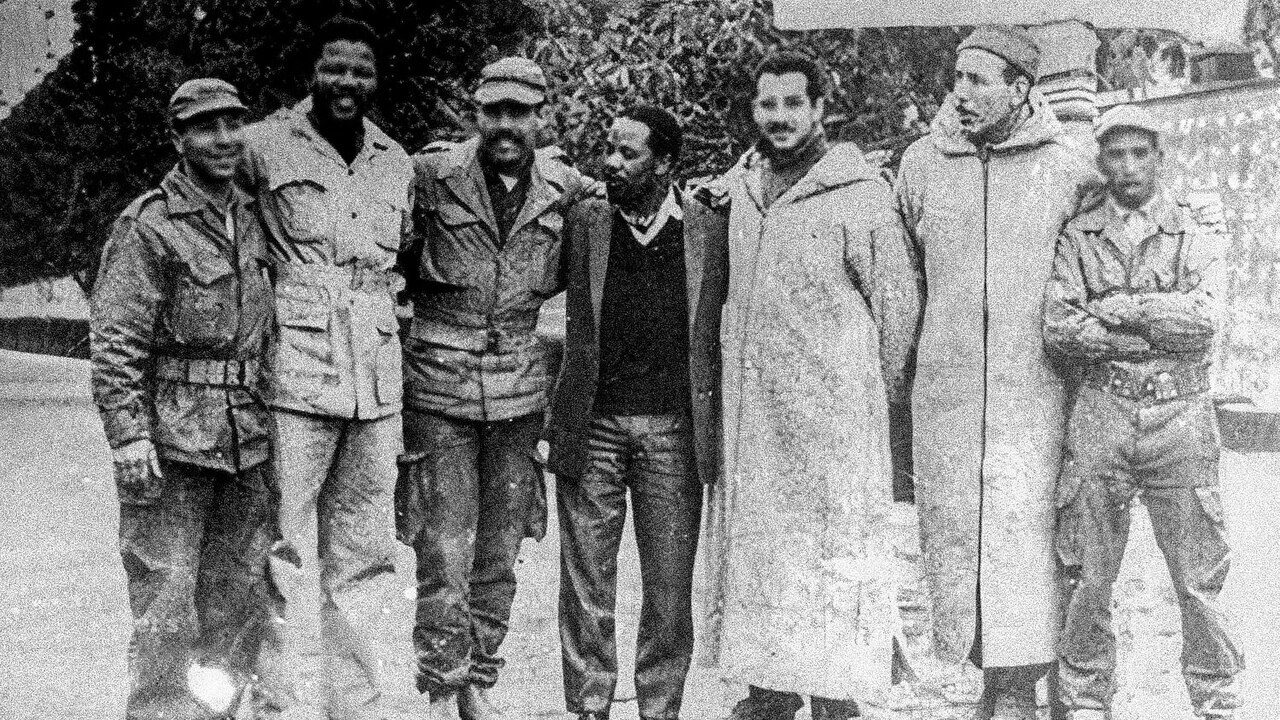
By August 1962 Nelson Mandela had been a fugitive in his own country for seventeen months. The African National Congress had been banned, its leaders scattered into exile or prison, and Mandela — a lawyer turned organiser of the movement's new armed wing — had gone underground, moving between safe houses, working under false names and slipping in and out of South Africa to rally support across Africa and in London. The police hunt for the man the press called the 'Black Pimpernel' was one of the largest in the country's history, and it ended not with a raid but with a routine-looking roadblock on a country road.
On 5 August 1962 Mandela was travelling back toward Johannesburg with his friend Cecil Williams, a white theatre director. Mandela was posing as Williams's chauffeur, under the alias David Motsamayi, when police stopped the car near the town of Howick in Natal and arrested him. How the police knew where to wait has never been conclusively established — a question that has fed decades of speculation about informers and foreign intelligence tips — but the alias did not survive the stop. The most wanted man in South Africa was in custody.
He was charged with inciting workers to strike and with leaving the country without a valid passport, and was convicted and imprisoned. The arrest might have been a footnote — a five-year sentence for a fugitive organiser — had the police not followed it, eleven months later, with a raid on the movement's underground headquarters at Liliesleaf Farm in Rivonia. There they seized documents and arrested the ANC's high command. Mandela, already in prison, was brought back to stand trial with them for sabotage and conspiracy to overthrow the state, charges that carried the death penalty. In the dock he delivered the speech that made him world-famous, declaring that a democratic and free society was an ideal 'for which I am prepared to die'.
The Rivonia court sentenced him to life imprisonment rather than death. He would spend twenty-seven years in prison — most of them on Robben Island — before walking free in February 1990, into a country already negotiating the end of apartheid. Four years later he voted for the first time in his life, in the election that made him president. The roadblock near Howick was intended to remove Mandela from South African politics permanently. Instead it began the process that turned a fugitive lawyer into the most famous political prisoner in the world, and eventually into his country's first democratically elected leader.
Why this date matters
August 5 is a study in long consequences. The cable completed on it in 1858 shrank the Atlantic to minutes; the treaty signed on it in 1963 put the first legal brake on the nuclear arms race; the controllers fired on it in 1981 reshaped American labour relations for a generation. Above all, it holds a strange double entry for 1962: on a single day, South Africa arrested the man who would become the century's emblem of patient resistance, and Hollywood lost Marilyn Monroe, its most famous face. One story was beginning a twenty-seven-year fuse; the other had just ended.
Sources
- Encyclopaedia Britannica — On This Day: August 5
- HISTORY — What Happened on August 5
- Nelson Mandela Foundation — The Arrest of Madiba and the Austin Westminster Story
- Wikimedia — On This Day feed: August 5
The facts on this page were checked against these sources on 19 November 2026. The History Trail's permanent pages are researched and written for this site; the live profiles elsewhere on The History Trail are assembled automatically from Wikipedia and Wikidata.
About the Author
Researched and written by the The History Trail Editorial Team — the accountable editorial function behind this site's permanent story pages. The team works from the published sources cited on each page; it does not invent historians, reviewers or credentials, and it corrects errors openly.
Fact Check
Every load-bearing fact on this page traces to one of the sources listed above, and significant claims link to their source in the text. Our checking method is described on the methodology page; errors can be reported via the corrections page.
Sources & Citations
Cite this page as: The History Trail Editorial Team, The History Trail — this article's title, publication and update dates are shown beneath its headline. The full source list appears under Sources above; the site's source standards are on the sources page.