
On This Day
August 3 in History
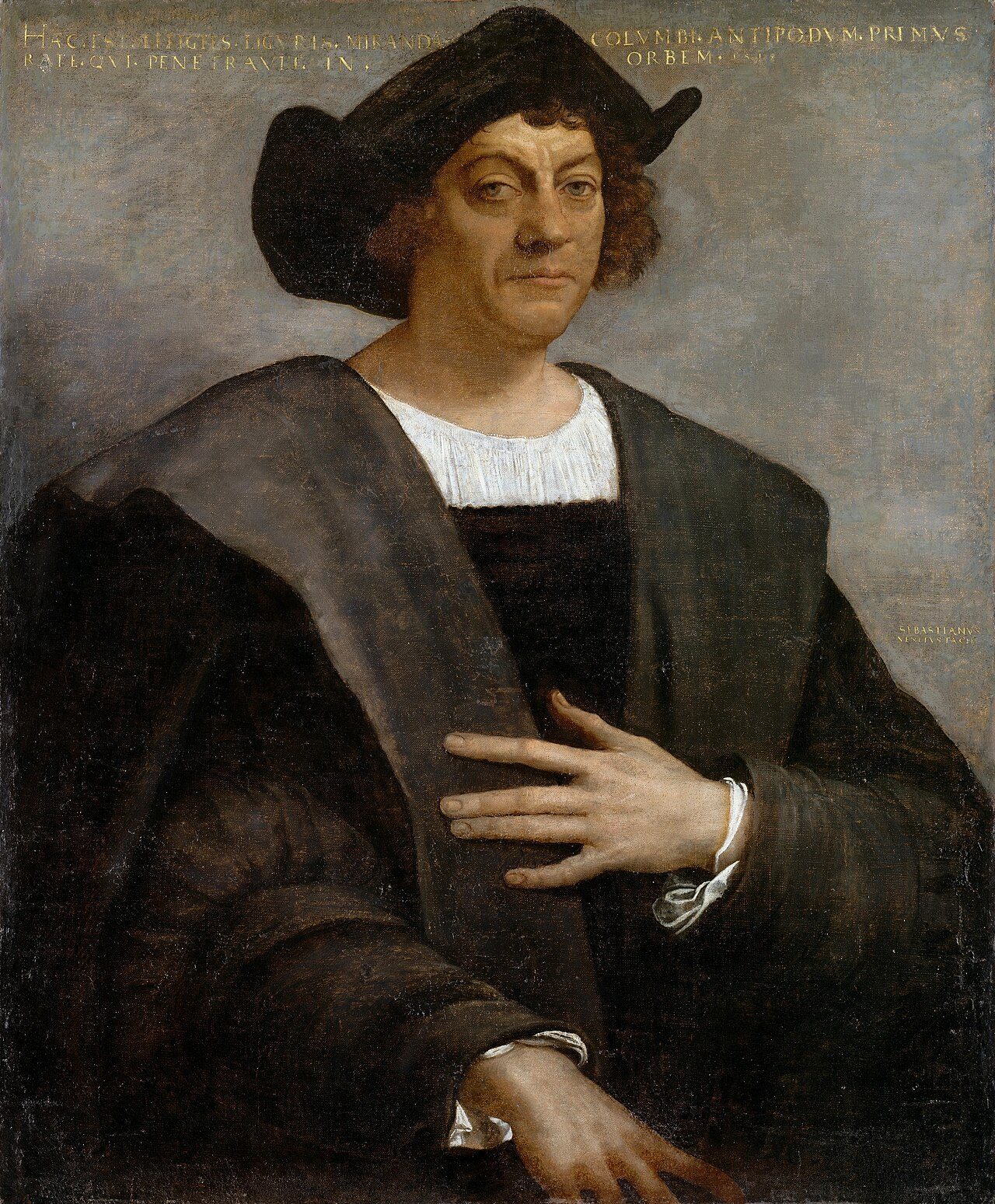
On 3 August 1492, Christopher Columbus set sail from the Spanish port of Palos with three small ships — the Niña, the Pinta and the Santa María — intending to reach Asia by sailing west. Ten weeks later he made landfall in the Bahamas, opening the age of sustained contact between Europe and the Americas. August 3 is also the day Germany declared war on France in 1914 and the USS Nautilus passed beneath the North Pole.
Choose another date: open the On This Day calendar to browse events, births and deaths for any day of the year.
At a Glance
- The fleet
- Three ships fitted out at Palos on the Tinto River in Spain: the Santa María, the Niña and the Pinta
- The departure
- 3 August 1492 — the fleet leaves Palos and sails first south to the Canary Islands
- The plan
- To reach the riches of Asia by a westward ocean route, rather than by the long voyage around Africa
- The crossing
- After repairs and nearly a month in the Canaries, the ships leave La Gomera on 6 September; by 10 October the crews are close to mutiny
- The landfall
- Land is sighted from the Pinta on 12 October 1492 — the island its people called Guanahani, generally identified with San Salvador in the Bahamas
- The flagship lost
- The Santa María runs aground off Hispaniola on Christmas Day 1492; Columbus returns to Spain aboard the Niña
Events on this day
- 1492Christopher Columbus sets sail from Palos in Spain with the Niña, the Pinta and the Santa María, seeking a westward route to Asia — the featured story above.
- 1795The Treaty of Greenville ends the Northwest Indian War, with Native nations ceding much of present-day Ohio to the United States.
- 1914Germany declares war on France and sets the Schlieffen Plan in motion, opening the western front of the First World War.
- 1916Roger Casement, the Irish nationalist and former British diplomat, is hanged for treason in London after seeking German support for Irish independence.
- 1923Vice President Calvin Coolidge is sworn in as president of the United States following the sudden death of Warren G. Harding.
- 1948Whittaker Chambers publicly accuses former State Department official Alger Hiss of having been a communist spy, opening the Hiss case that would convulse American politics.
- 1949The National Basketball Association is formed in the United States by the merger of the Basketball Association of America and the National Basketball League.
- 1958The American nuclear submarine USS Nautilus reaches the North Pole, passing beneath the Arctic ice cap.
- 1975A Boeing 707 crashes into a mountain near Agadir, Morocco, killing all 188 people aboard, at the time the deadliest crash of a single airliner.
- 1984Gymnast Mary Lou Retton wins the Olympic all-around title in Los Angeles, sealing her victory with two perfect-10 routines.
- 1996'Macarena', the Spanish dance song by Los del Río, reaches number one on the American charts, beginning an extraordinary run at the top.
Born on this day
- 1811Elisha Otis — American inventor of the safety elevator, the device that made the skyscraper practical.
- 1860William Kennedy Dickson — Scottish inventor who, in Thomas Edison's laboratory, built the first practical motion-picture camera.
- 1867Stanley Baldwin — British statesman who served three times as prime minister between the world wars.
- 1900Ernie Pyle — American journalist whose dispatches from the front lines defined Second World War reporting for readers at home.
- 1926Tony Bennett — American singer whose career stretched from the big-band era into the twenty-first century.
- 1941Martha Stewart — American businesswoman who built a media and homemaking empire on her own name.
- 1977Tom Brady — American football quarterback who won a record seven Super Bowl titles.
Died on this day
- 1792Richard Arkwright — English inventor whose water frame mechanised cotton spinning and helped launch the factory system.
- 1924Joseph Conrad — Polish-born novelist in English, author of Heart of Darkness and Lord Jim.
- 1929Emile Berliner — German-American inventor of the flat gramophone record.
- 1954Colette — French novelist, author of the Claudine books and Gigi.
- 1966Lenny Bruce — American stand-up comedian whose obscenity trials helped reshape the law of free speech.
- 2008Aleksandr Solzhenitsyn — Russian novelist and Nobel laureate whose works exposed the Soviet Gulag to the world.
The featured story: Columbus sets sail, 3 August 1492
Christopher Columbus, a Genoese navigator in the service of Spain, had spent years arguing that Asia could be reached more quickly by sailing west across the Atlantic than by the long route around Africa. The learned geographers who doubted him were mostly right about the size of the Earth — Columbus had badly underestimated it — but in January 1492 the Spanish monarchs, fresh from the conquest of Granada, agreed to back the attempt. Three ships were fitted out at Palos, on the Tinto River: the Santa María, a relatively large carrack that served as flagship, and two smaller caravels, the Niña and the Pinta, crewed largely by local seamen under the Pinzón brothers.
The fleet departed Palos on 3 August 1492 and sailed first south to the Canary Islands, where the Pinta's rudder had to be repaired and the ships took on supplies. They set out again from La Gomera on 6 September, into an ocean no European had crossed at that latitude. The passage took five weeks. By 10 October the crews, out of sight of land for more than a month and fearing that contrary winds and dwindling provisions would trap them, had begun to lose patience and complain openly. Columbus held them to the course, promising that land was near.
In the early hours of 12 October, land was sighted from the Pinta. The fleet had reached an island in the Bahamas that its inhabitants called Guanahani; Columbus renamed it San Salvador, claimed it for Spain, and went ashore to meet a people entirely unknown to Europe. He was convinced he had reached the outskirts of Asia — the 'Indies' — and the name he gave the peoples of the Caribbean stuck for centuries. The expedition went on to Cuba and to the island he named Hispaniola, where on Christmas Day the Santa María ran aground and was wrecked; Columbus left a small garrison in a fort built from her timbers and sailed home on the Niña in January 1493.
Columbus made four voyages across the Atlantic in all, and never accepted that he had found continents unknown to Europe rather than a route to Asia. But the consequences of the August morning at Palos are beyond argument. The voyage opened sustained contact between the hemispheres: European colonisation, the conquest of American empires, the exchange of crops, animals and technologies that transformed diets and economies on both sides of the ocean — and, for the Indigenous peoples of the Americas, catastrophe in the form of war, enslavement and diseases against which they had no immunity. Few single sailings have divided historians so sharply, or changed so much.
Why this date matters
August 3 is a day of departures and declarations. Columbus sailed on it; Germany declared war on France on it in 1914, converting a Balkan crisis into a world war; a submarine slipped under the North Pole on it in 1958, announcing a new kind of reach. Even its quieter entries share the theme of thresholds — a league founded, a spy accused, a gymnast perfect. But everything else on the date is a footnote to 1492: the morning three small ships left a Spanish river port and, without anyone aboard understanding it, joined two worlds that had been separate for millennia.
Sources
- Encyclopaedia Britannica — On This Day: August 3
- HISTORY — What Happened on August 3
- Encyclopaedia Britannica — Christopher Columbus: The First Voyage
- Wikimedia — On This Day feed: August 3
The facts on this page were checked against these sources on 19 November 2026. The History Trail's permanent pages are researched and written for this site; the live profiles elsewhere on The History Trail are assembled automatically from Wikipedia and Wikidata.
About the Author
Researched and written by the The History Trail Editorial Team — the accountable editorial function behind this site's permanent story pages. The team works from the published sources cited on each page; it does not invent historians, reviewers or credentials, and it corrects errors openly.
Fact Check
Every load-bearing fact on this page traces to one of the sources listed above, and significant claims link to their source in the text. Our checking method is described on the methodology page; errors can be reported via the corrections page.
Sources & Citations
Cite this page as: The History Trail Editorial Team, The History Trail — this article's title, publication and update dates are shown beneath its headline. The full source list appears under Sources above; the site's source standards are on the sources page.