
On This Day
August 1 in History
On 1 August 1944 the Polish Home Army rose in Warsaw against the German occupation, opening the largest uprising in occupied Europe. It was timed to the arrival of the Red Army, which had reached the far bank of the Vistula — and then stopped, leaving the Poles to fight alone for two months. August 1 is also the day slavery was abolished across the British Empire, Germany declared war on Russia in 1914, and MTV went on the air.
Choose another date: open the On This Day calendar to browse events, births and deaths for any day of the year.
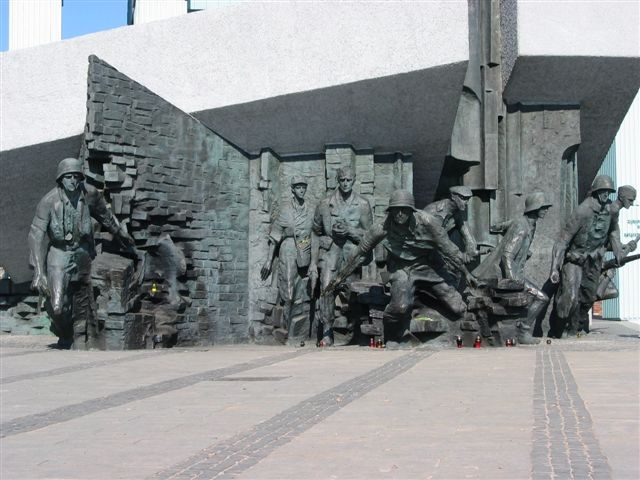
At a Glance
- The rising
- 1 August 1944 — the Warsaw corps of the Polish Home Army, some 50,000 troops, attacks the German garrison in the city
- The commander
- General Tadeusz Bór-Komorowski, commander of the Home Army
- The aim
- To seize the capital before the advancing Red Army arrived, so that Poland could meet the Soviets as master of its own capital
- The Soviet halt
- The Red Army takes up position at Praga, across the Vistula from Warsaw, and remains idle while the rising is fought
- The end
- After its supplies run out, the Home Army surrenders on 2 October 1944; the Germans deport the surviving population and raze the city
Events on this day
- 1498Christopher Columbus sights the coast of South America for the first time, sighting the mainland near present-day Venezuela on his third voyage.
- 1786Caroline Herschel discovers a comet, becoming the first woman credited with the discovery of a comet.
- 1834Slavery is abolished throughout the British Empire, as the Slavery Abolition Act comes into force.
- 1861The first published weather forecast appears, the beginning of a daily ritual now taken for granted.
- 1914Germany declares war on Russia and France orders mobilisation, as the First World War begins in earnest.
- 1936Adolf Hitler opens the Olympic Games in Berlin, staged by Nazi Germany as a showcase for the regime.
- 1943Rioting breaks out in Harlem, New York, after a white police officer shoots a Black soldier.
- 1944Anne Frank, in hiding in Amsterdam, writes the final entry in her diary, three days before her arrest.
- 1944The Warsaw Uprising begins, as the Polish Home Army rises against the German occupation of Warsaw — the featured story above.
- 1966Charles Whitman climbs the tower of the University of Texas at Austin and opens fire on the campus below, killing 14 people before police shoot him dead.
- 1975The Helsinki Final Act is signed by the United States, the Soviet Union and the nations of Europe, setting Cold War rules on borders and human rights.
- 1981MTV goes on the air in the United States, the first television channel devoted to music videos, opening with 'Video Killed the Radio Star'.
Born on this day
- 1744Jean-Baptiste Lamarck — French naturalist who proposed an early theory of evolution based on the inheritance of acquired characteristics.
- 1779Francis Scott Key — American lawyer and poet who wrote the words of 'The Star-Spangled Banner'.
- 1818Maria Mitchell — American astronomer, the first professional woman astronomer in the United States.
- 1819Herman Melville — American novelist, author of Moby-Dick.
- 1930Pierre Bourdieu — French sociologist whose work reshaped the study of culture, education and power.
- 1942Jerry Garcia — American guitarist and singer, co-founder of the Grateful Dead.
- 1979Jason Momoa — American actor known for Game of Thrones and Aquaman.
Died on this day
- 1714Queen Anne — the last Stuart monarch of Britain, in whose reign England and Scotland were united into Great Britain.
- 1920Bal Gangadhar Tilak — Indian nationalist leader, among the first to demand complete self-rule from British rule.
- 1944Manuel Quezon — first president of the Commonwealth of the Philippines, dead in the United States while his country was under Japanese occupation.
- 1970Frances Farmer — American film actress of the 1930s whose career was destroyed amid scandal and illness.
- 2009Corazon Aquino — president of the Philippines who led the restoration of democracy after the Marcos years.
The featured story: the Warsaw Uprising begins, 1 August 1944
By the last days of July 1944, the Red Army was closing on Warsaw, and Soviet radio broadcasts were calling on the city's underground to rise against the Germans, promising aid. The Polish Home Army — the resistance force loyal to the Polish government in exile — had its own reasons to act. The Soviet Union had already taken direct control of eastern Poland and had sponsored a rival Polish committee to administer the territory behind its lines. If Warsaw was to be free, the Poles intended to free it themselves, and to greet the Soviets as masters of their own capital rather than as subjects awaiting a new administration.
On 1 August 1944, the Warsaw corps of the Home Army, commanded by General Tadeusz Bór-Komorowski and numbering some 50,000 troops, attacked the German garrison in the city. The garrison was relatively weak, and within three days the Poles had regained control of most of Warsaw. But they had failed to seize the points that mattered most — the railway stations, bridges and road junctions through which German reinforcements would come — and the rising's early success concealed how exposed it was. The insurgents had few heavy weapons, little ammunition to spare, and no certainty of help from outside.
The help did not come. The Red Army, checked at first by a German counter-assault east of the city, took up a position at Praga, the suburb across the Vistula River from Warsaw, and remained idle there while the battle raged within earshot. German reinforcements poured in against the Poles, and without significant Allied support the Home Army was gradually broken into small, disconnected units, fighting district by district for streets and buildings it could not hold. Whether the Soviet halt was a military necessity or a political calculation — Stalin had no wish to see a London-backed Polish force in possession of the capital — has been argued ever since.
The end came when the supplies gave out. On 2 October 1944, after sixty-three days, Bór-Komorowski surrendered and he and his surviving forces were taken prisoner. The Germans then systematically deported the remainder of the city's population and razed Warsaw itself, street by street, so that the capital of Poland effectively ceased to exist. The uprising had failed in every immediate aim. Yet it fixed itself permanently in Polish memory as the supreme act of national defiance, and Warsaw marks the anniversary each year at the hour the rising began.
Why this date matters
August 1 is a day on which new orders are switched on. Slavery ended across an empire on it in 1834; the First World War effectively began on it in 1914; the Helsinki rules for Cold War Europe were signed on it in 1975; and a television channel that changed popular culture launched on it in 1981. But its deepest mark is 1944, when two of the war's defining stories crossed on a single day: a whole city rising in Warsaw, and, quietly in Amsterdam, a fifteen-year-old girl writing the last page of her diary.
Sources
- Encyclopaedia Britannica — On This Day: August 1
- HISTORY — What Happened on August 1
- Encyclopaedia Britannica — Warsaw Uprising
- timeanddate — On This Day: August 1
The facts on this page were checked against these sources on 19 November 2026. The History Trail's permanent pages are researched and written for this site; the live profiles elsewhere on The History Trail are assembled automatically from Wikipedia and Wikidata.
About the Author
Researched and written by the The History Trail Editorial Team — the accountable editorial function behind this site's permanent story pages. The team works from the published sources cited on each page; it does not invent historians, reviewers or credentials, and it corrects errors openly.
Fact Check
Every load-bearing fact on this page traces to one of the sources listed above, and significant claims link to their source in the text. Our checking method is described on the methodology page; errors can be reported via the corrections page.
Sources & Citations
Cite this page as: The History Trail Editorial Team, The History Trail — this article's title, publication and update dates are shown beneath its headline. The full source list appears under Sources above; the site's source standards are on the sources page.