
Holidays
Jackie Robinson Day
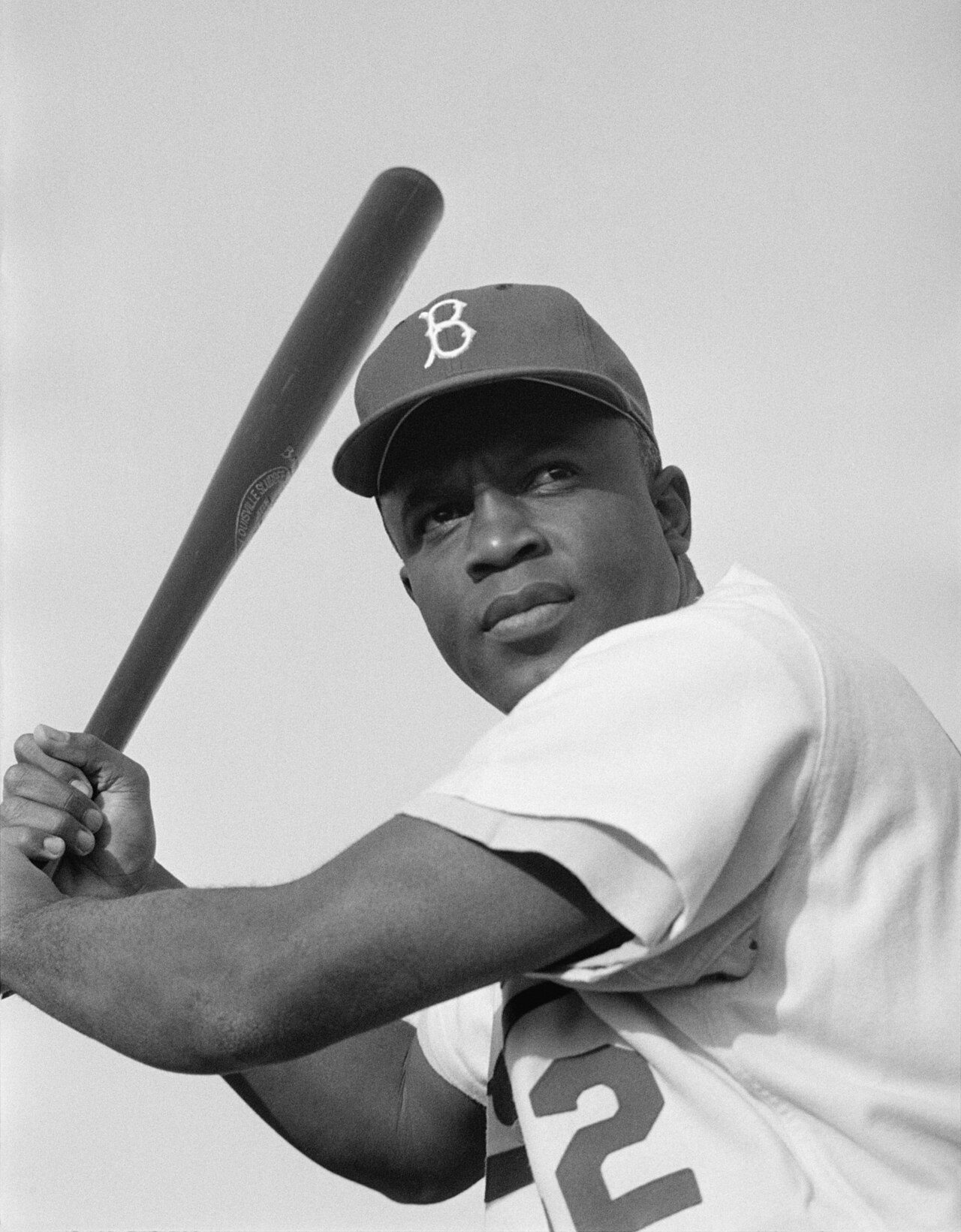
Jackie Robinson Day is Major League Baseball's annual observance on 15 April, the date in 1947 when Jackie Robinson played his first game for the Brooklyn Dodgers at Ebbets Field and broke the modern major leagues' colour barrier. On 15 April 2027 the day marks the 80th anniversary of that debut, and, as every year since 2009, every player, coach and umpire on the field will wear Robinson's number, 42.
At a Glance
- When
- Every 15 April, the anniversary of Robinson's major-league debut in 1947
- The debut
- 15 April 1947, Brooklyn Dodgers against the Boston Braves at Ebbets Field, before 26,623 fans
- The number
- 42, Robinson's Dodgers number, retired across all major-league teams on 15 April 1997, the debut's 50th anniversary
- First observed league-wide
- 15 April 2004, by announcement of Commissioner Bud Selig
- Everyone wears 42
- Since 2009, all players, coaches, managers and umpires wear number 42 on the day
- The player
- Jackie Robinson (1919-1972): 1947 Rookie of the Year, 1949 National League MVP, inducted into the Baseball Hall of Fame in 1962
- In 2027
- The 80th anniversary of the debut falls on 15 April 2027
Introduction
Some sporting anniversaries are kept by one club. This one is kept by a whole league, on the field, in the middle of its season. Every 15 April, the players who take the field in major-league ballparks do so wearing the same number - 42 - in honour of a man who last played in 1956. The date is not a birthday or a round number chosen for convenience. It is the exact anniversary of the afternoon Jackie Robinson started at first base for the Brooklyn Dodgers and ended the segregation that had kept Black players out of the major leagues for more than half a century.
The observance was built in stages - a number retired in 1997, a day named in 2004, a uniform worn by everyone from 2009 - and each stage widened the same point: what happened that afternoon belongs to the whole sport's history, not one team's.
The Signing: Branch Rickey's Experiment, 1945-1946
Robinson reached Brooklyn by design. In 1945 he was playing shortstop for the Kansas City Monarchs of the Negro American League when Branch Rickey, president and general manager of the Brooklyn Dodgers, settled on him as the player who would integrate the major leagues. Rickey's test was not only talent. As Britannica recounts, at their famous first meeting Rickey acted out the abuse Robinson would face - shouting insults at him - to be sure Robinson could absorb it without retaliating, because a single fight could be used to declare the experiment a failure. On 23 October 1945 Robinson signed for the Montreal Royals, the Dodgers' top farm club.
Montreal was the proving ground. Robinson endured a Jim Crow spring training in Florida - bumped from flights, barred from team hotels and restaurants, as Smithsonian Magazine documents - then led the International League in batting in 1946, hitting .349 with 40 stolen bases. On 10 April 1947 he signed his first major-league contract. Five days later he was a Dodger.
15 April 1947 and the Season That Followed
The debut itself was quiet on the scoresheet: Robinson went hitless in three at-bats against the Boston Braves at Ebbets Field, reached base on an error and scored the go-ahead run, and handled 11 chances at first base without a mistake, before 26,623 spectators. What surrounded it was not quiet. The National Baseball Hall of Fame records that opposing teams threatened to strike rather than play against him, and that National League president Ford Frick and Commissioner Happy Chandler warned that strikers would be suspended. Britannica's account lists the rest: racial slurs and death threats, bottles thrown from the stands, opponents pitching at his head and spiking him on slides, and segregation laws that kept him out of the hotels and restaurants his teammates used.
Robinson's answer, in 1947, was performance held under discipline. He later put the bargain plainly: plenty of times he wanted to strike back when insulted for the colour of his skin, but he held himself in - he knew he was an experiment, and the whole thing was bigger than him. He hit .297, led the league with 29 stolen bases, and won the first Rookie of the Year Award. Two years later he was the National League's Most Valuable Player, and across ten seasons in Brooklyn he batted .311, played in six World Series and won one, in 1955. He was inducted into the Baseball Hall of Fame in 1962, his first year on the ballot.
How the Day Was Built: 1997, 2004, 2009
The commemoration came in three steps, each on 15 April. In 1997, on the debut's 50th anniversary, Commissioner Bud Selig retired Robinson's number 42 across every major-league team - the first time a number had been retired league-wide in professional sport; players already wearing 42, such as Mariano Rivera, were allowed to keep it for their own careers. In March 2004 Selig announced that 15 April would be Jackie Robinson Day throughout the majors, and the first league-wide observance followed that April. Then the number began to come back for a day: Ken Griffey Jr. asked permission to wear 42 on the day in 2007, others followed in growing numbers in 2008, and from 2009 Major League Baseball has had every player, coach, manager and umpire wear 42 on Jackie Robinson Day - a retired number unretired, once a year, by everyone at once.
Timeline
- 23 October 1945
Branch Rickey signs Robinson for the Montreal Royals, the Dodgers' Triple-A farm club, after testing whether he can endure abuse without retaliating.
- 18 April 1946
Robinson debuts for Montreal in Jersey City, going 4-for-5 with a home run - the first Black player in the International League since the 1880s.
- 15 April 1947
Robinson starts at first base for the Brooklyn Dodgers at Ebbets Field against the Boston Braves, breaking the modern colour barrier.
- 1947
Despite slurs, threats and rough play, Robinson hits .297, leads the league in stolen bases and wins the first Rookie of the Year Award.
- 1949
Robinson wins the National League batting title at .342 and is named the league's Most Valuable Player.
- 1955
Robinson and the Dodgers win the World Series, Brooklyn's only championship - the sixth pennant of his ten seasons.
- 23 July 1962
Robinson is inducted into the National Baseball Hall of Fame in Cooperstown, in his first year on the ballot.
- 15 April 1997
On the debut's 50th anniversary, MLB retires number 42 across all teams - a first in professional sport.
- 15 April 2004
The first league-wide Jackie Robinson Day, established by Commissioner Bud Selig, is observed at ballparks across the majors.
- 2007-2008
Ken Griffey Jr.'s request to wear 42 on the day starts a voluntary practice that spreads across the league.
- 2009
For the first time, every player, coach, manager and umpire wears number 42 on Jackie Robinson Day - the practice ever since.
- 15 April 2027
The 80th anniversary of the debut: Jackie Robinson Day is observed across Major League Baseball.
Significance
The day's significance is that it commemorates an integration, not just a debut. Other players had been first at other things; Robinson's afternoon is the one baseball chose as the hinge between its segregated past and everything after - the Hall of Fame notes that from 1947 to 1959, as the remaining teams integrated one by one, Black players won nine MVP awards and nine Rookie of the Year awards in the majors. By fixing the observance to the date itself, and by putting the number on every back rather than on a statue or a plaque, the league made the anniversary impossible to walk past: for one day each season, the most basic identifier a player has - his number - is someone else's.
Questions readers ask
Why 15 April? Because that is the date of the debut itself - Opening Day at Ebbets Field in 1947. The day was not moved to a weekend or a convenient slot; when 15 April's games are postponed, the observance travels with the makeup game rather than shifting to a tidier date.
Why does everyone wear 42? Because 42 was Robinson's number with Brooklyn, and retiring it everywhere in 1997 made it the one number no team owned. Wearing it league-wide, a practice begun voluntarily after Ken Griffey Jr.'s 2007 request and made universal in 2009, turns the tribute into something the whole sport does together rather than something each club does separately.
Could a player refuse? Since 2009 it has not been an individual choice: Major League Baseball decided that all uniformed personnel wear 42 on the day, as it sets other uniform requirements for its games. The number is otherwise retired, so the day is also the only time it appears on the field at all.
Legacy
Robinson used his last public appearance, in October 1972, nine days before his death, to ask for the next step - a Black manager in the major leagues. The day marks a beginning its own subject considered unfinished. What 15 April guarantees is repetition: every season, new players put on a number that is not theirs, and the story of Ebbets Field is retold to an audience that came to watch a ballgame. Eighty years on, in April 2027, the ritual runs again.
Sources
- Major League Baseball (via Latino Sports) - Details for the Commemoration of Jackie Robinson Day
- National Baseball Hall of Fame - Remembering Jackie
- National Baseball Hall of Fame - Robinson debuts five days after signing with Dodgers
- Encyclopaedia Britannica - Jackie Robinson
- Smithsonian Magazine - The Year of Jackie Robinson's Mutual Love Affair With Montreal
- National Archives - Jackie Robinson, Civil Rights Advocate
The facts on this page were checked against these sources on 19 November 2026. The History Trail's permanent pages are researched and written for this site; the live profiles elsewhere on The History Trail are assembled automatically from Wikipedia and Wikidata.
About the Author
Researched and written by the The History Trail Editorial Team — the accountable editorial function behind this site's permanent story pages. The team works from the published sources cited on each page; it does not invent historians, reviewers or credentials, and it corrects errors openly.
Fact Check
Every load-bearing fact on this page traces to one of the sources listed above, and significant claims link to their source in the text. Our checking method is described on the methodology page; errors can be reported via the corrections page.
Sources & Citations
Cite this page as: The History Trail Editorial Team, The History Trail — this article's title, publication and update dates are shown beneath its headline. The full source list appears under Sources above; the site's source standards are on the sources page.