
Years
1982 in History
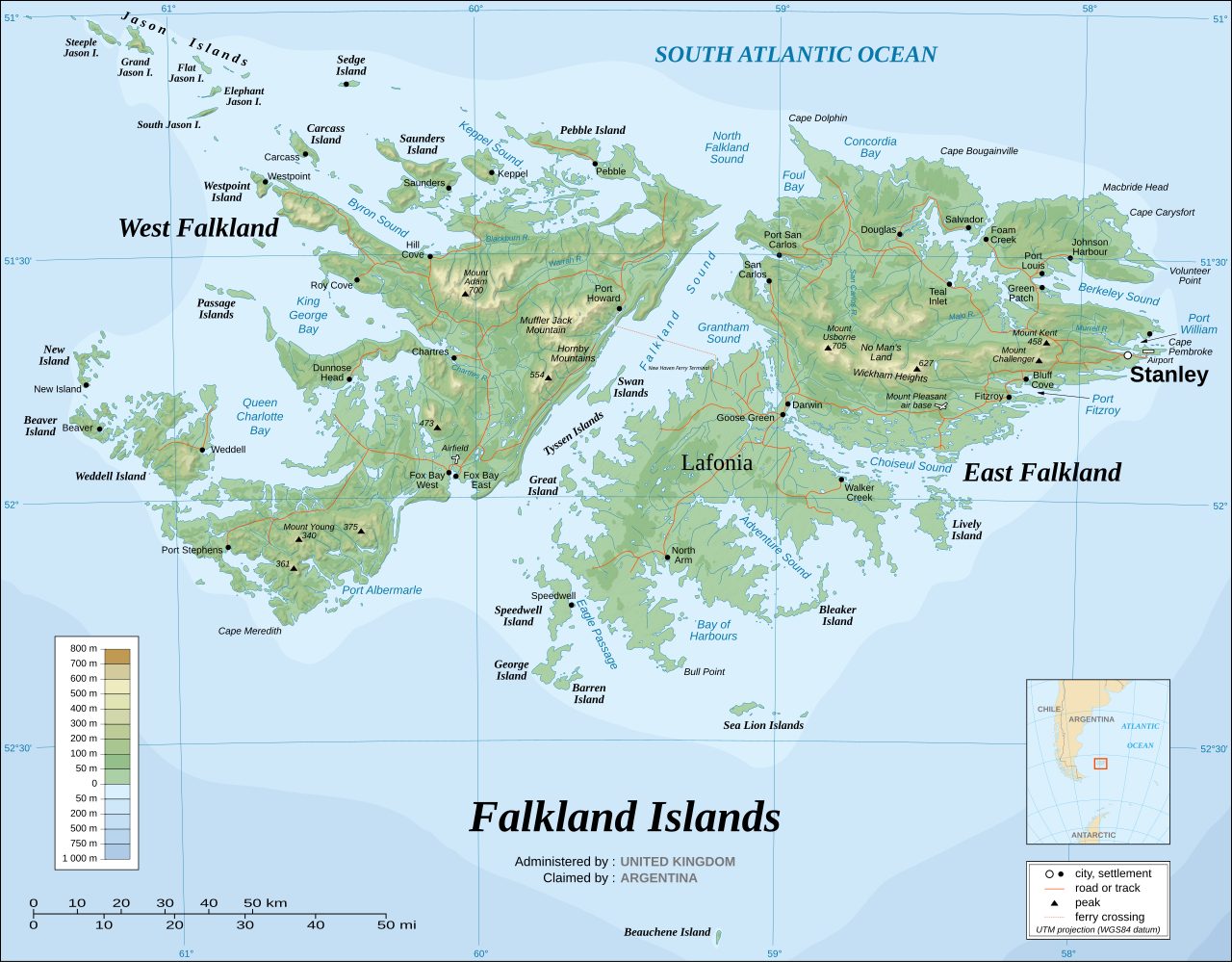
1982 is remembered for a war nobody expected in the South Atlantic: on 2 April Argentine forces invaded the Falkland Islands and seized Stanley, and ten weeks later, on 14 June, Argentine forces surrendered to Britain, ending the 74-day Falklands War. The same year released E.T. and Michael Jackson's Thriller, dedicated the Vietnam Veterans Memorial in Washington, gave Barney Clark the first permanent artificial heart, and lost Leonid Brezhnev, whose death opened the Soviet succession that ended with Gorbachev.
At a Glance
- Defining event
- The Falklands War: Argentina invades on 2 April; Argentine forces surrender on 14 June, ending the 74-day war
- In cinemas
- Steven Spielberg's E.T. the Extra-Terrestrial opens on 11 June and becomes the highest-grossing film of its era
- In music
- Michael Jackson's Thriller is released on 30 November; it becomes the best-selling album in history
- Medicine
- Barney Clark receives the Jarvik-7, the first permanent artificial heart implanted in a human, 2 December; he survives 112 days
- Succession
- Leonid Brezhnev dies on 10 November after 18 years leading the Soviet Union, opening the succession that ends with Gorbachev
- Memorial
- The Vietnam Veterans Memorial is dedicated in Washington, D.C., 13 November
The defining story: a war in the South Atlantic
In the early hours of 2 April 1982, Argentine amphibious forces landed near Stanley, the small capital of the Falkland Islands, and overwhelmed the tiny garrison of Royal Marines defending Government House. By morning the islands, a British territory since 1833, were in Argentine hands, and the next day Argentine forces seized South Georgia and the South Sandwich Islands as well. The invasion opened a ten-week war in the South Atlantic that almost nobody had expected and that neither government could afford to lose.
Argentina had claimed the islands it calls the Malvinas since the nineteenth century, and by 1982 its military junta, led by General Leopoldo Galtieri, was presiding over economic collapse and growing unrest at home. The seizure was meant to rally the country behind a patriotic cause and to force Britain into negotiations from a position of strength. In Buenos Aires it worked, at first: huge crowds filled the Plaza de Mayo, cheering a recovery they had been taught since childhood was a national duty. The invasion had nearly begun by accident of timing — Argentina brought the operation forward after Argentine scrap-metal workers raised their flag on South Georgia on 19 March, and the confrontation that followed convinced the junta it had to act before Britain reinforced the South Atlantic.
Britain's answer was a task force sailed eight thousand miles to retake the islands, and on 14 June Argentine forces in the Falklands surrendered, ending the 74-day war. The April 2 record calls it the century's clearest lesson in miscalculation: a regime that mistook a distant, distracted Britain for an indifferent one, and discovered, ten weeks and hundreds of lives later, how wrong it had been. The junta that had gambled on the invasion did not survive its failure; the British government that had won the war was transformed in standing at home.
The rest of 1982 belonged to screens, stadiums of memory and laboratories. On 7 June Elvis Presley's Memphis home, Graceland, opened to the public, five years after his death; on 11 June E.T. the Extra-Terrestrial opened in American cinemas and became the highest-grossing film of its era. On 17 April Queen Elizabeth II proclaimed Canada's new constitution in Ottawa, patriating it from Britain with a Charter of Rights and Freedoms. On 13 November the Vietnam Veterans Memorial was dedicated in Washington, D.C., and on 30 November Michael Jackson's Thriller was released — it became the best-selling album in history. On 2 December, at the University of Utah, Barney Clark received the Jarvik-7, the first permanent artificial heart implanted in a human being; he survived 112 days. On 10 November Leonid Brezhnev, leader of the Soviet Union for 18 years, died — opening the succession that ends with Gorbachev.
Timeline of 1982
- 13 January
Air Florida Flight 90 crashes into Washington's frozen Potomac River shortly after takeoff, killing 78 people.
- 19 March
Argentine scrap-metal workers land on South Georgia and raise their flag, an opening move of the Falklands War.
- 2 April
Argentine forces invade and seize the Falkland Islands from Britain, beginning the Falklands War.
- 17 April
Queen Elizabeth II proclaims Canada's new constitution in Ottawa, patriating it from Britain with a Charter of Rights and Freedoms.
- 7 June
Elvis Presley's Memphis home, Graceland, opens to the public, five years after his death.
- 11 June
Steven Spielberg's E.T. the Extra-Terrestrial opens in American cinemas and becomes the highest-grossing film of its era.
- 14 June
Argentine forces in the Falkland Islands surrender to Britain, ending the 74-day Falklands War.
- 21 June
Prince William is born — elder son of King Charles III and Diana, Princess of Wales, and heir to the British throne.
- 14 September
Grace Kelly, the American film star turned Princess Grace of Monaco, dies at 52 of injuries from a car crash above Monte Carlo.
- 30 September
The Boston bar sitcom Cheers is broadcast for the first time.
- 10 November
Leonid Brezhnev dies — leader of the Soviet Union for 18 years, whose death opens the succession that ends with Gorbachev.
- 30 November
Michael Jackson's Thriller is released; it becomes the best-selling album in history.
- 2 December
At the University of Utah, Barney Clark receives the Jarvik-7, the first permanent artificial heart implanted in a human being; he survives 112 days.
Why 1982 still matters
The Falklands War matters because it was the last war of its kind — a conventional campaign between two states over territory, fought with ships, aircraft and infantry at the end of an eight-thousand-mile supply line, in an age that had supposedly retired such contests. It destroyed the Argentine junta that launched it, consolidated the British government that won it, and left the islands' sovereignty exactly where the fighting had started: the dispute the invasion was meant to settle by force remained, and remains, a matter of diplomacy. Its lesson, as the April record puts it, is about miscalculation — a regime reading distraction as indifference.
The year's culture set records that stood for decades. E.T. became the highest-grossing film of its era by making the alien a childlike guest rather than a threat; Thriller became the best-selling album in history and redefined what a pop record — and its videos — could be. Canada's patriated constitution, with its Charter of Rights and Freedoms, completed in April the legal independence the Statute of Westminster had begun in 1931. The Vietnam Veterans Memorial, dedicated in November, changed how America builds monuments to its wars: a wall of names, sunk in the earth, that made listing the dead the memorial itself.
Brezhnev's death was the year's slow fuse. Eighteen years of Soviet leadership ended on 10 November, and the succession it opened — through two more ageing leaders — ended with Gorbachev, and with him the reforms that closed the Cold War. Barney Clark's 112 days with the Jarvik-7, finally, opened the age of the permanent artificial heart: a machine keeping a man alive for a season, as a bridge between surgery and engineering that medicine is still crossing.
1982 on The History Trail
A war in the South Atlantic is this year's featured story on The History Trail, with Thriller and the first artificial heart beside it.
- April 2 in History — Argentina invades the Falkland Islands in 1982 — a gamble that ended in defeat and the junta's fall.
- June 14 in History — Argentine forces surrender in the Falklands in 1982, on Flag Day's date.
- November 30 in History — Michael Jackson's Thriller is released in 1982.
- December 2 in History — Barney Clark receives the first permanent artificial heart in 1982.
- April 17 in History — Canada's new constitution is proclaimed in Ottawa in 1982.
- FIFA World Cup — The world's game and its tournament, told in full.
Sources
- HISTORY — What Happened on April 2
- Encyclopaedia Britannica — On This Day: June 14
- Encyclopaedia Britannica — On This Day: November 30
- Encyclopaedia Britannica — On This Day: December 2
- Encyclopaedia Britannica — On This Day: April 17
- Encyclopaedia Britannica — On This Day: March 19
The facts on this page were checked against these sources on 19 November 2026. The History Trail's permanent pages are researched and written for this site; the live profiles elsewhere on The History Trail are assembled automatically from Wikipedia and Wikidata.
About the Author
Researched and written by the The History Trail Editorial Team — the accountable editorial function behind this site's permanent story pages. The team works from the published sources cited on each page; it does not invent historians, reviewers or credentials, and it corrects errors openly.
Fact Check
Every load-bearing fact on this page traces to one of the sources listed above, and significant claims link to their source in the text. Our checking method is described on the methodology page; errors can be reported via the corrections page.
Sources & Citations
Cite this page as: The History Trail Editorial Team, The History Trail — this article's title, publication and update dates are shown beneath its headline. The full source list appears under Sources above; the site's source standards are on the sources page.