
On This Day
December 2 in History
On 2 December 1823, in his seventh annual message to Congress, President James Monroe laid down the principles the world would call the Monroe Doctrine: the Americas were closed to new European colonisation, any European attempt to control a nation in the Western Hemisphere would be treated as a hostile act, and in return the United States would stay out of Europe's internal affairs. It shaped American foreign policy for two centuries. December 2 is also the day Napoleon crowned himself emperor, Fermi split the atom's secret in Chicago, and Enron collapsed.
Choose another date: open the On This Day calendar to browse events, births and deaths for any day of the year.
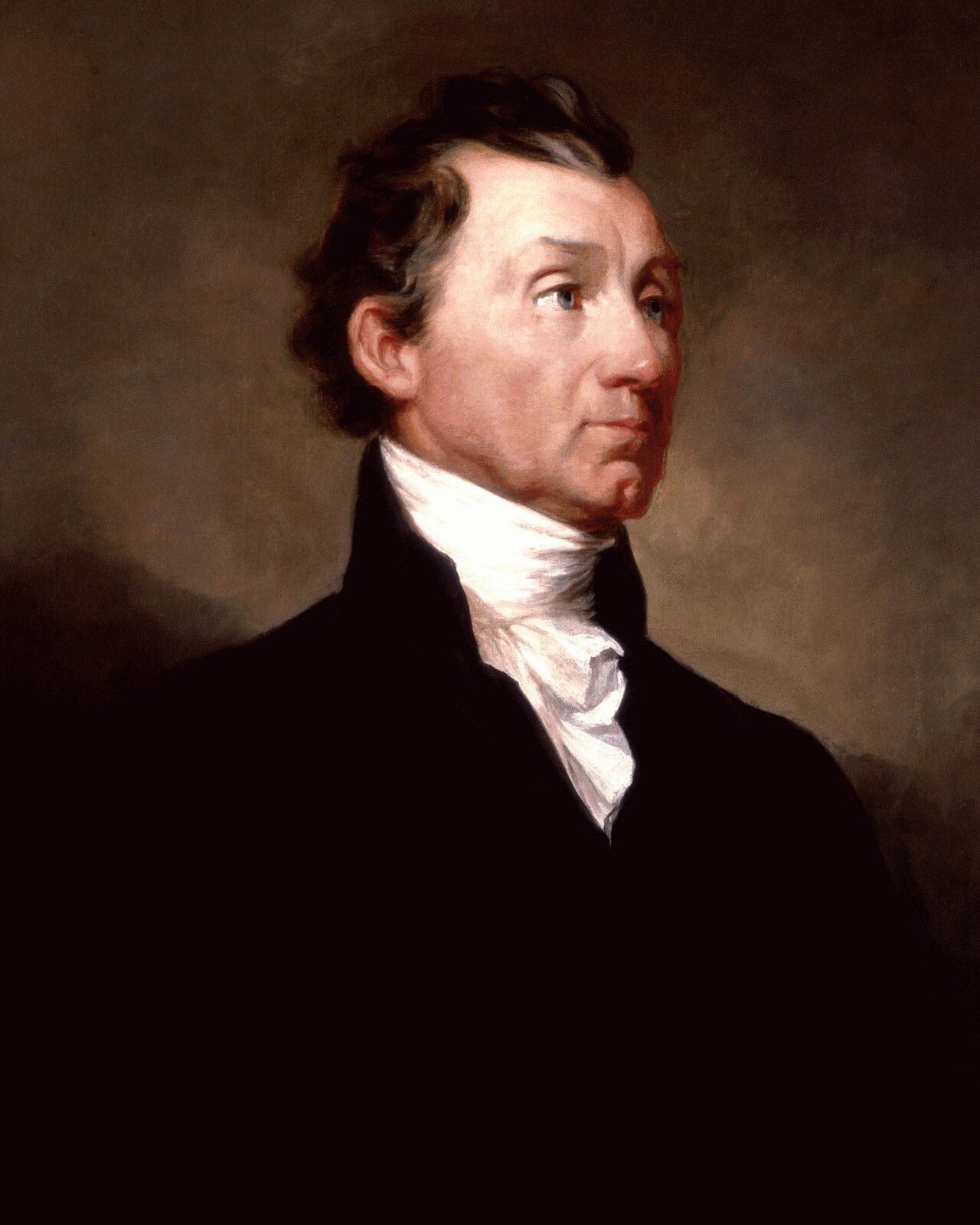
At a Glance
- The setting
- 2 December 1823 — three paragraphs inside President James Monroe's seventh annual message to Congress
- The author behind it
- Secretary of State John Quincy Adams, who argued for a unilateral American statement rather than a joint one with Britain
- The first principle
- The American continents 'are henceforth not to be considered as subjects for future colonization by any European powers'
- The warning
- Any European attempt to extend its system to this hemisphere would be 'dangerous to our peace and safety'
- The bargain
- In exchange, the United States promised not to interfere in Europe's internal concerns or its existing colonies
- The afterlife
- Little enforced in 1823, the doctrine was revived in 1904 as the Roosevelt Corollary and invoked throughout the Cold War and after
Events on this day
- 1804Napoleon Bonaparte is crowned emperor in Notre Dame Cathedral, Paris, taking the crown from the hands of Pope Pius VII and placing it on his own head.
- 1823President James Monroe announces the principles known as the Monroe Doctrine in his annual message to Congress — the featured story above.
- 1859The abolitionist John Brown is hanged at Charles Town, Virginia, for his raid on the federal arsenal at Harpers Ferry — a death that makes him a martyr in the North and a warning in the South, seventeen months before the Civil War.
- 1932The first Test of the Bodyline Ashes series opens in Sydney; England's fast bowlers, aiming at Australian batsmen's bodies, win the series 4–1 and nearly break cricket's oldest relationship.
- 1942Beneath the stands of the University of Chicago's Stagg Field, Enrico Fermi's team achieves the first controlled, self-sustaining nuclear chain reaction — the dawn of the atomic age, reported to Washington in the coded words 'the Italian navigator has landed.'
- 1954The U.S. Senate votes 65–22 to condemn Senator Joseph McCarthy for conduct unbecoming a senator, breaking the power of the anti-communist crusade that bore his name.
- 1961Fidel Castro declares on Cuban television that he is a Marxist-Leninist, confirming Cuba's alignment with the Soviet bloc two years after his revolution.
- 1970The United States Environmental Protection Agency opens its doors, created by President Nixon as pollution becomes a first-rank political issue.
- 1971Six Gulf emirates unite to form the United Arab Emirates, a federation whose oil wealth will give it an outsized place in the world economy; a seventh joins the following year.
- 1982At the University of Utah, Barney Clark receives the Jarvik-7, the first permanent artificial heart implanted in a human being; he survives 112 days.
- 1999Scientists announce in Nature that they have sequenced human chromosome 22, the first human chromosome to be fully decoded by the Human Genome Project.
- 2001Enron files for bankruptcy protection, then the largest corporate failure in American history, after revelations of massive accounting fraud at the energy giant once ranked the seventh-largest U.S. corporation.
Born on this day
- 1859Georges Seurat — French painter who built shimmering canvases from tiny dots of separate colour, the pointillist of A Sunday on La Grande Jatte.
- 1946Gianni Versace — Italian fashion designer who built a global luxury house on bold prints and Medusa glamour before his murder in 1997.
- 1968Lucy Liu — American actress of Charlie's Angels, Kill Bill and Elementary.
- 1981Britney Spears — American singer whose debut made her the defining pop star of the turn of the century.
Died on this day
- 1547Hernán Cortés — Spanish conquistador who destroyed the Aztec Empire and conquered Mexico for Spain, dead near Seville at about 62.
- 1814Marquis de Sade — French aristocrat and writer who spent some 32 years in prisons and asylums for his scandalous works, and left his name to sadism.
- 1993Pablo Escobar — Colombian cocaine kingpin, once among the richest criminals alive, shot dead by security forces on a Medellín rooftop the day after his 44th birthday.
The featured story: the Monroe Doctrine is announced, 2 December 1823
In the autumn of 1823 the map of the Americas had been redrawn in a generation. Spain's mainland empire had broken apart into new republics, and Washington had recognised them; but in Europe the victorious monarchies of the Holy Alliance were restoring kings by force, and there were real fears they might help Spain try to win its colonies back. Russia, meanwhile, was pushing claims down the Pacific coast of North America. Britain, which traded profitably with the new republics, proposed that London and Washington issue a joint warning to Europe. It was Monroe's secretary of state, John Quincy Adams, who argued the United States should speak alone — in his famous image, it would be more candid and dignified to declare American principles outright than to come in 'like a cock-boat in the wake of the British man-of-war.'
The doctrine arrived, as the National Archives has noted, buried in a routine annual message. On 2 December 1823 Monroe's seventh message to Congress ran to some 6,400 words of ordinary business, but inside it were three paragraphs that made history. The American continents, 'by the free and independent condition which they have assumed and maintain, are henceforth not to be considered as subjects for future colonization by any European powers.' Any attempt by the allied powers of Europe to extend their political system to any portion of the hemisphere would be considered 'dangerous to our peace and safety.' And interference with the hemisphere's independent governments would be viewed as 'the manifestation of an unfriendly disposition toward the United States.'
The other half of the doctrine is the half most often forgotten. Monroe promised that the United States would not interfere 'in the internal concerns of any of its powers' in Europe, would treat existing European colonies in the Americas as they were, and would stay out of European wars. It was, in form, a bargain: Europe keeps out of the Americas; America keeps out of Europe. In 1823 the United States had neither the navy nor the army to enforce the claim, and everyone in Europe knew it — the doctrine rested in practice on the British fleet, whose interest in keeping rivals out of Latin America matched Washington's words.
Yet words outlast fleets. The statement was not even called the Monroe Doctrine until decades later, but once named it became the charter of American hemispheric policy: invoked against French intervention in Mexico in the 1860s, expanded by Theodore Roosevelt's 1904 corollary claiming a right to intervene in Latin America itself, deployed through the Cold War against Soviet influence in Cuba and Central America, and formally renounced and half-revived by secretaries of state in the twenty-first century. Few paragraphs in any annual message have been quoted, stretched and argued over for so long — the cock-boat ended up claiming an ocean.
Why this date matters
December 2 is a day of declarations that outgrow their authors. Monroe's three paragraphs claim a hemisphere his country cannot yet police; Fermi's coded telegram announces a force no one can yet control; Napoleon, crowned on this day, discovers an empire is easier to seize than to keep; and Enron, filing for bankruptcy on the same date 197 years later, shows how fast a declared giant can vanish when the numbers prove false. The date keeps asking the same question: how long can a claim on the future hold?
Sources
- Encyclopaedia Britannica — On This Day: December 2
- HISTORY — What Happened on December 2
- National Museum of American Diplomacy — The Monroe Doctrine: The United States and Latin American Independence
- HISTORY — First nuclear chain reaction (December 2, 1942)
The facts on this page were checked against these sources on 19 November 2026. The History Trail's permanent pages are researched and written for this site; the live profiles elsewhere on The History Trail are assembled automatically from Wikipedia and Wikidata.
About the Author
Researched and written by the The History Trail Editorial Team — the accountable editorial function behind this site's permanent story pages. The team works from the published sources cited on each page; it does not invent historians, reviewers or credentials, and it corrects errors openly.
Fact Check
Every load-bearing fact on this page traces to one of the sources listed above, and significant claims link to their source in the text. Our checking method is described on the methodology page; errors can be reported via the corrections page.
Sources & Citations
Cite this page as: The History Trail Editorial Team, The History Trail — this article's title, publication and update dates are shown beneath its headline. The full source list appears under Sources above; the site's source standards are on the sources page.