
Years
1973 in History
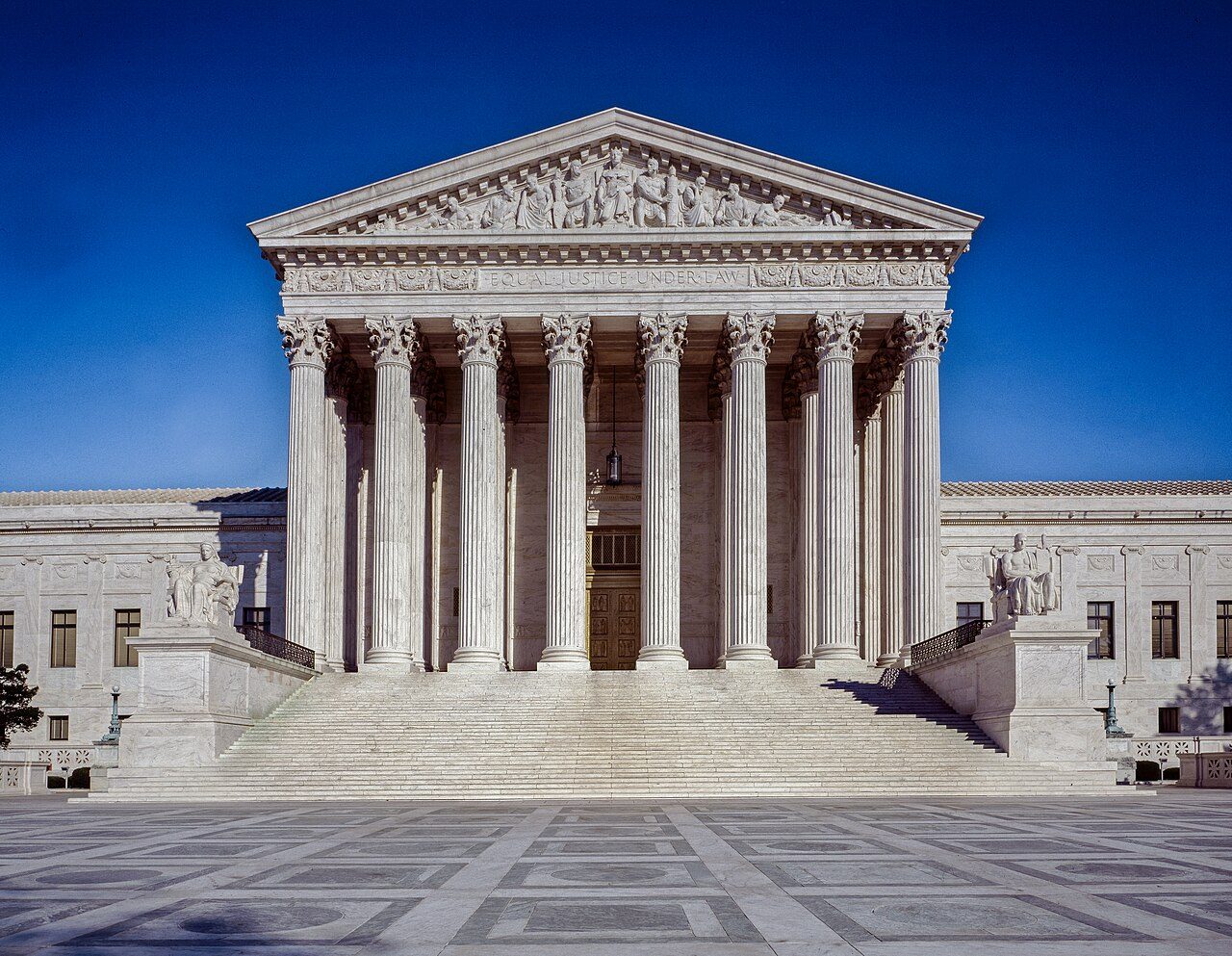
1973 is remembered for a single crowded January and a turbulent October: the Supreme Court decided Roe v. Wade on 22 January, the Paris Peace Accords ended direct American involvement in Vietnam days later, and in October the Yom Kippur War, an Arab oil embargo and Vice President Agnew's resignation arrived together — while Watergate's televised hearings tightened around President Nixon.
At a Glance
- Defining event
- Roe v. Wade decided 7–2 on 22 January, protecting abortion rights nationwide until 2022
- War ended
- Paris Peace Accords signed 27 January; last U.S. combat troops leave Vietnam 29 March
- Middle East
- Yom Kippur War begins 6 October; Arab oil embargo follows on 17 October
- Scandal
- Senate Watergate hearings open 17 May; the White House taping system is revealed 16 July
- First mobile call
- A Motorola engineer makes the first handheld mobile telephone call, 3 April
- Remembered for
- Rights decided, a war closed, and an energy crisis that changed the West
The defining story: Roe v. Wade and the end of a war
On 22 January 1973 the United States Supreme Court handed down one of the most consequential decisions in its history. In Roe v. Wade, by seven votes to two, the Court struck down a Texas law that banned abortion except to save the mother's life, and held that the right to privacy protected by the Fourteenth Amendment was broad enough to cover a woman's decision to end a pregnancy. Because the ruling rested on the Constitution, it reshaped abortion law across America, and it governed for nearly fifty years, until the decision was overturned in 2022. The same day, former president Lyndon B. Johnson died in Texas at 64 — the president who had escalated the war that was about to end.
The very next day, 23 January, President Nixon announced on television that Henry Kissinger and Le Duc Tho had reached agreement to end the Vietnam War and bring, in his words, peace with honour. The accords were initialled in Paris that day and formally signed on 27 January, setting a ceasefire, American withdrawal and prisoner release within sixty days. On 17 March photographer Slava Veder captured Burst of Joy at Travis Air Force Base, the era's defining homecoming photograph of a released American prisoner, and on 29 March the last American combat troops left South Vietnam as Hanoi released the last of its acknowledged prisoners. America's direct war in Vietnam was over.
The scandal that would consume Nixon advanced all year in parallel. The televised Senate Watergate hearings opened on 17 May, and on 16 July testimony revealed the existence of the president's secret White House taping system — the revelation that doomed his presidency. On 10 October Vice President Spiro Agnew resigned and pleaded no contest to tax evasion, a plea deal that dropped corruption charges; his replacement by Gerald Ford set up Ford's succession to the presidency in 1974. Ten days later, in the Saturday Night Massacre of 20 October, Nixon had Watergate prosecutor Archibald Cox fired, and his attorney general and deputy resigned rather than comply.
October also remade the world economy. At two in the afternoon on 6 October, Yom Kippur, Egypt crossed the Suez Canal and Syria attacked the Golan Heights, achieving almost complete surprise; the nineteen-day war ended under United Nations Resolution 338 and led eventually to Egyptian-Israeli peace. On 17 October Arab members of OPEC announced an oil embargo against countries supporting Israel, triggering the 1970s energy crisis. Between those bookends the year also found room for Secretariat's 31-length Belmont victory on 9 June, completing the first Triple Crown in 25 years, the opening of the Sydney Opera House on 20 October, and, on 3 April, the first handheld mobile telephone call — placed by a Motorola engineer to a rival at Bell Laboratories.
Timeline of 1973
- 22 January
The Supreme Court decides Roe v. Wade, 7–2, striking down the Texas abortion ban; former president Lyndon B. Johnson dies the same day.
- 27 January
The Paris Peace Accords are formally signed, ending direct American participation in the Vietnam War.
- 29 March
The last U.S. combat troops leave South Vietnam, and Hanoi releases the last of its acknowledged American prisoners.
- 3 April
A Motorola engineer makes the first handheld mobile telephone call, ringing a rival at AT&T's Bell Laboratories.
- 4 April
The World Trade Center is officially opened in New York, its Twin Towers then the tallest buildings in the world.
- 17 May
The televised Senate Watergate hearings open in Washington.
- 9 June
Secretariat wins the Belmont Stakes by 31 lengths to complete the Triple Crown, the first in 25 years.
- 16 July
Senate testimony reveals the existence of President Nixon's secret White House taping system.
- 11 September
Chile's armed forces overthrow President Salvador Allende, who dies as the presidential palace in Santiago is bombed.
- 6 October
Egypt and Syria attack Israel on Yom Kippur, beginning the October War.
- 10 October
Vice President Spiro Agnew resigns and pleads no contest to tax evasion.
- 17 October
Arab members of OPEC announce an oil embargo against countries supporting Israel, triggering the energy crisis.
- 20 October
The Sydney Opera House opens in Sydney; in Washington, the Saturday Night Massacre removes prosecutor Archibald Cox.
- 28 December
President Nixon signs the Endangered Species Act, the strongest wildlife-protection law in American history.
Why 1973 still matters
Roe v. Wade organised American argument for half a century: decided in a single January morning, it was cited, defended and attacked until its overturning in 2022 returned abortion law to the states — a reminder that constitutional settlements can be both durable and reversible. The Paris Accords closed America's longest war to that point without settling Vietnam's fate, which was decided by armies in 1975; the photograph Burst of Joy, not any treaty text, became the war's American closing image.
The October war changed two regions at once. Israel's near-defeat destroyed its aura of invincibility and, paradoxically, made the Egyptian-Israeli peace of 1979 possible, while the embargo taught Western economies that energy was a weapon — queues, inflation and a permanent new attention to oil followed. In Chile, the coup of 11 September installed Pinochet and became a byword for democracy overthrown with foreign sympathy, argued over ever since.
Watergate's machinery, meanwhile, ground toward its conclusion: the tapes revealed in July 1973 were the evidence that would force a resignation the following August, and Agnew's fall quietly placed Gerald Ford one heartbeat — then one resignation — from the presidency. Even the year's diversions endured: hip-hop was born at a Bronx party on 11 August, the mobile phone was born in a single call in April, and the Endangered Species Act signed in December still governs American conservation. Few years pack so many beginnings and endings into twelve months. Egypt's engineers had opened the Bar Lev Line's massive sand walls with water, not explosives — high-pressure hoses washed away dozens of passages in a few hours, a solution so simple that Israeli planners, expecting blasting and bridging under fire, had not prepared for it.
1973 on The History Trail
Six featured stories belong to 1973 on The History Trail, from the Supreme Court to Sydney Harbour.
- January 22 in History — Roe v. Wade is decided by the U.S. Supreme Court, seven votes to two.
- January 23 in History — Nixon announces agreement on the Paris Peace Accords to end the Vietnam War.
- June 9 in History — Secretariat wins the Belmont Stakes by 31 lengths and takes the Triple Crown.
- October 6 in History — The Yom Kippur War begins with Egyptian and Syrian attacks on Israel.
- October 10 in History — Vice President Spiro Agnew resigns and pleads no contest to tax evasion.
- October 20 in History — The Sydney Opera House opens — and Washington sees the Saturday Night Massacre.
- Vietnam War — The war whose direct American chapter closed with the Paris Accords of 1973.
Sources
- Encyclopaedia Britannica — On This Day: January 22
- HISTORY — Roe v. Wade: Decision, Summary & Overturned
- Office of the Historian, U.S. Department of State — Foreign Relations of the United States, 1969–1976, Editorial Note on the Paris Peace Accords
- Encyclopaedia Britannica — On This Day: January 27
- Encyclopaedia Britannica — On This Day: March 29
- Encyclopaedia Britannica — On This Day: June 9
The facts on this page were checked against these sources on 19 November 2026. The History Trail's permanent pages are researched and written for this site; the live profiles elsewhere on The History Trail are assembled automatically from Wikipedia and Wikidata.
About the Author
Researched and written by the The History Trail Editorial Team — the accountable editorial function behind this site's permanent story pages. The team works from the published sources cited on each page; it does not invent historians, reviewers or credentials, and it corrects errors openly.
Fact Check
Every load-bearing fact on this page traces to one of the sources listed above, and significant claims link to their source in the text. Our checking method is described on the methodology page; errors can be reported via the corrections page.
Sources & Citations
Cite this page as: The History Trail Editorial Team, The History Trail — this article's title, publication and update dates are shown beneath its headline. The full source list appears under Sources above; the site's source standards are on the sources page.