
Years
1924 in History
1924 is remembered for a death that opened an era: on 21 January Vladimir Lenin, architect of the Bolshevik Revolution and first leader of the Soviet Union, died at 53, leaving a state built around one man to be fought over by his successors. The same year lost George Mallory and Andrew Irvine high on Mount Everest, heard Gershwin's Rhapsody in Blue for the first time, granted United States citizenship to Native Americans born in the country, and closed with the announcement that the universe contains galaxies far beyond our own.
At a Glance
- Defining event
- The death of Vladimir Lenin, 21 January, opens the Soviet succession struggle
- Also lost
- Woodrow Wilson, the wartime American president, dies on 3 February
- The mountain
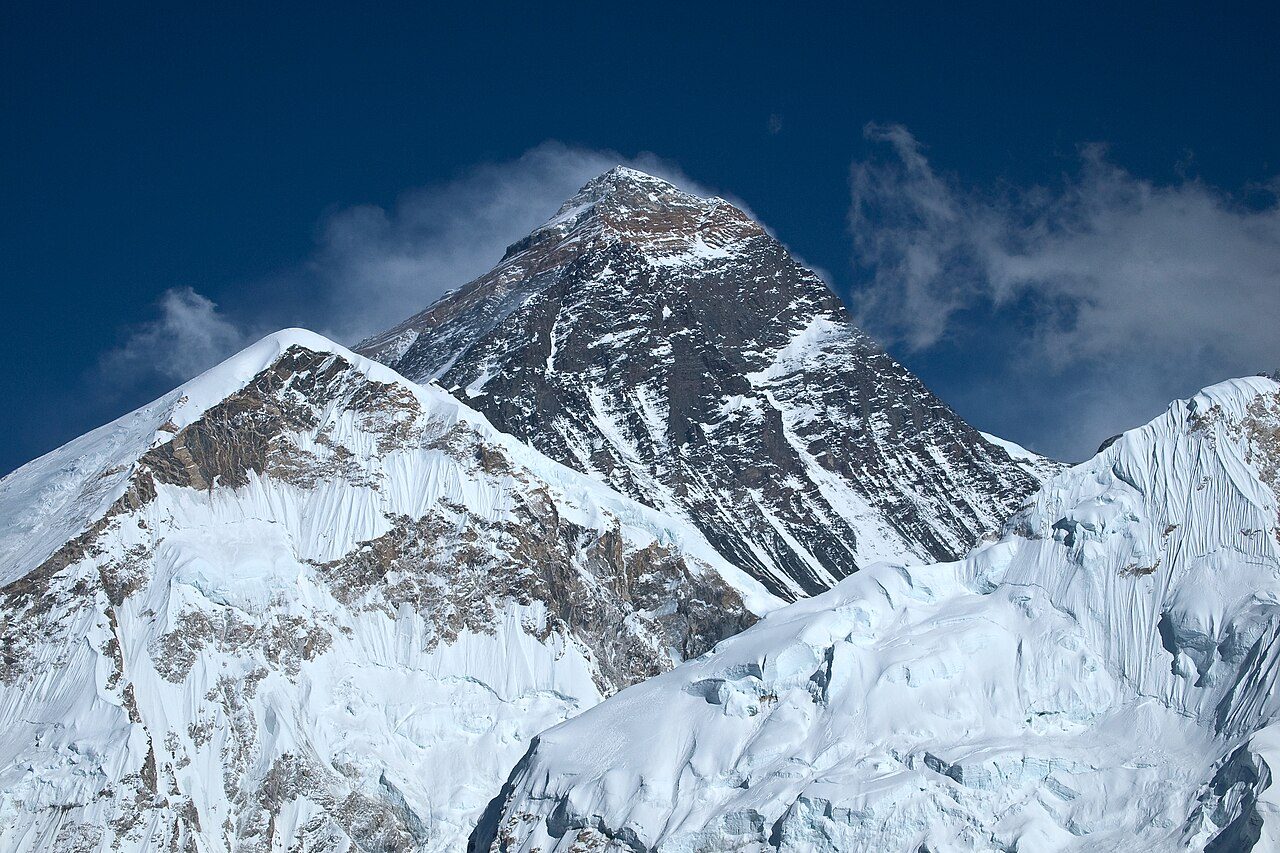
- George Mallory and Andrew Irvine are last seen alive high on Everest, 8 June; Mallory's body was found in 1999
- Citizenship
- The Indian Citizenship Act, signed 2 June, grants U.S. citizenship to Native Americans born in the country
- In science
- Edwin Hubble's discovery of galaxies beyond the Milky Way is announced, 30 December
- First heard
- Gershwin's Rhapsody in Blue is performed for the first time in New York, 12 February
The defining story: the death of Lenin
The Soviet Union was two years old when it lost the only leader it had known. Vladimir Lenin — architect of the Bolshevik Revolution and first head of the Soviet state — died on 21 January 1924, aged 53. The state he had built, formally founded at the end of 1922, had been designed by argument as much as by decree, and his last political fight had been over its shape. His death left no settled successor and no settled mechanism for choosing one: it opened the succession struggle from which Joseph Stalin would eventually emerge, and turned Lenin himself into the embalmed icon of the state he founded.
Thirteen days later the other great wartime leader of the revolutionary years died too. Woodrow Wilson, the twenty-eighth president of the United States, who had led his country through the First World War and staked his health on the League of Nations America refused to join, died on 3 February at 67. Between the two deaths, on 3 January, Howard Carter's team in the Valley of the Kings uncovered the stone sarcophagus of Tutankhamun, two years after entering the tomb — the patient sequel to 1923's sensation, as the nested shrines gave up the king's coffins layer by layer.
The year's boldest gamble was made on a mountain. On 8 June George Mallory and Andrew Irvine, British climbers on the third British Everest expedition, were last seen alive high on Mount Everest, going strongly for the summit. They never returned, and are presumed to have died that day. Whether they reached the top — twenty-nine years before Hillary and Tenzing's confirmed ascent — has never been settled; Mallory's body was found on the mountain only in 1999, seventy-five years later, and the question his disappearance posed is still open.
At home in America the year mixed reform, appointment and sensation. On 2 June President Calvin Coolidge signed the Indian Citizenship Act, granting United States citizenship to Native Americans born in the country. On 10 May J. Edgar Hoover was appointed head of the Bureau of Investigation, beginning a tenure at the FBI that would last 48 years. On 1 April, in Munich, Adolf Hitler was sentenced to five years in prison for the Beer Hall Putsch; he served nine months and wrote much of Mein Kampf behind bars. And the year closed by enlarging everything: on 30 December the announcement of Edwin Hubble's work established that galaxies exist beyond the Milky Way, transforming the scale of the known universe.
Timeline of 1924
- 3 January
Howard Carter's team uncovers the stone sarcophagus of Tutankhamun in the Valley of the Kings, two years after entering the tomb.
- 21 January
Vladimir Lenin dies at 53 — architect of the Bolshevik Revolution and first leader of the Soviet Union.
- 3 February
Woodrow Wilson dies at 67 — the twenty-eighth president of the United States, who led the country through the First World War.
- 12 February
George Gershwin's Rhapsody in Blue is performed for the first time, at Aeolian Hall in New York City, with the composer at the piano.
- 1 April
Adolf Hitler is sentenced to five years in prison for the Beer Hall Putsch; he serves nine months and writes much of Mein Kampf behind bars.
- 10 May
J. Edgar Hoover is appointed head of the Bureau of Investigation, beginning his 48-year tenure at the FBI.
- 2 June
President Calvin Coolidge signs the Indian Citizenship Act, granting United States citizenship to Native Americans born in the country.
- 8 June
George Mallory and Andrew Irvine are last seen alive high on Mount Everest; they are presumed to have died that day.
- 28 September
United States Army Air Service pilots land at Seattle, completing the first aerial circumnavigation of the world.
- 1 October
Jimmy Carter is born — the 39th president of the United States and later a Nobel Peace Prize laureate.
- 4 November
Nellie Tayloe Ross of Wyoming and Miriam Ferguson of Texas are elected the first women governors in the United States.
- 27 November
The first Macy's Christmas Parade — later the Macy's Thanksgiving Day Parade — is held in New York City, with live animals from Central Park Zoo.
- 30 December
Astronomer Edwin Hubble's discovery of galaxies beyond the Milky Way is announced, transforming the scale of the known universe.
Why 1924 still matters
Lenin's death matters because of what the succession produced. The Soviet state had been built by a revolutionary generation around a single dominant figure; removing him in 1924 set off the contest that carried Stalin to absolute power, with consequences — collectivisation, terror, and the Soviet Union's central role in the century's wars — that ran for decades. The mausoleum cult that followed made Lenin's body itself an instrument of the state, and the argument over his legacy was still live when the Union dissolved almost seventy years later.
The year's other stories each opened a long account. Hubble's galaxies ended the idea that the Milky Way was the universe, and every cosmology since has been built on the vastly larger stage announced in December 1924. Hoover's appointment began a 48-year tenure that made the FBI a power in American life long after the presidents who served above him were gone. The Indian Citizenship Act extended citizenship to the country's first peoples — a legal milestone whose promise of full voting rights took decades more to honour in practice.
And Everest kept its question. Mallory and Irvine's disappearance created mountaineering's most durable mystery: two men seen high on the mountain, a summit possibly reached a generation before the confirmed first ascent, and a body found in 1999 that answered everything except the one thing everyone wanted to know. 1924 shrank no horizons; it widened the universe, lengthened a bureaucrat's reign, and left a mountain holding its secret.
1924 on The History Trail
Lenin's death and Mallory's mountain frame this year on The History Trail, with Hubble's universe beside them.
- January 21 in History — Lenin dies in 1924, on the date Louis XVI went to the scaffold in 1793.
- June 8 in History — Mallory and Irvine are last seen alive on Everest in 1924.
- December 30 in History — Hubble's galaxies are announced in 1924, two years after the Soviet Union was founded on this date.
- January 3 in History — Carter's team uncovers Tutankhamun's stone sarcophagus in 1924.
- September 28 in History — American pilots complete the first aerial circumnavigation of the world in 1924.
- Mount Everest — Surveyed, named and first climbed in 1953 — the mountain Mallory and Irvine attempted in 1924.
Sources
- Encyclopaedia Britannica — On This Day: January 21
- Encyclopaedia Britannica — On This Day: February 3
- Encyclopaedia Britannica — On This Day: June 8
- Encyclopaedia Britannica — On This Day: June 2
- Encyclopaedia Britannica — On This Day: May 10
- Encyclopaedia Britannica — On This Day: December 30
- Encyclopaedia Britannica — On This Day: January 3
The facts on this page were checked against these sources on 19 November 2026. The History Trail's permanent pages are researched and written for this site; the live profiles elsewhere on The History Trail are assembled automatically from Wikipedia and Wikidata.
About the Author
Researched and written by the The History Trail Editorial Team — the accountable editorial function behind this site's permanent story pages. The team works from the published sources cited on each page; it does not invent historians, reviewers or credentials, and it corrects errors openly.
Fact Check
Every load-bearing fact on this page traces to one of the sources listed above, and significant claims link to their source in the text. Our checking method is described on the methodology page; errors can be reported via the corrections page.
Sources & Citations
Cite this page as: The History Trail Editorial Team, The History Trail — this article's title, publication and update dates are shown beneath its headline. The full source list appears under Sources above; the site's source standards are on the sources page.