
On This Day
January 21 in History
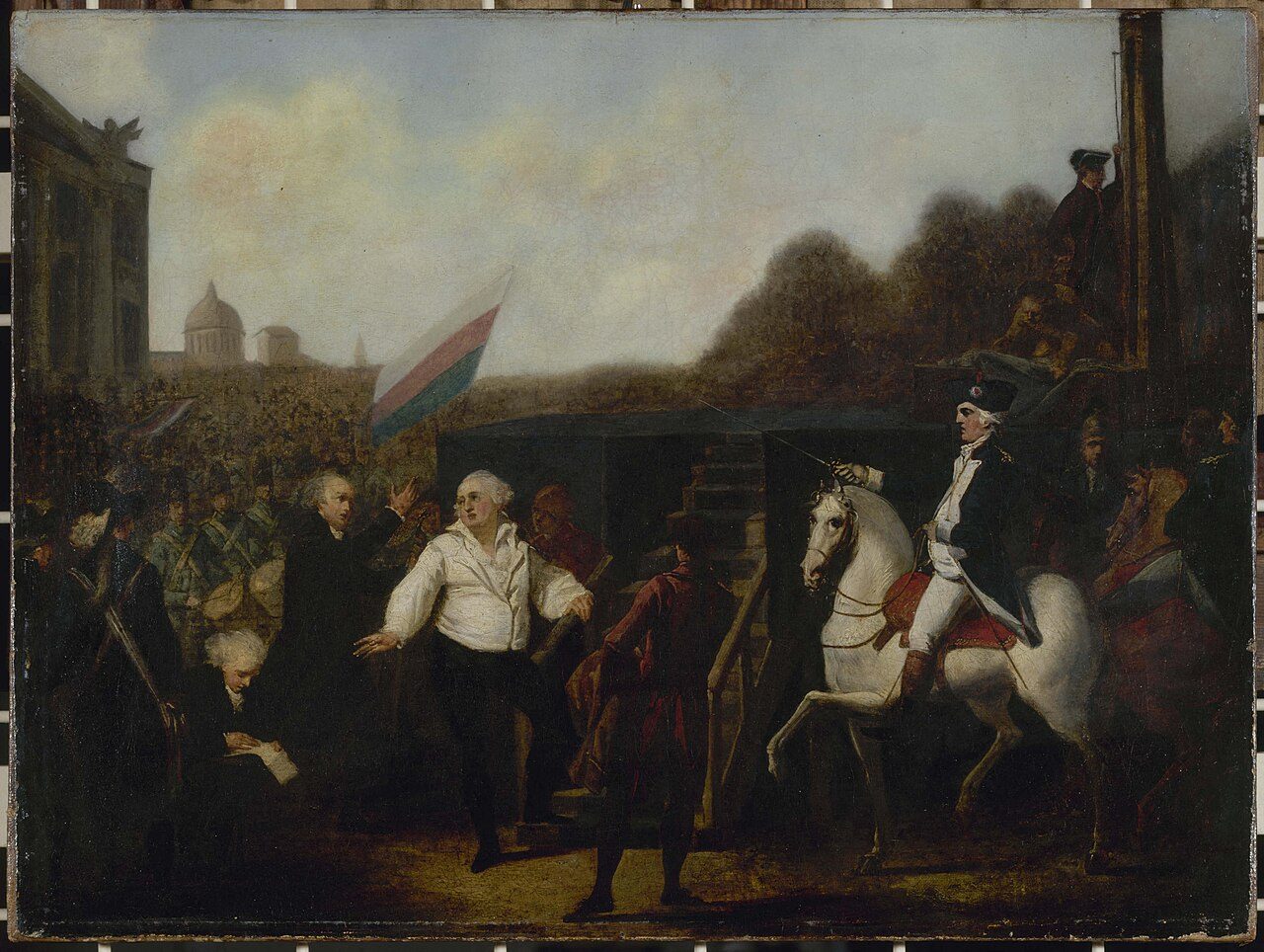
On 21 January 1793 Louis XVI, the deposed king of France, was guillotined in Paris before a crowd of thousands — tried as 'Citizen Capet', convicted of treason by the National Convention, and executed in the square now called the Place de la Concorde. January 21 is also the day the first Concorde passengers flew, the first nuclear submarine was launched, and Lenin died in 1924.
Choose another date: open the On This Day calendar to browse events, births and deaths for any day of the year.
At a Glance
- When and where
- 21 January 1793, at the Place de la Révolution (today's Place de la Concorde), Paris
- The condemned
- Louis XVI, king of France until the monarchy was abolished on 21 September 1792
- Tried as
- 'Citizen Louis Capet', before the National Convention sitting as his court
- The verdict
- Guilty of treason; the Convention voted for death by 387 votes to 334, and rejected a reprieve
- The executioner
- Charles-Henri Sanson, the former royal executioner
- The hour
- 10:22 a.m., by contemporary accounts
- What followed
- War with Britain and Spain, the Terror — and Marie Antoinette's execution nine months later
Events on this day
- 1525The Swiss Anabaptist movement is founded in Zurich, as Conrad Grebel and companions baptise one another — breaking with both Rome and the state churches.
- 1793Louis XVI is executed by guillotine in Paris — the featured story above.
- 1910Angel Island, the 'Ellis Island of the West', opens in San Francisco Bay as the main entry station for Asian immigrants to America.
- 1919Ireland's Sinn Féin deputies meet in Dublin as the first Dáil and declare an Irish republic, opening the War of Independence.
- 1950Alger Hiss, the former U.S. State Department official, is convicted of perjury in the era's defining espionage case.
- 1954The USS Nautilus, the world's first nuclear-powered submarine, is launched at Groton, Connecticut, by First Lady Mamie Eisenhower.
- 1968The Battle of Khe Sanh begins in Vietnam, one of the war's longest and most controversial engagements.
- 1968A U.S. B-52 carrying four hydrogen bombs crashes onto the ice near Thule, Greenland, scattering radioactive material.
- 1976Concorde enters commercial service, with simultaneous flights from London and Paris — the age of passenger supersonic travel begins.
- 1977President Jimmy Carter pardons most Vietnam War draft evaders, fulfilling a campaign promise on his first full day in office.
- 2017The Women's March brings hundreds of thousands to Washington and millions worldwide, among the largest single-day protests in U.S. history.
Born on this day
- 1738Ethan Allen — American frontiersman, leader of the Green Mountain Boys and founder of Vermont.
- 1824Stonewall Jackson — Confederate general of the American Civil War, Lee's most brilliant and eccentric lieutenant.
- 1829Oscar II — king of Sweden and Norway, patron of learning who reigned over a peaceful half-century.
- 1905Christian Dior — French couturier whose 'New Look' of 1947 remade postwar fashion.
- 1940Jack Nicklaus — American golfer, winner of a record 18 major championships.
- 1953Paul Allen — American entrepreneur who co-founded Microsoft with Bill Gates.
Died on this day
- 1118Paschal II — pope through the investiture controversy, who died in a Rome still contested with emperors.
- 1924Vladimir Lenin — architect of the Bolshevik Revolution and first leader of the Soviet Union, dead at 53.
- 1950George Orwell — English writer of Animal Farm and Nineteen Eighty-Four, dead of tuberculosis at 46.
- 1959Cecil B. DeMille — American director of The Ten Commandments, a founding showman of Hollywood.
- 2020Terry Jones — Welsh comedian of Monty Python and historian of the Middle Ages.
The featured story: Louis XVI is executed, 21 January 1793
Louis XVI had been a prisoner since the Paris crowd stormed the Tuileries in August 1792, and a private citizen — in the Revolution's pointed phrase, 'Citizen Capet' — since the monarchy was abolished that September. In December the National Convention put him on trial itself, deputies acting as judges of the man who had summoned their predecessors to Versailles in 1789. He was charged with treason: with conspiring against the Revolution, corresponding with foreign enemies, and shedding French blood. His lawyers argued that the constitution of 1791 had made the king inviolable. The Convention was unmoved.
The votes in mid-January were counted name by name, each deputy mounting the tribune to pronounce. On guilt, the verdict was near-unanimous. On the sentence, as Britannica's history of France records, death carried by 387 votes to 334 — a margin that included the king's own cousin, Philippe d'Orléans, voting for death. A final vote rejected any reprieve by 380 to 310. On the morning of 21 January 1793, Louis was driven through Paris in a closed carriage, past streets lined with troops, to the Place de la Révolution, where the guillotine stood near the pedestal of his grandfather's demolished statue.
He behaved, by almost all accounts, with complete composure. He had heard mass, made his will and taken leave of his family the night before. On the scaffold he tried to address the crowd — the words reported for him begin 'I die innocent' and pardon his enemies — before a roll of drums, ordered to drown his voice, cut him short. At 10:22 the blade fell. The executioner was Charles-Henri Sanson, who had served as royal executioner to the king he now killed. Louis was 38 years old.
The execution crossed the Revolution's point of no return. Within weeks France was at war with Britain and Spain as well as Austria and Prussia; within months the Republic descended into the Terror that would consume its own makers, and in October Marie Antoinette followed her husband to the same scaffold. Europe's monarchies now knew the Revolution would kill a king and call it justice. Every revolution since has lived in the shadow of that January morning — and so has every argument about whether it was justice, murder, or both.
Why this date matters
January 21 is the Revolution's date: a king executed in 1793, a republic declared in Ireland in 1919, Lenin dead in 1924, millions marching in 2017. Its other entries run on new machines and new powers — a nuclear submarine in 1954, a supersonic airliner in 1976, bombs lost on Greenland ice in 1968. Again and again this is the day the old order is formally ended and something faster, louder and less certain takes its place.
Sources
- Encyclopaedia Britannica — On This Day: January 21
- HISTORY — What Happened on January 21
- Encyclopaedia Britannica — Louis XVI
- Encyclopaedia Britannica — History of France: The French Revolution and Napoleon, 1789–1815
The facts on this page were checked against these sources on 19 November 2026. The History Trail's permanent pages are researched and written for this site; the live profiles elsewhere on The History Trail are assembled automatically from Wikipedia and Wikidata.
About the Author
Researched and written by the The History Trail Editorial Team — the accountable editorial function behind this site's permanent story pages. The team works from the published sources cited on each page; it does not invent historians, reviewers or credentials, and it corrects errors openly.
Fact Check
Every load-bearing fact on this page traces to one of the sources listed above, and significant claims link to their source in the text. Our checking method is described on the methodology page; errors can be reported via the corrections page.
Sources & Citations
Cite this page as: The History Trail Editorial Team, The History Trail — this article's title, publication and update dates are shown beneath its headline. The full source list appears under Sources above; the site's source standards are on the sources page.