
Years
1908 in History
1908 is remembered above all for 1 October, when the Ford Model T went on sale in the United States and began the era of the affordable family car. The same year flattened some 2,000 square kilometres of Siberian forest at Tunguska, poisoned the road to war with the Bosnian Crisis, ended Leopold II's Congo, and closed with Europe's deadliest recorded earthquake at Messina.
At a Glance
- Defining event
- The Ford Model T goes on sale, 1 October 1908, beginning the era of the affordable family car; 15,007,034 will be built by 1927
- Explosion of the year
- The Tunguska event, 30 June: a colossal explosion flattens some 2,000 square kilometres of Siberian forest, the largest impact event in recorded history
- Crisis of the year
- Austria-Hungary annexes Bosnia and Herzegovina, 6 October, sparking the Bosnian Crisis
- Empire corrected
- After international outrage at Leopold II's atrocities, the Congo Free State is annexed to Belgium, 15 November
- Disaster of the year
- The Messina earthquake, 28 December: about 80,000 killed, by the estimates of the time — Europe's deadliest recorded earthquake
- Flight proven
- Wilbur Wright makes the brothers' first public flight at Le Mans, 8 August, astonishing European spectators
The defining story: a car for the multitude
Ford introduced the Model T on 1 October 1908 as the fulfilment of Henry Ford's long-held ambition: a car inexpensive, efficient and reliable enough to put ownership within reach of far more people. The first production car had been completed days earlier, on 27 September, at the Piquette Avenue plant in Detroit. The Model T was thoroughly modern for its moment, and its production run tells the story the launch promised: built from 1908 to 1927, it reached a total of 15,007,034 cars, assembled eventually in nineteen other countries besides the United States. The pack's date record prices the launch at $825; the Model T comparison record on this site gives $850 as the 1908 launch price, falling below $300 by 1922 — the direction, at least, is not in dispute.
Two weeks before the launch, on 16 September, William C. Durant had founded the General Motors Corporation in Flint, Michigan, assembling Buick and other makers into an industrial giant. Between Ford's single perfected model and Durant's portfolio of brands, the American motor industry acquired in one autumn the two strategies between which it would divide the century. In August the Wright brothers had made their parallel claim on the other new machine: on 8 August Wilbur Wright made the brothers' first public flight, at a racecourse at Le Mans in France, astonishing European spectators who had doubted the Americans' claims.
The year's violence came from the sky, the earth and the chancelleries. On 30 June a colossal explosion flattened some 2,000 square kilometres of Siberian forest in the Tunguska event, the largest impact event in recorded history — a blast in an empty wilderness that has been argued about ever since. On 6 October Austria-Hungary annexed Bosnia and Herzegovina, sparking the Bosnian Crisis that poisoned relations before the First World War: the annexation loaded the provinces' status into the alliance quarrels of the years before 1914. And on 15 November, after international outrage at Leopold II's atrocities, the Congo Free State — the king's personal estate — was annexed to Belgium as the Belgian Congo.
The year ended as it had begun, with the ground moving. On 28 December an earthquake devastated Messina in Sicily and Reggio across the strait; about 80,000 people were killed, by the estimates of the time — Europe's deadliest recorded earthquake. Between the Siberian airburst that killed no one and the Sicilian quake that killed tens of thousands, 1908 measured both ends of nature's indifference.
Timeline of 1908
- 11 January
President Theodore Roosevelt proclaims the Grand Canyon a national monument, eleven years before it becomes a national park.
- 24 January
The Boy Scouts movement begins in England with the first instalment of Baden-Powell's Scouting for Boys.
- 5 March
Ernest Shackleton's Nimrod expedition party sets out to climb Mount Erebus in Antarctica, reaching the summit five days later.
- 10 May
The first Mother's Day observance is held in Grafton, West Virginia, organised by Anna Jarvis.
- 30 June
A colossal explosion flattens some 2,000 square kilometres of Siberian forest in the Tunguska event.
- 8 August
Wilbur Wright makes the Wright brothers' first public flight, at Le Mans in France.
- 27 August
Lyndon B. Johnson, 36th president of the United States, and Don Bradman, whose batting average of 99.94 remains sport's most famous statistic, are born on the same day.
- 16 September
William C. Durant founds the General Motors Corporation in Flint, Michigan.
- 1 October
The Ford Model T goes on sale in the United States, beginning the era of the affordable family car.
- 6 October
Austria-Hungary annexes Bosnia and Herzegovina, sparking the Bosnian Crisis.
- 15 November
After international outrage at Leopold II's atrocities, the Congo Free State is annexed to Belgium as the Belgian Congo.
- 26 December
Jack Johnson defeats Tommy Burns in Sydney to become the first African American world heavyweight boxing champion.
- 28 December
An earthquake devastates Messina and Reggio; about 80,000 people are killed, by the estimates of the time.
Why 1908 still matters
The Model T is the founding artefact of consumer modernity: not the first car, but the first built on the principle that a machine should be priced for the multitude and improved by being made cheaper, until its price fell below $300. Its success also froze its design — when the 15 millionth car left Highland Park in 1927 it was, underneath, fundamentally the car of 1908, and rivals offering more comfort, style and power had overtaken it, as this site's Model T comparison records. The lesson the industry learned from both halves of that story — democratise, then diversify — is the lesson General Motors, founded the same autumn, was built to teach.
The Bosnian annexation matters because of what it rehearsed. Austria-Hungary's seizure of Bosnia and Herzegovina humiliated Serbia and Russia, hardened the alliance blocs, and left the annexed provinces' grievances loaded for 1914. The Congo transfer matters for the opposite reason: it was an early case of international opinion forcing an empire to disgorge a colony — though annexation to Belgium changed the management more than the governed would have wished.
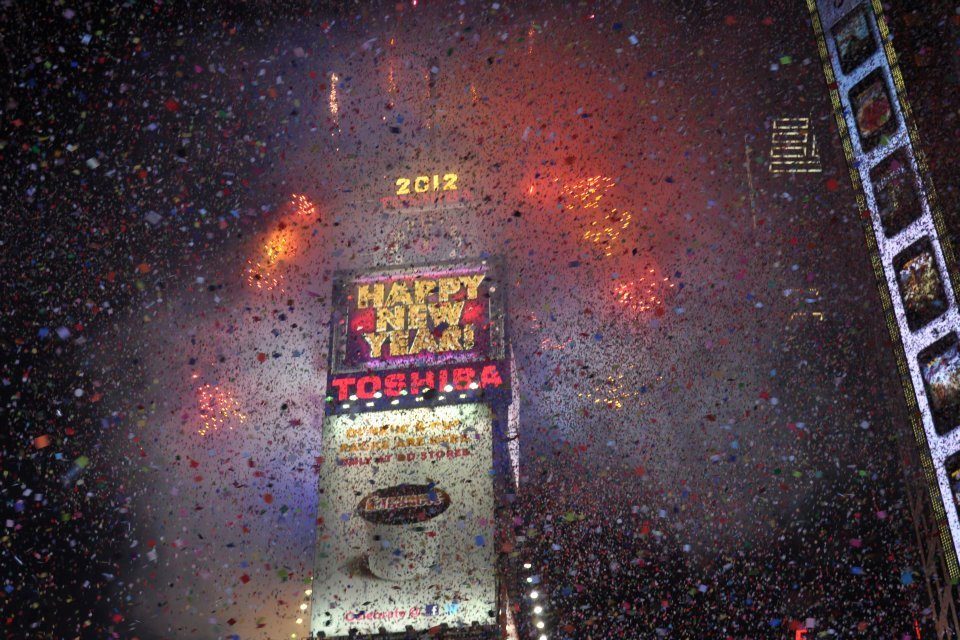
And 1908 began, in the most literal sense, with a ball falling in New York. The first Times Square ball had dropped on 31 December 1907 to signal the arrival of 1908 — 700 pounds of iron and wood lit by 100 bulbs, built after the city banned the fireworks that had rained hot ash on the crowds. The ceremony has run every year since except the wartime dimouts of 1942 and 1943. The year that put the world on wheels began with the world watching time descend, together, in public.
1908 on The History Trail
The Model T leads this year on The History Trail, with Tunguska, the Bosnian Crisis and the first full year of the Times Square ball.
- October 1 in History — The Ford Model T goes on sale in the United States.
- June 30 in History — The Tunguska explosion flattens some 2,000 square kilometres of Siberian forest.
- October 6 in History — Austria-Hungary annexes Bosnia and Herzegovina.
- August 8 in History — Wilbur Wright makes the brothers' first public flight, at Le Mans.
- December 28 in History — The Messina earthquake devastates Sicily and Calabria.
- Ford Model T vs Volkswagen Beetle — The two cars that chased the same democratic idea, a generation apart.
- The Times Square Ball Drop — The ritual whose first ball fell to signal the arrival of 1908.
Sources
- Encyclopaedia Britannica — On This Day: October 1
- Encyclopaedia Britannica — On This Day: June 30
- Encyclopaedia Britannica — On This Day: October 6
- Encyclopaedia Britannica — On This Day: November 15
- Encyclopaedia Britannica — On This Day: December 28
- Encyclopaedia Britannica — On This Day: September 16
- Encyclopaedia Britannica — On This Day: January 11
- Encyclopaedia Britannica — On This Day: January 24
The facts on this page were checked against these sources on 19 November 2026. The History Trail's permanent pages are researched and written for this site; the live profiles elsewhere on The History Trail are assembled automatically from Wikipedia and Wikidata.
About the Author
Researched and written by the The History Trail Editorial Team — the accountable editorial function behind this site's permanent story pages. The team works from the published sources cited on each page; it does not invent historians, reviewers or credentials, and it corrects errors openly.
Fact Check
Every load-bearing fact on this page traces to one of the sources listed above, and significant claims link to their source in the text. Our checking method is described on the methodology page; errors can be reported via the corrections page.
Sources & Citations
Cite this page as: The History Trail Editorial Team, The History Trail — this article's title, publication and update dates are shown beneath its headline. The full source list appears under Sources above; the site's source standards are on the sources page.