
Years
1893 in History
1893 is remembered above all for 19 September, when New Zealand's governor signed the Electoral Act and the colony became the first self-governing country in the world where all women, including Māori women, could vote in national elections. The same year opened the first Ferris wheel in Chicago, saw Hawaii's monarchy overthrown, and ended with Dvořák's New World Symphony triumphing in New York.
At a Glance
- Defining event
- New Zealand's Electoral Act signed 19 September 1893 — women vote in national elections, a world first
- The campaign
- Led by Kate Sheppard and the Women's Christian Temperance Union; the 1893 petition carried 31,872 signatures on a roll more than 270 metres long
- The first vote
- Women voted for the first time on 28 November 1893; 109,461 women enrolled, about 84 percent of those eligible
- The limit
- Women could vote but could not stand for Parliament until 1919; the first woman MP was elected in 1933
- Spectacle of the year
- The first Ferris wheel opens at the World's Columbian Exposition in Chicago, carrying up to 2,160 passengers at a time
- Opened the year
- Hawaii's monarchy is overthrown on 17 January as Queen Liliuokalani is forced to yield power
The defining story: New Zealand gives women the vote
On 19 September 1893, in Wellington, the governor, Lord Glasgow, signed a new Electoral Act into law, and a small colony at the edge of the world did something no self-governing country had done: it gave every woman the right to vote in national elections. As New Zealand's Ministry for Women records, the Act covered all adult women — including Māori women, who voted in the Māori electorates on the same terms as Māori men — at a time when Britain, the United States and the countries of Europe still refused women the franchise altogether, and most would go on refusing it for decades.
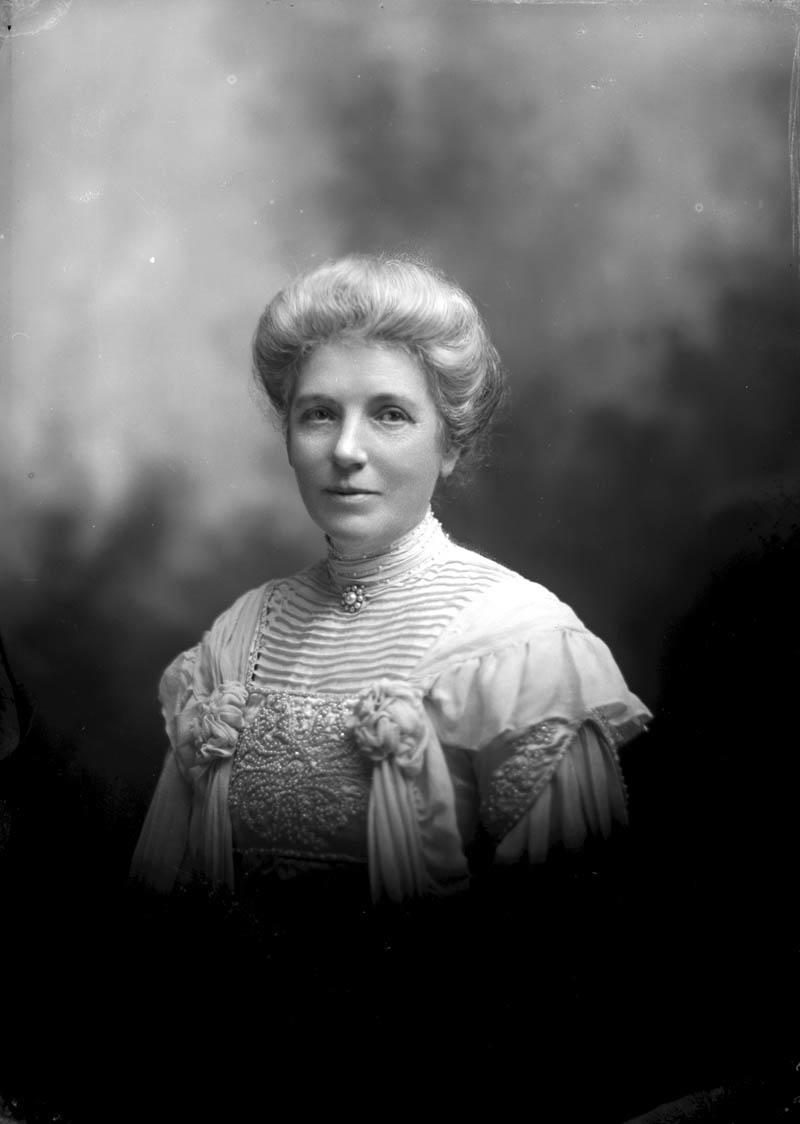
The victory was organised, above all, by Kate Sheppard. A Christchurch activist who became the franchise superintendent of the Women's Christian Temperance Union, Sheppard built the campaign on petitions: three great rolls of signatures in 1891, 1892 and 1893, each larger than the last. The final petition, presented to Parliament that July, carried 31,872 signatures — close to a quarter of the colony's adult women — its hundreds of sheets glued end to end into a roll more than 270 metres long that was famously unrolled across the chamber floor. Māori women campaigned in parallel: in May 1893 Meri Te Tai Mangakāhia became the first woman known to address the Māori Parliament, proposing that Māori women be granted both the vote and the right to sit.
The parliamentary fight was close. The bill passed the elected house comfortably but scraped through the upper house by 20 votes to 18 — after, as New Zealand Parliament's account tells it, some councillors who had opposed suffrage switched sides in irritation at the premier's lobbying tactics. Eighteen councillors then petitioned Lord Glasgow to withhold his assent. He signed anyway, on 19 September, and in Christchurch the campaigners celebrated; Sheppard received white camellias, which became the emblem of the victory.
The proof came ten weeks later. Despite having barely two months to enrol, 109,461 women — about 84 percent of those eligible — registered, and on 28 November 1893 women voted in a national election for the first time anywhere in the world. One limit remained: women could vote but not stand for Parliament, a right withheld until 1919, and the first woman MP, Elizabeth McCombs, was elected only in 1933. But the principle had been established in law, by a signature on 19 September, and the rest of the world would follow where New Zealand had led.
Timeline of 1893
- 17 January
Hawaii's monarchy is overthrown as a committee of American and European businessmen forces Queen Liliuokalani to yield power.
- 9 February
Verdi's last opera, Falstaff, premieres at La Scala in Milan to acclaim, the composer aged seventy-nine.
- 18 March
Wilfred Owen, the English poet of the First World War, is born; he will be killed a week before the Armistice.
- 22 March
The first women's college basketball game is played at Smith College in Massachusetts, behind closed doors, a year after the sport's invention.
- 5 April
By the Mendenhall Order, the United States defines its yard and pound in terms of the metre and kilogram.
- 20 June
A Massachusetts jury acquits Lizzie Borden of the axe murders of her father and stepmother after barely an hour's deliberation.
- 21 June
The first Ferris wheel opens to the public at the World's Columbian Exposition in Chicago, carrying up to 2,160 passengers at a time.
- 16 September
More than 100,000 settlers race into the Cherokee Strip in Oklahoma in one of the largest land runs in American history.
- 19 September
New Zealand's Electoral Act gives women the vote in national elections, a world first.
- 6 November
Pyotr Ilyich Tchaikovsky dies, nine days after premiering his Sixth Symphony.
- 16 December
Dvořák's Symphony No. 9, 'From the New World', premieres at Carnegie Hall in New York, an instant triumph.
- 26 December
Mao Zedong, founder of the People's Republic of China and its chairman from 1949, is born.
Why 1893 still matters
The Electoral Act of 1893 redrew the boundary of who counts as a political person. New Zealand's women did not receive the vote as a gift after a war or a revolution; they organised for it, petitioned for it in rolls hundreds of metres long, and then turned out to use it at a rate — about 84 percent of those eligible enrolled within weeks — that demolished the argument that women did not want it. Australia followed in 1902 and Finland in 1906; Britain and the United States waited until after the First World War. The sequence began, demonstrably, in Wellington.
The year's other events trace the same widening and narrowing of belonging. In Hawaii, a committee of businessmen ended a monarchy in a day, showing how quickly a people's sovereignty could be removed when stronger commercial interests wanted it gone. In Oklahoma, more than 100,000 settlers raced into the Cherokee Strip in a single land run — expansion measured in hours. And in a Massachusetts gymnasium, women played their first college basketball game behind closed doors, a year after the sport was invented: participation, like the franchise, arriving first in private before it could be public.
Culture closed the year on a valedictory note. Verdi, at seventy-nine, premiered Falstaff, his last opera, to acclaim in Milan; Tchaikovsky died in November, nine days after premiering his Sixth Symphony; and in December Dvořák's New World Symphony triumphed at Carnegie Hall — the old world's music answering the new. The births of the year, from Wilfred Owen to Mao Zedong, belonged entirely to the century to come.
1893 on The History Trail
New Zealand's suffrage victory leads this year on The History Trail, with the first Ferris wheel, Hawaii's fallen monarchy and the first women's basketball game.
- September 19 in History — New Zealand enfranchises women, the featured story of the year.
- January 17 in History — Hawaii's monarchy is overthrown and Queen Liliuokalani yields power.
- June 21 in History — The first Ferris wheel opens at the World's Columbian Exposition in Chicago.
- March 22 in History — The first women's college basketball game is played at Smith College.
- December 16 in History — Dvořák's New World Symphony premieres at Carnegie Hall.
- Basketball — The winter game invented in a Springfield gym in 1891, whose first women's college game came in 1893.
Sources
- Encyclopaedia Britannica — On This Day: September 19
- HISTORY — This Day in History: September 19
- New Zealand Ministry for Women — Women's Suffrage in Aotearoa New Zealand
- Encyclopaedia Britannica — On This Day: January 17
- Encyclopaedia Britannica — On This Day: June 21
- Encyclopaedia Britannica — On This Day: March 22
- Encyclopaedia Britannica — On This Day: September 16
- Encyclopaedia Britannica — On This Day: December 16
The facts on this page were checked against these sources on 19 November 2026. The History Trail's permanent pages are researched and written for this site; the live profiles elsewhere on The History Trail are assembled automatically from Wikipedia and Wikidata.
About the Author
Researched and written by the The History Trail Editorial Team — the accountable editorial function behind this site's permanent story pages. The team works from the published sources cited on each page; it does not invent historians, reviewers or credentials, and it corrects errors openly.
Fact Check
Every load-bearing fact on this page traces to one of the sources listed above, and significant claims link to their source in the text. Our checking method is described on the methodology page; errors can be reported via the corrections page.
Sources & Citations
Cite this page as: The History Trail Editorial Team, The History Trail — this article's title, publication and update dates are shown beneath its headline. The full source list appears under Sources above; the site's source standards are on the sources page.