
Things
The Lord of the Rings
The Lord of the Rings is a single epic fantasy novel by J. R. R. Tolkien, written between 1937 and 1949 and published in 1954-55. It was issued in three volumes for cost reasons, not because Tolkien designed a trilogy, and it became a mass phenomenon only a decade later, when authorised and unauthorised American paperbacks carried it onto college campuses in 1965.
At a Glance
- Author
- J. R. R. Tolkien (1892-1973), Oxford professor of English language and literature
- What it is
- One novel in six internal books plus appendices, set in the fictional world of Middle-earth; a sequel to The Hobbit (1937)
- Written
- In stages between 1937 and 1949, through the Second World War, alongside Tolkien's Oxford teaching
- First published
- By George Allen & Unwin in three volumes: The Fellowship of the Ring (29 July 1954), The Two Towers (11 November 1954) and The Return of the King (20 October 1955)
- Why three volumes
- For economic reasons - the high cost of typesetting and modest expected sales - against Tolkien's preference for a single volume
- The breakthrough
- United States paperback publication in 1965 brought cult status on college campuses, as Britannica records
- Sales
- More than 50 million copies in some 30 languages by the turn of the 21st century, according to Britannica
Introduction
In the fiction, a hobbit named Frodo Baggins inherits a ring that proves to be the One Ring forged by the Dark Lord Sauron, and joins a fellowship charged with destroying it in Mordor before Sauron can use it to rule Middle-earth. That plot is the work's content, treated here as fiction. The documented history is stranger: a children's-book sequel that grew for twelve years, was split to limit the publisher's risk, sold respectably, and then, ten years on, became a defining book of its generation.
Britannica describes the result as a modern version of the heroic epic and Tolkien's masterpiece. It also states the point this page returns to: the work was not written specifically for children, nor is it a trilogy, though it is often published in three parts.
A Sequel That Outgrew Its Commission
The Hobbit was published in 1937, with pictures by Tolkien himself, and was popular enough that George Allen & Unwin asked for a sequel. Britannica notes that a few elements carried over, above all a magic ring, now revealed to be the One Ring. But the new book also drew on Tolkien's far older Silmarillion tales, which gave it a ready-made history of Elves, Dwarves, Orcs and Men, and on invented languages built over decades by a professional philologist.
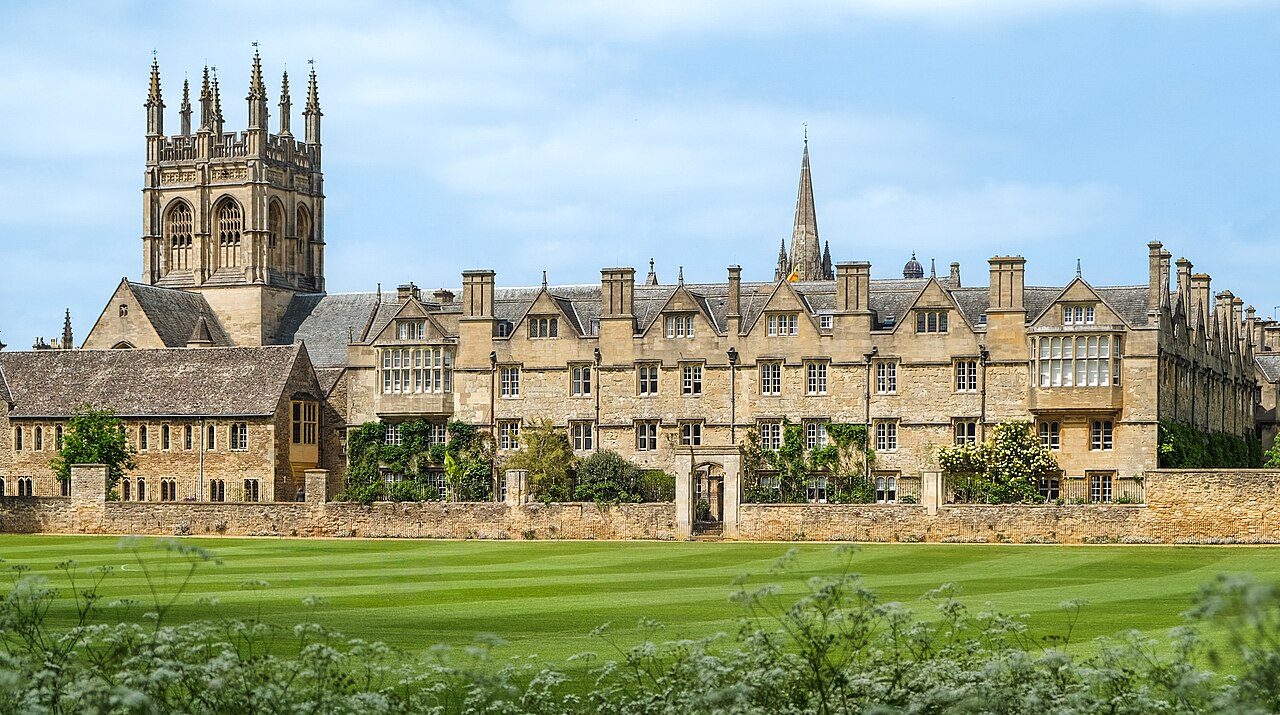
Writing proceeded in stages from 1937 to 1949. Tolkien was a full-time Oxford academic - at Pembroke College and then, from 1945, Merton Professor at Merton College - and the work advanced in term-time gaps, through the Second World War. Draft chapters went for comment to his son Christopher, serving with the Royal Air Force in South Africa, and the Inklings, his Oxford literary circle, heard the work in progress; Britannica records that Tolkien credited Lewis and the group with encouraging him to finish it, and dedicated the first edition to the Inklings. The war is part of the book's writing history, not its plot: Tolkien insisted the story was not simply modified by the war that began in 1939, a claim examined below.
Publication: Three Volumes for Cost Reasons
Tolkien wanted a single volume, ideally published alongside The Silmarillion, which did not appear until after his death, in 1977. Allen & Unwin instead divided the text into three volumes to minimise the risk of a very long book: high typesetting costs and modest anticipated sales made one large volume a gamble the firm would not take. Two of Tolkien's six internal books went into each volume, with the appendices in the third.
The volumes appeared as The Fellowship of the Ring on 29 July 1954, The Two Towers on 11 November 1954 and The Return of the King on 20 October 1955 in the United Kingdom; Houghton Mifflin published them in the United States on 21 October 1954, 21 April 1955 and 5 January 1956 respectively. Delays over appendices, maps and an index pushed the third volume almost a year beyond the first. The volumes were later issued as a boxed set in 1957 and, in 1968, finally as the single volume Tolkien had intended. First reviews were mixed to warm and sales steady rather than spectacular.
1965: The American Paperback Phenomenon
The turning point was paperback publication in the United States in 1965. An unauthorised, non-royalty-paying edition from Ace Books, produced amid a dispute over the work's American copyright status, appeared first; an authorised Ballantine Books paperback, published under licence from Houghton Mifflin in October 1965 with revisions by Tolkien, followed and outsold it. Britannica's summary is concise: on its publication in paperback in the United States in 1965, the work attained cult status on college campuses.
Cheap paperbacks and campus word of mouth did the rest. Tolkien, by then retired, became an unlikely countercultural figure, corrected his text for a second edition in 1966, and watched a philologist's epic become a mass phenomenon. By the turn of the 21st century, Britannica records, it had sold more than 50 million copies in some 30 languages; later figures above 150 million copies are publisher estimates, not audited totals, and are best treated as such.
Timeline
- 1937
The Hobbit is published by George Allen & Unwin; its success prompts the publisher to ask Tolkien for a sequel.
- 1937-1949
Tolkien writes The Lord of the Rings in stages, through the Second World War and alongside his Oxford posts.
- 1945
Tolkien becomes Merton Professor of English Language and Literature at Oxford, a post he holds until 1959.
- 29 July 1954
The Fellowship of the Ring, the first of three volumes, is published in London by George Allen & Unwin.
- 11 November 1954
The Two Towers, the second volume, is published in the United Kingdom.
- 20 October 1955
The Return of the King completes the first publication, delayed by work on appendices, maps and the index.
- 1965
Unauthorised Ace Books and authorised Ballantine paperbacks appear in the United States; the book attains cult status on college campuses.
- 1966
A revised second edition, incorporating Tolkien's corrections, is published.
- 1968
The work is published in a single volume, as Tolkien had originally intended.
- 1973
Tolkien dies on 2 September at Bournemouth; The Silmarillion follows posthumously in 1977, edited by Christopher Tolkien.
- 2001-2003
Peter Jackson's three film adaptations are released to worldwide critical and financial success, introducing the book to a new generation.
Significance
The Lord of the Rings reshaped modern fantasy. Its fully realised secondary world, invented languages, maps, genealogies and appendices set the template against which later epic fantasy was written and marketed - usually, following Tolkien's publishers rather than Tolkien, in three volumes. Britannica notes it was named the best book of the 20th century in several polls, and in 2003 it topped the BBC's Big Read as Britain's best-loved novel - a reader vote, not a critical verdict.
Tolkien's Oxford archive, held principally at the Bodleian Library, preserves the manuscripts, artwork, maps and letters documenting how the work was made, and exhibitions drawn from it - notably the Bodleian's Tolkien: Maker of Middle-earth in 2018 - have treated the drafts as major cultural artefacts.
Myths and disputes
Is it a trilogy? No. Tolkien wrote one novel in six books; the three-volume form was a publishing decision taken for economic reasons, and Britannica states plainly that it is not a trilogy. Calling it one is convenient shorthand, but it misdescribes how the work was conceived and written.
Is it an allegory of the Second World War, with the Ring as the atomic bomb? Tolkien denied it directly. In the foreword to the second edition of 1966 he wrote that the work had, in the author's intention, no inner meaning or message, that it was neither allegorical nor topical, and that little or nothing in it was modified by the war that began in 1939. His own distinction was between allegory, which he said he cordially disliked, and applicability, which resides in the freedom of the reader. Readers remain free to apply the story to war, power or technology; the historical record is that the author rejected a one-to-one allegorical reading, while acknowledging that his experience of the First World War, in which he served at the Somme, formed part of the soil from which the story grew.
A smaller dispute concerned the Ace edition: Ace maintained the work was not protected by United States copyright; Tolkien and his publishers maintained that it was. Ace eventually agreed to pay royalties and let its edition go out of print.
Legacy
The legacy is visible in three places. In publishing, the book created the modern epic-fantasy market and proved a long, linguistically dense novel could sell for seventy years. In reading culture, it has repeatedly topped reader polls, from the 1965 campus cult to the BBC Big Read. On screen, Peter Jackson's films of 2001-03, a worldwide critical and financial success according to Britannica, fixed a visual Middle-earth for millions who then returned to the book.
The three volumes on a shelf are an accident of 1950s printing economics. The single, continuous work inside them - a fiction built like a history, with languages, chronologies and appendices - is what Tolkien made.
Sources
- Encyclopaedia Britannica - J.R.R. Tolkien
- Encyclopaedia Britannica - The Lord of the Rings
- University of Oxford, Exeter College - J.R.R. Tolkien in Oxford
- The Tolkien Estate - Life
- HistoryExtra - JRR Tolkien and the making of Middle Earth
The facts on this page were checked against these sources on 19 November 2026. The History Trail's permanent pages are researched and written for this site; the live profiles elsewhere on The History Trail are assembled automatically from Wikipedia and Wikidata.
About the Author
Researched and written by the The History Trail Editorial Team — the accountable editorial function behind this site's permanent story pages. The team works from the published sources cited on each page; it does not invent historians, reviewers or credentials, and it corrects errors openly.
Fact Check
Every load-bearing fact on this page traces to one of the sources listed above, and significant claims link to their source in the text. Our checking method is described on the methodology page; errors can be reported via the corrections page.
Sources & Citations
Cite this page as: The History Trail Editorial Team, The History Trail — this article's title, publication and update dates are shown beneath its headline. The full source list appears under Sources above; the site's source standards are on the sources page.