
Things
Napoleonic Wars
For twelve years Napoleon won battle after battle and lost an empire. The Napoleonic Wars carried revolution across Europe at bayonet point, killed millions, and ended at Waterloo with a peace settlement that shaped the next century.
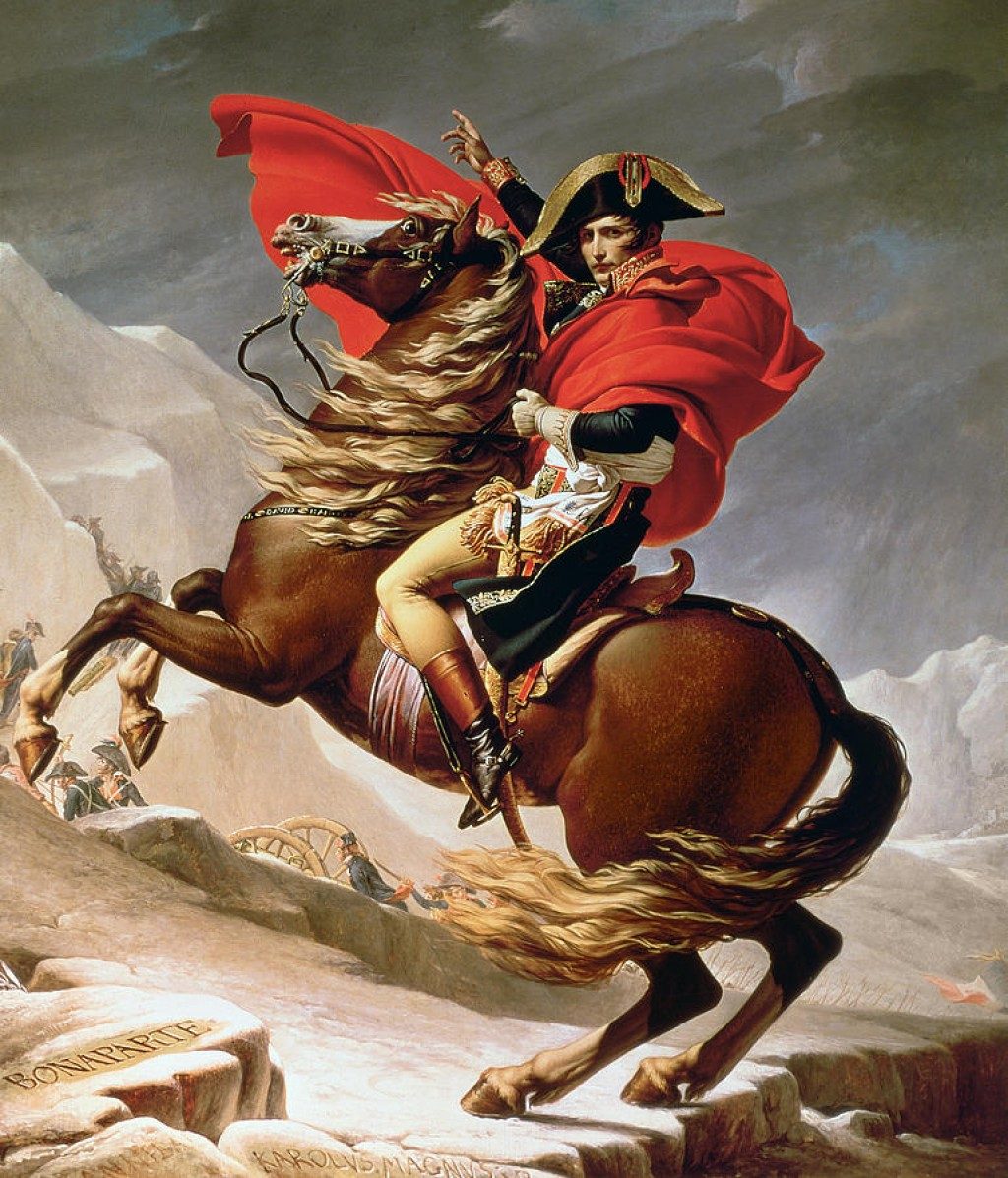
At a Glance
- Fought
- 18 May 1803 – 20 November 1815
- Principals
- Napoleonic France vs successive coalitions, usually financed and led by Britain
- Decisive land victory
- Austerlitz, 2 December 1805
- Decisive sea victory
- Trafalgar, 21 October 1805 — Nelson killed, British naval supremacy secured
- Turning point
- The destruction of the Grande Armée in Russia, 1812
- Final battle
- Waterloo, 18 June 1815
- Settlement
- The Congress of Vienna, 1814–1815
- Deaths
- Estimates vary widely; mid-range modern estimates are around 3.5 million soldiers and civilians
Introduction
Between 1803 and 1815, Europe was at war almost without pause, as Napoleon Bonaparte's France fought a succession of coalitions raised, financed and usually led by Britain. The Napoleonic Wars were not one war but a sequence of them — conventionally grouped by the coalitions that fought Napoleon: the Third (1805), Fourth (1806–07), Fifth (1809), Sixth (1813–14) and Seventh (1815). They ranged across the continent from Lisbon to Moscow, onto the seas from Trafalgar to the Caribbean, and they ended with something genuinely new: a general peace settlement, the Congress of Vienna, that redrew the map of Europe and kept its great powers from a general war for a generation.
The human cost resists a single agreed number — estimates of the total dead, soldiers and civilians together, vary widely, with mid-range modern estimates around three and a half million — but its scale is not in doubt. The wars killed the Holy Roman Empire, made Britain the world's dominant naval and commercial power, and spread the legal and administrative reforms of the French Revolution across the continent that was trying to defeat them.
Background
The wars grew directly out of the French Revolutionary Wars of the 1790s, in which revolutionary France had survived the combined assault of Europe's monarchies and carried its armies into Italy, the Low Countries and Egypt. Napoleon, the artillery officer who rose through those campaigns, seized power in 1799 and crowned himself Emperor in 1804. A brief peace with Britain, the Treaty of Amiens in 1802, collapsed in May 1803, and Britain, Austria and Russia formed the Third Coalition against him. The pattern of the next twelve years was set: Britain, uninvadable behind its navy, subsidised continental allies; Napoleon, unbeatable for a decade on land, tried to break the cycle by destroying each coalition in turn.
His instrument was the Grande Armée and a style of war built on speed, living off the land, and seeking the decisive battle. It reached its zenith on 2 December 1805 at Austerlitz, where Napoleon destroyed the combined Austrian and Russian armies in what is widely considered his greatest victory; the Holy Roman Empire was dissolved in the settlement that followed. The same autumn fixed the war's other geometry: on 21 October, off Cape Trafalgar, Nelson's fleet destroyed the combined French and Spanish fleets, Nelson himself being killed — securing British command of the sea and making invasion of Britain impossible. Napoleon could win almost any battle on land and could not cross twenty miles of water.
Timeline
- 18 May 1803
The Peace of Amiens collapses and Britain declares war on France; the Napoleonic Wars begin.
- 2 December 1804
Napoleon crowns himself Emperor of the French in Notre-Dame, Paris.
- 21 October 1805
At Trafalgar, Nelson's fleet destroys the Franco-Spanish fleet; Nelson is killed, and British naval supremacy is secured for a century.
- 2 December 1805
At Austerlitz, Napoleon crushes the Austrian and Russian armies — his masterpiece; Austria leaves the war and the Holy Roman Empire is dissolved in 1806.
- 1806–1807
Prussia is destroyed as a military power at Jena–Auerstedt; French troops enter Berlin, and Napoleon imposes the Continental System against British trade.
- 1808–1814
The Peninsular War in Spain and Portugal bleeds France in a guerrilla conflict Wellington's army exploits — Napoleon's 'Spanish ulcer'.
- 24 June 1812
Napoleon invades Russia with the largest army Europe had ever seen; by December the Grande Armée has been destroyed by battle, hunger, disease and cold.
- 16–19 October 1813
At Leipzig — the Battle of the Nations, the largest battle in Europe before the First World War — the Sixth Coalition defeats Napoleon.
- April 1814
Paris falls; Napoleon abdicates and is exiled to Elba, and the Bourbons are restored in France.
- 18 June 1815
Escaped from Elba, Napoleon is defeated finally at Waterloo by Wellington's and Blücher's armies; he abdicates again and is exiled to Saint Helena.
- 1814–1815
The Congress of Vienna redraws the map of Europe and constructs the balance-of-power settlement that follows the wars.
Significance
The wars were a revolution in the scale of warfare. Mass conscription, begun by revolutionary France, put armies of hundreds of thousands into the field and made war a business of nations rather than of kings' professionals; the Russian campaign of 1812 and Leipzig in 1813 were battles on a scale Europe would not see again until 1914.
Politically, the paradox of the wars is that Napoleon spread the revolution while fighting its enemies. Wherever his armies went they carried the Napoleonic Code, the metric system and the abolition of feudal dues — reforms that survived his defeat because the restored monarchs of 1815 dared not fully repeal them.
Legacy
The Congress of Vienna, meeting through 1814–15 under the guidance of Austria's foreign minister Metternich, built a settlement on the principles of legitimacy and balance: France was contained but not crushed, the great powers agreed to consult in concert, and the resulting order — the Concert of Europe — spared the continent a general war for decades. Its map endured in outline until 1914, and its habits of congress diplomacy are the ancestors of every international conference since.
The wars' other legacies are still visible: a unified Germany and Italy became thinkable because Napoleon had swept away hundreds of petty states; the Code Napoléon still underlies the civil law of dozens of countries; and Britain emerged confirmed as the century's naval, industrial and financial superpower.
Sources
- Encyclopaedia Britannica — Napoleonic Wars
- Encyclopaedia Britannica — Battle of Waterloo
- Smithsonian Magazine — The Napoleonic Wars
The facts on this page were checked against these sources on 19 November 2026. The History Trail's permanent pages are researched and written for this site; the live profiles elsewhere on The History Trail are assembled automatically from Wikipedia and Wikidata.
About the Author
Researched and written by the The History Trail Editorial Team — the accountable editorial function behind this site's permanent story pages. The team works from the published sources cited on each page; it does not invent historians, reviewers or credentials, and it corrects errors openly.
Fact Check
Every load-bearing fact on this page traces to one of the sources listed above, and significant claims link to their source in the text. Our checking method is described on the methodology page; errors can be reported via the corrections page.
Sources & Citations
Cite this page as: The History Trail Editorial Team, The History Trail — this article's title, publication and update dates are shown beneath its headline. The full source list appears under Sources above; the site's source standards are on the sources page.