
On This Day
October 31 in History
On 31 October 1517 Martin Luther sent his Ninety-five Theses to the Archbishop of Mainz, challenging the sale of indulgences — the act that opened the Protestant Reformation. October 31 is also the day Houdini died, Mount Rushmore was completed, Indira Gandhi was assassinated, and the first crew left to live aboard the International Space Station.
Choose another date: open the On This Day calendar to browse events, births and deaths for any day of the year.
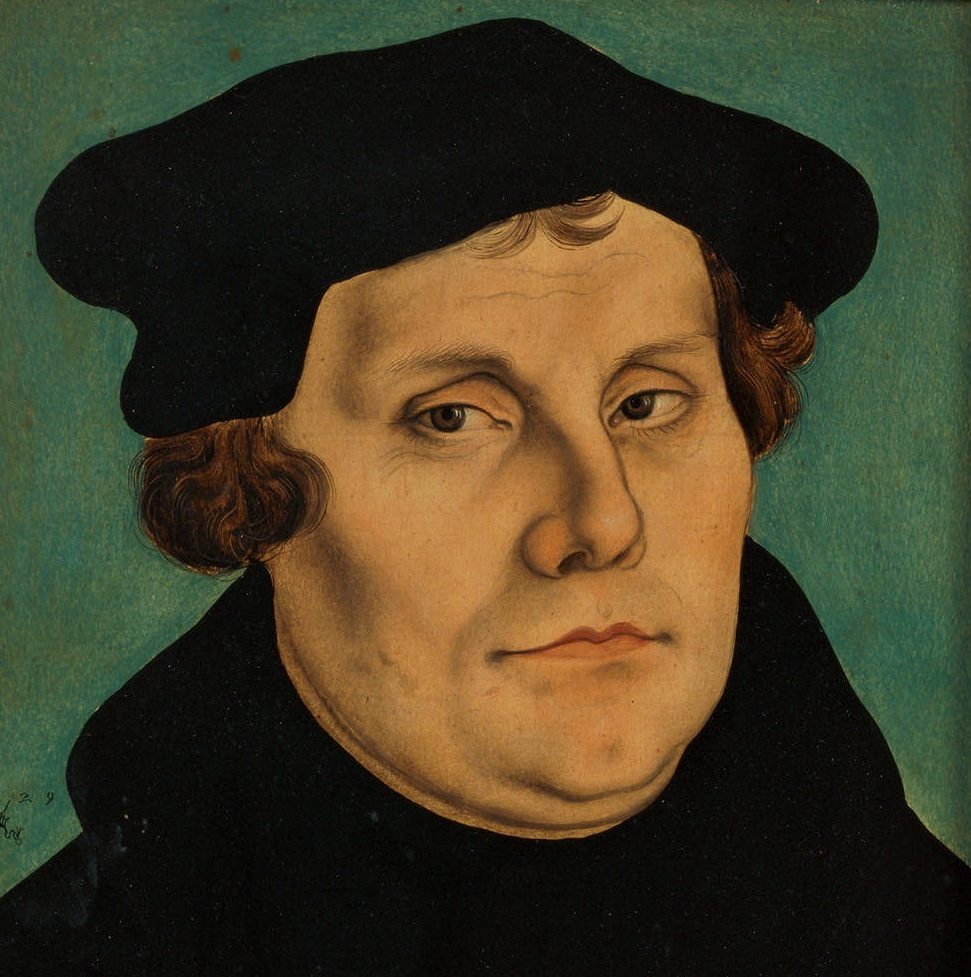
At a Glance
- The author
- Martin Luther, Augustinian monk and professor of theology at Wittenberg
- The provocation
- The sale of indulgences in Germany by Johann Tetzel, fundraising for St Peter's in Rome and Archbishop Albert of Mainz
- The act
- On 31 October 1517 Luther sent the theses to Archbishop Albert; the famous nailing to the Castle Church door is tradition, and is disputed
- The document
- Ninety-five short propositions in Latin, academic in form and relatively tentative in tone
- The consequence
- Spread by print across Germany within weeks, the theses opened the Protestant Reformation; 31 October is kept as Reformation Day
Events on this day
- 1517Martin Luther sends his Ninety-five Theses to Archbishop Albert of Mainz, challenging the sale of indulgences and sparking the Protestant Reformation — the featured story above.
- 1922Benito Mussolini becomes prime minister of Italy, days after the March on Rome.
- 1926Harry Houdini, the escape artist, dies in Detroit of peritonitis from a ruptured appendix, nine days after being punched in the stomach by a student in Montreal.
- 1941Mount Rushmore is completed in South Dakota, fourteen years after work began on the colossal presidential sculpture.
- 1956Britain and France begin bombing Egypt in the Suez Crisis, seeking to force the reopening of the canal.
- 1968President Lyndon B. Johnson orders a complete halt to the American bombing of North Vietnam.
- 1984Indian prime minister Indira Gandhi is assassinated in New Delhi by two of her own Sikh bodyguards, in reprisal for the army's storming of the Golden Temple; anti-Sikh riots follow in which, by official counts, some two thousand people are killed.
- 2000The first crew launches to live aboard the International Space Station, beginning an unbroken human presence in orbit.
Born on this day
- 1632Jan Vermeer — Dutch painter of Girl with a Pearl Earring and the quiet interiors of Delft.
- 1760Katsushika Hokusai — Japanese artist of The Great Wave off Kanagawa.
- 1795John Keats — English Romantic poet, born in London, dead of tuberculosis at twenty-five.
- 1887Chiang Kai-shek — Chinese soldier and statesman, leader of the Republic of China.
- 1922Norodom Sihanouk — king and dominant political figure of Cambodia for much of the twentieth century.
- 1931Dan Rather — American television journalist, born in Wharton, Texas, longtime anchor of the CBS Evening News.
- 1961Peter Jackson — New Zealand film director of The Lord of the Rings trilogy.
Died on this day
- 1926Harry Houdini — Hungarian-born American escape artist, born Erik Weisz, dead in Detroit at 52.
- 1940John R. Carson — American electrical engineer, a pioneer of radio communications theory.
- 1984Indira Gandhi — prime minister of India, assassinated in New Delhi at 66.
The featured story: Luther's Ninety-five Theses, 31 October 1517
On 31 October 1517, an Augustinian monk and professor of theology named Martin Luther sent a document to his archbishop that would split Western Christianity in two. The document was the Ninety-five Theses — ninety-five short propositions, written in Latin, questioning the sale of indulgences. Indulgences, certificates said to reduce the punishment due for sins, were being marketed across Germany with unprecedented energy by the Dominican friar Johann Tetzel, as a fundraising campaign: the money was to rebuild St Peter's Basilica in Rome and to service the debts of Albert of Mainz, Luther's own archbishop, who had borrowed heavily to buy his office. To Luther, the pitch he heard reported — that a coin in the coffer could spring a soul from purgatory — was a pastoral scandal and a theological error. Salvation, he argued, could not be sold.
What Luther did on 31 October is a matter of record in one respect and of legend in another. He certainly wrote to Archbishop Albert that day, politely enclosing the theses and asking him to restrain the indulgence sellers. Tradition adds the famous scene: Luther striding to the Castle Church in Wittenberg and nailing the theses to its door, the university's noticeboard, in open challenge. Whether the nailing happened as described has been disputed by historians — no contemporary account of it survives — but the letter alone was enough. The theses were academic in form and, by the standards of what followed, relatively tentative; Luther was proposing a disputation, not founding a church. What turned a professor's protest into a revolution was the printing press: within weeks the theses, translated from Latin into German, were being reprinted and read across the Empire.
Rome's machinery moved slowly, then all at once: investigation, summons, Luther's refusal to recant at Worms in 1521, excommunication and outlawry. By then the questions he had raised — about authority, scripture, and how human beings are saved — had escaped his control entirely, and princes, cities and peasants were answering them for themselves. The movement that took his name, and the wider Protestant Reformation, redrew the religious and political map of Europe, and the aftershocks — confessional states, wars of religion, new churches across the world — ran for centuries.
Luther himself died in 1546, in Eisleben, the town where he had been born in 1483. The day of his letter is kept across Protestant Germany and far beyond as Reformation Day, and the Castle Church at Wittenberg, rebuilt after fire, now carries bronze doors cast in 1858 on which the ninety-five theses are inscribed in German — so that today, whether or not the hammer ever fell in 1517, the theses really are fixed to the church door, in metal, for every visitor to read. Few single days have a better claim to have started the modern world arguing with itself.
Why this date matters
October 31 is the year's great day of masks and unmaskings. A monk's letter, posted on All Hallows' Eve, tore the mask from a church's finances and began the Reformation; four centuries later the world's most famous escapologist, a man whose art was escaping every restraint, died on it of an injury no audience saw. The date keeps the pattern: a colossal sculpture unveiled on a mountainside in 1941, a prime minister murdered by her own guards in 1984, and, in 2000, the first crew departing to live permanently off the Earth. Beneath the Halloween costumes, 31 October is about the moment hidden things come into the open — theses on a door, for all to read.
Sources
- Encyclopaedia Britannica — Today in History: October 31
- HISTORY — What Happened on October 31
- HISTORY — Houdini is dead
- Wikimedia — On This Day feed: October 31
The facts on this page were checked against these sources on 19 November 2026. The History Trail's permanent pages are researched and written for this site; the live profiles elsewhere on The History Trail are assembled automatically from Wikipedia and Wikidata.
About the Author
Researched and written by the The History Trail Editorial Team — the accountable editorial function behind this site's permanent story pages. The team works from the published sources cited on each page; it does not invent historians, reviewers or credentials, and it corrects errors openly.
Fact Check
Every load-bearing fact on this page traces to one of the sources listed above, and significant claims link to their source in the text. Our checking method is described on the methodology page; errors can be reported via the corrections page.
Sources & Citations
Cite this page as: The History Trail Editorial Team, The History Trail — this article's title, publication and update dates are shown beneath its headline. The full source list appears under Sources above; the site's source standards are on the sources page.