
On This Day
October 30 in History
On 30 October 1938 Orson Welles's radio dramatisation of The War of the Worlds, told as fake news bulletins, convinced some listeners that Martians had landed in New Jersey — and newspapers turned a fright into a legend of mass panic. October 30 is also the day of Tsar Bomba, the Rumble in the Jungle, and the births of John Adams and Diego Maradona.
Choose another date: open the On This Day calendar to browse events, births and deaths for any day of the year.
At a Glance
- The broadcast
- The Mercury Theatre on the Air, CBS, on the evening of 30 October 1938 — Halloween eve
- The story
- Howard Koch's adaptation of H. G. Wells's The War of the Worlds, told as interrupting news bulletins about a Martian landing at Grovers Mill, New Jersey
- The director
- Orson Welles, aged 23
- The reaction
- Some late-tuning listeners believed the bulletins; CBS clarified on air at the break, about forty minutes in
- The modern verdict
- Scholars estimate only about two per cent of radio households were listening to a play that night; the scale of the panic was inflated by newspapers
Events on this day
- 1938Orson Welles's Mercury Theatre broadcasts 'The War of the Worlds' as fake news bulletins, frightening some listeners — and making broadcast history — the featured story above.
- 1947The General Agreement on Tariffs and Trade (GATT) is signed in Geneva, laying a foundation of the modern world trading system.
- 1961The Soviet Union detonates Tsar Bomba over Novaya Zemlya, the largest nuclear weapon ever tested: Soviet figures put the yield at about 50 megatons, Western estimates at 55 to 58.
- 1973The Bosphorus Bridge is inaugurated in Istanbul, linking Europe and Asia across the strait for the first time by road.
- 1974In the 'Rumble in the Jungle' in Kinshasa, Zaire, Muhammad Ali knocks out George Foreman in the eighth round to regain the world heavyweight title.
- 1975Prince Juan Carlos becomes Spain's acting head of state as General Franco's health fails.
- 1983Raúl Alfonsín wins Argentina's presidential election, the first democratic vote after seven years of military rule.
- 1993Ulster Defence Association gunmen open fire on a Halloween party in a pub in Greysteel, County Londonderry, killing eight civilians.
Born on this day
- 1735John Adams — second president of the United States and a leading voice of American independence.
- 1885Ezra Pound — American poet and critic, a central and controversial figure of literary modernism.
- 1939Grace Slick — American singer, vocalist of Jefferson Airplane.
- 1945Henry Winkler — American actor, the Fonz in Happy Days.
- 1960Diego Maradona — Argentine footballer, born in Lanús, captain of the 1986 World Cup winners.
Died on this day
- 1611Charles IX — king of Sweden, who reaffirmed Lutheranism as the national religion, dead at Nyköping and succeeded by his son Gustavus Adolphus.
- 2000Steve Allen — American comedian and writer, the first host of The Tonight Show, dead in Encino, California, at 78.
- 2009Claude Lévi-Strauss — French anthropologist who founded structural anthropology, dead in Paris at 100, weeks before his 101st birthday.
The featured story: 'The War of the Worlds' panics America, 30 October 1938
On the evening of 30 October 1938 — the night before Halloween — the CBS radio network broadcast an episode of The Mercury Theatre on the Air that became the most famous radio programme ever made. The 23-year-old Orson Welles and his company presented Howard Koch's adaptation of H. G. Wells's novel The War of the Worlds, updated from Victorian England to contemporary New Jersey — and, crucially, told largely as a series of fake news bulletins interrupting an evening of dance music. A reporter described a strange cylinder in a farmer's field at Grovers Mill; then a Martian emerged; then heat-rays, poison gas, and a march on New York. Announcers insisted, in the flat urgent tones of real breaking news, that the invasion was real.
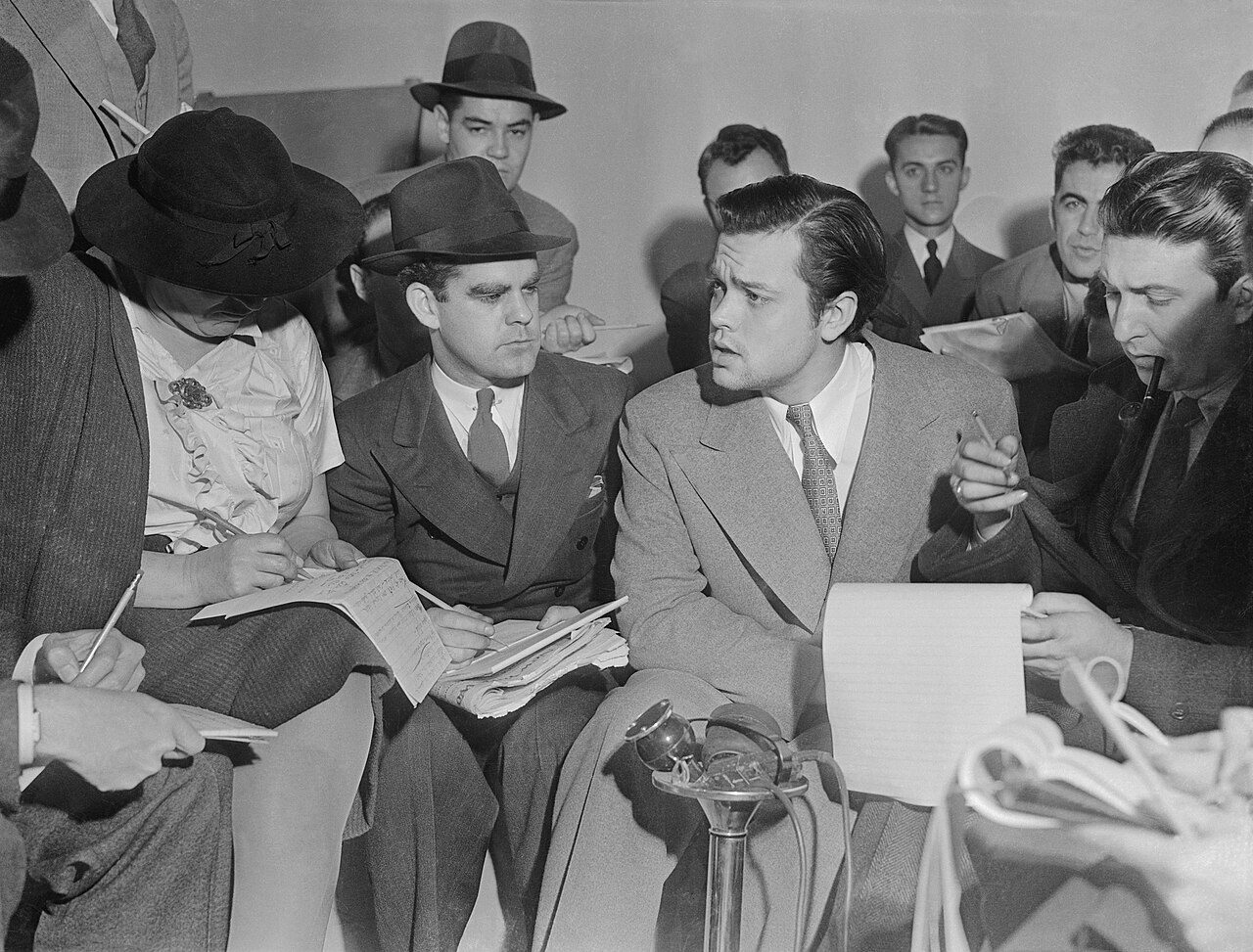
The programme announced itself as fiction at the start, but many listeners tuned in late and missed the announcement. What they heard, in a country already jittery with news of crisis in Europe, sounded like the end of the world arriving by wireless. Some fled their homes; some prayed; telephone exchanges jammed. About forty minutes in, a CBS announcer broke in to remind listeners that they were hearing a play, and the second half of the hour returned to conventional drama. By then the legend was loose. The next morning Welles, looking suitably stricken, met the press and professed bewilderment that anyone had been fooled — a performance of innocence that did his career no harm at all.
Newspapers seized on the story with delight, running front pages about mass panic, stampedes and hysteria. For the press, locked in a commercial war with the upstart medium of radio for advertising and authority, the moral was convenient: radio was irresponsible and dangerous. The broadcast became a founding case study of media effects, cited for decades as proof of the power of mass media over a helpless public, and it made Welles famous enough to be summoned to Hollywood, where his first film was Citizen Kane.
Modern scholarship has shrunk the panic to something much smaller. Researchers such as Jefferson Pooley and Michael Socolow have pointed out that ratings surveys suggest only about two per cent of radio households were listening to any radio play that night; most Americans were tuned to a popular comedy show on another network. No verified death or suicide has ever been traced to the broadcast, and many of the most dramatic newspaper tales of terror cannot be corroborated. The panic happened — some listeners were genuinely frightened — but its scale was inflated by newspapers with a grudge. The real lesson of 30 October 1938 may be double: a fake news bulletin can scare a nation, and so can the reporting of the scare.
Why this date matters
October 30 is the calendar's day for testing what people can be made to believe — and what they can be made to withstand. In 1938 a fiction dressed as news persuaded some Americans that Martians had landed, and the newspapers' exaggeration of that panic persuaded everyone else. In 1961 the Soviet Union detonated the largest bomb ever built, a weapon too big to use, meant purely to be believed in. Against those manufactured terrors stand the day's genuine feats of nerve: Ali, given no chance, out-thinking and out-lasting Foreman in Kinshasa in 1974, and Argentina voting itself out of dictatorship in 1983. Fear, on this date, is always partly theatre — and courage is always real.
Sources
- Encyclopaedia Britannica — On This Day: October 30
- HISTORY — What Happened on October 30
- Smithsonian National Portrait Gallery — Orson Welles and the Anniversary of 'War of the Worlds'
- Encyclopaedia Britannica — Charles IX, king of Sweden
- Wikimedia — On This Day feed: October 30
The facts on this page were checked against these sources on 19 November 2026. The History Trail's permanent pages are researched and written for this site; the live profiles elsewhere on The History Trail are assembled automatically from Wikipedia and Wikidata.
About the Author
Researched and written by the The History Trail Editorial Team — the accountable editorial function behind this site's permanent story pages. The team works from the published sources cited on each page; it does not invent historians, reviewers or credentials, and it corrects errors openly.
Fact Check
Every load-bearing fact on this page traces to one of the sources listed above, and significant claims link to their source in the text. Our checking method is described on the methodology page; errors can be reported via the corrections page.
Sources & Citations
Cite this page as: The History Trail Editorial Team, The History Trail — this article's title, publication and update dates are shown beneath its headline. The full source list appears under Sources above; the site's source standards are on the sources page.