
On This Day
October 13 in History
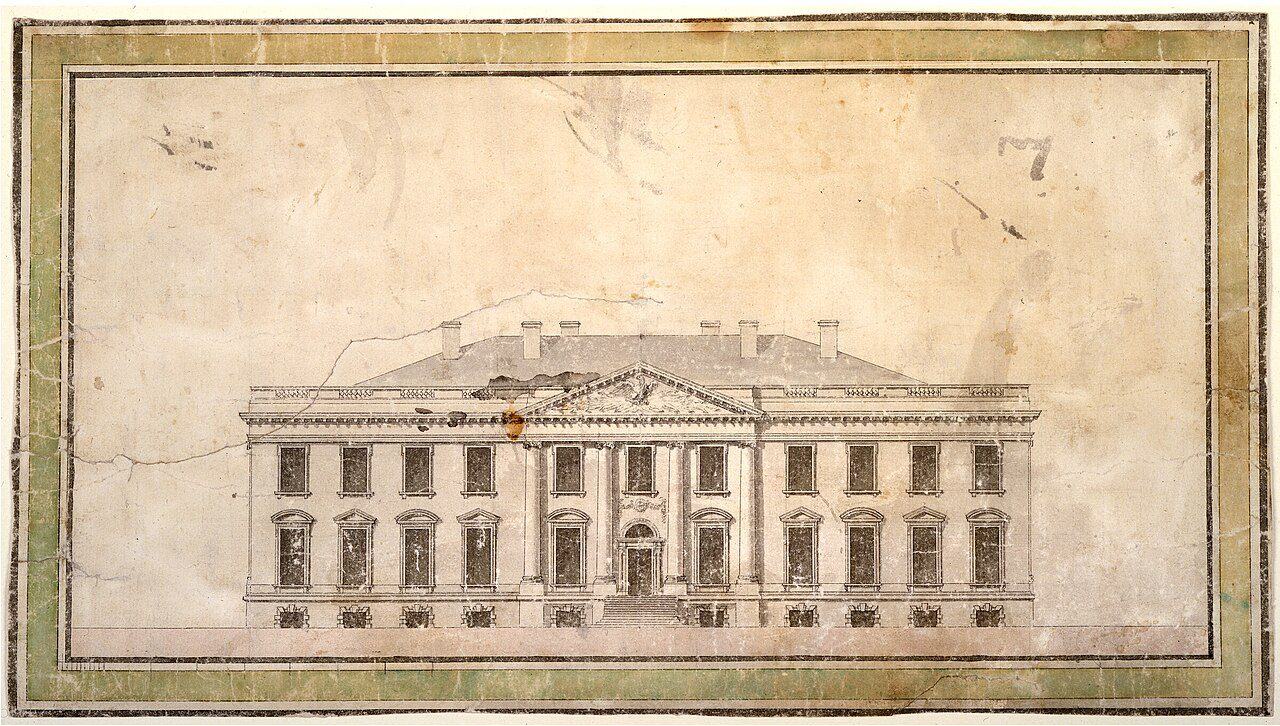
On 13 October 1792 the cornerstone was laid for a president's house in the raw new federal city of Washington — the building the world now knows as the White House, designed by the Irish-born architect James Hoban and home to every U.S. president since John Adams. October 13 is also the day the Knights Templar were arrested in France in 1307, the Chilean miners came up from the deep in 2010, and Margaret Thatcher was born.
Choose another date: open the On This Day calendar to browse events, births and deaths for any day of the year.
At a Glance
- Authorised
- The Residence Act of 1790 created the federal capital on the Potomac and provided for a president's house
- The designer
- James Hoban, an Irish-born architect working in Charleston, won the 1792 design competition
- Cornerstone laid
- 13 October 1792 — with, by most accounts, no formal ceremony; the stone's location is now unknown
- First occupants
- President John Adams and his wife Abigail, who moved into the unfinished house in November 1800
- Burned and rebuilt
- Set on fire by British troops in 1814 during the War of 1812; Hoban supervised the reconstruction
- The name
- Long called the President's House or Executive Mansion; Theodore Roosevelt made 'White House' official in 1901
Events on this day
- 54The Roman emperor Claudius dies, traditionally said to have been poisoned with mushrooms; his adopted son Nero succeeds him.
- 1307At dawn on Friday 13 October, King Philip IV of France has the Knights Templar across his kingdom arrested en masse; the order is destroyed and its leaders eventually burned.
- 1775The Continental Congress authorises the first American naval force, the seed of the United States Navy.
- 1792The cornerstone of the president's house — the White House — is laid in Washington, D.C. — the featured story above.
- 1812At Queenston Heights on the Niagara frontier, British and Indigenous forces repel an American invasion of Canada; their commander, Isaac Brock, is killed.
- 1903The Boston Red Sox beat the Pittsburgh Pirates to win the first modern World Series of baseball.
- 1943Italy's new government under Marshal Badoglio declares war on its former ally, Nazi Germany, and joins the Allied side.
- 1972Uruguayan Air Force Flight 571, carrying a rugby team, crashes high in the Andes; the survivors' 72-day ordeal becomes one of history's starkest survival stories.
- 1983Ameritech launches the first commercial cellular telephone network in the United States, in Chicago.
- 2010The last of 33 Chilean miners is winched to the surface after 69 days trapped half a mile underground in the San José mine.
- 2021Actor William Shatner, television's Captain Kirk, flies to space aboard Blue Origin's New Shepard at the age of 90, the oldest person yet to leave Earth.
Born on this day
- 1921Yves Montand — Italian-French actor and singer, the smoky-voiced star of French cinema's postwar years.
- 1925Margaret Thatcher — British chemist-turned-politician who became Europe's first woman prime minister and led Britain from 1979 to 1990.
- 1925Lenny Bruce — American stand-up comedian whose obscenity trials made him a landmark figure in the history of free speech.
- 1941Paul Simon — American singer-songwriter, half of Simon & Garfunkel and later a solo explorer of world rhythms.
- 1962Jerry Rice — American football wide receiver, holder of the NFL's great receiving records.
Died on this day
- 54Claudius — Roman emperor who conquered Britain and governed capably despite the mockery of the court; his death opens the way to Nero.
- 1812Isaac Brock — British general whose defence of Upper Canada made him a hero of the War of 1812, killed at Queenston Heights.
- 1945Milton S. Hershey — American chocolate manufacturer whose company town and school for orphans outlasted his candy fortune.
- 1974Ed Sullivan — American impresario whose Sunday-night variety show introduced the Beatles and Elvis Presley to U.S. television audiences.
- 2016Bhumibol Adulyadej — king of Thailand for 70 years, the world's longest-reigning monarch at his death.
The featured story: the cornerstone of the White House is laid, 13 October 1792
The White House began as an act of imagination: a capital city that did not yet exist, on swampy farmland along the Potomac, needed a house for a president of a republic that was itself barely three years old. The Residence Act of 1790 fixed the capital's site, and in 1792 a competition was held for the president's house. Nine designs were entered — one of them, submitted anonymously under the initials 'A.Z.', by Thomas Jefferson. George Washington chose the entry of James Hoban, an Irish-born, Dublin-trained architect then working in Charleston, South Carolina, whose Georgian design drew on Leinster House in Dublin.
On 13 October 1792 the cornerstone was laid. There was, by most accounts, no grand formal ceremony, and the stone — said to carry a brass plate with the dedication — has never been found since, despite searches with metal detectors and X-rays during later renovations. The house rose over eight years from sandstone quarried at Aquia Creek in Virginia, built by a workforce that included enslaved labourers, free workers and Scottish stonemasons — a founding contradiction the White House Historical Association now documents openly: the home of American liberty was raised in part by people who were not free.
John Adams, the second president, moved into the unfinished house on 1 November 1800, and his wife Abigail, arriving weeks later, famously hung laundry in the unfinished East Room. Washington, who had chosen the site and enlarged Hoban's design, never lived there — he died in 1799, the only president the house has not sheltered. Every president since Adams has: through the fire set by British troops in August 1814, after which Hoban returned to supervise the rebuilding of his own blackened walls, and through a complete gutting and reconstruction under Harry Truman in 1949–52.
The building laid out on this day in 1792 thus became something its designers could not have foreseen: not merely an office and residence but the standing visual shorthand for the American presidency itself, recognised on every screen on earth. That its cornerstone is lost is almost fitting — the house's meaning was never in the stone, but in the unbroken line of occupants who have lived and worked inside it for more than two centuries.
Why this date matters
October 13 has an unsettled, threshold character. A cornerstone goes into the ground for a house no president has yet seen; an ancient order of warrior-monks is arrested in a single dawn; an emperor dies by poisoned mushrooms, by tradition, and a teenager takes his throne. The modern entries rhyme with the old: men buried alive in a mine come back into daylight, a rugby team falls out of the sky into snow, and a 90-year-old actor crosses the last threshold of all. It is a day of foundations laid and of people passing, one way or another, through the ground.
Sources
- Encyclopaedia Britannica — On This Day: October 13
- HISTORY — What Happened on October 13
- HISTORY — This Day in History: October 13
- USA Today — Today in history, October 13
- Wikimedia — On This Day feed: October 13
The facts on this page were checked against these sources on 19 November 2026. The History Trail's permanent pages are researched and written for this site; the live profiles elsewhere on The History Trail are assembled automatically from Wikipedia and Wikidata.
About the Author
Researched and written by the The History Trail Editorial Team — the accountable editorial function behind this site's permanent story pages. The team works from the published sources cited on each page; it does not invent historians, reviewers or credentials, and it corrects errors openly.
Fact Check
Every load-bearing fact on this page traces to one of the sources listed above, and significant claims link to their source in the text. Our checking method is described on the methodology page; errors can be reported via the corrections page.
Sources & Citations
Cite this page as: The History Trail Editorial Team, The History Trail — this article's title, publication and update dates are shown beneath its headline. The full source list appears under Sources above; the site's source standards are on the sources page.