
On This Day
April 7 in History
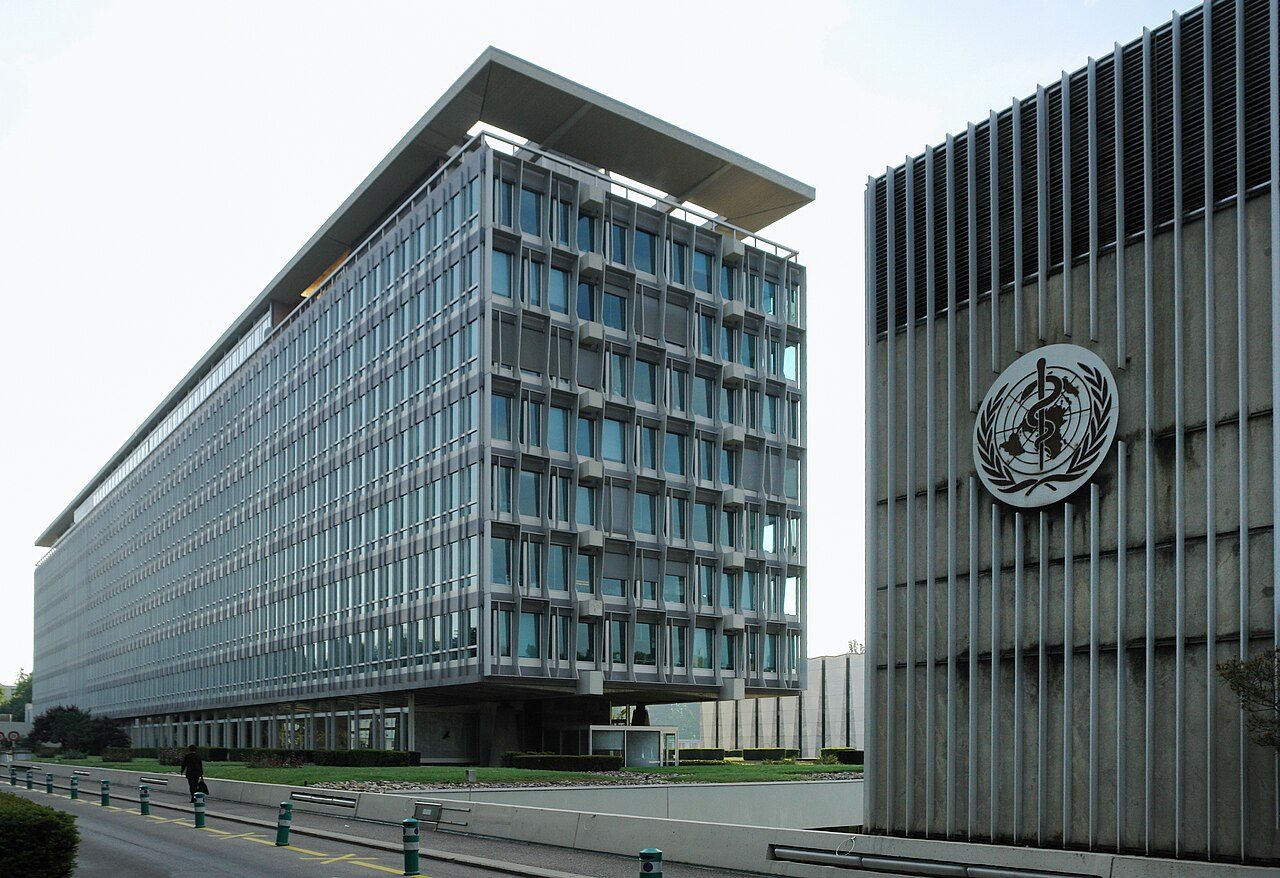
On 7 April 1948 the constitution of the World Health Organization entered into force, creating the UN's health agency and defining health as complete physical, mental and social well-being. April 7 is also the day Bach's St John Passion was first performed in 1724 and the Yamato was sunk in 1945.
Choose another date: open the On This Day calendar to browse events, births and deaths for any day of the year.
At a Glance
- The constitution
- Drafted in New York in 1946; it entered into force on 7 April 1948 on the 26th ratification
- The definition
- Health as 'complete physical, mental and social well-being', not merely the absence of disease
- The headquarters
- Geneva, Switzerland
- The first director-general
- G. Brock Chisholm, a Canadian psychiatrist
- The triumph
- Smallpox declared eradicated in 1980, the first disease wiped out by deliberate effort
- The anniversary
- 7 April is kept every year as World Health Day
Events on this day
- 529Emperor Justinian issues the first draft of the Corpus Juris Civilis, the codification of Roman law that shapes European legal systems for centuries.
- 1348Charles University is founded in Prague, the first university in Central Europe.
- 1724Johann Sebastian Bach's St John Passion is performed for the first time, at Good Friday vespers in Leipzig.
- 1805Beethoven's Third Symphony, the Eroica, is given its first public performance in Vienna, remaking the symphony as a form.
- 1862The Battle of Shiloh concludes in Tennessee with a Union victory after two days of slaughter.
- 1906Mount Vesuvius erupts, devastating Naples and the surrounding towns and killing more than a hundred people.
- 1939Italy invades Albania, annexing the kingdom across the Adriatic in a five-day campaign.
- 1945The Japanese battleship Yamato, the largest ever built, is sunk by American carrier aircraft on a one-way mission toward Okinawa.
- 1948The World Health Organization is founded as its constitution enters into force — the featured story above.
- 1966The United States announces that a hydrogen bomb lost in the sea off Palomares, Spain, in January has been recovered intact.
- 1969RFC 1, the first Request for Comments document of the ARPANET project, is published — a date sometimes kept as the symbolic birthday of the Internet.
- 1994Rwanda's prime minister Agathe Uwilingiyimana is murdered by soldiers as the genocide begins; ten Belgian peacekeepers guarding her are also killed.
- 2001NASA launches the Mars Odyssey orbiter, which goes on to map the planet and find evidence of buried water ice.
Born on this day
- 1506Francis Xavier — Spanish Jesuit missionary who carried Christianity to India and Japan.
- 1770William Wordsworth — English poet, whose Lyrical Ballads with Coleridge launched English Romanticism.
- 1915Billie Holiday — American jazz singer whose phrasing remade popular singing.
- 1920Ravi Shankar — Indian sitar virtuoso who carried Indian classical music to the world.
- 1939Francis Ford Coppola — American director of The Godfather and Apocalypse Now.
- 1954Tony Dorsett — American football running back, Heisman Trophy winner and Pro Football Hall of Famer.
Died on this day
- 1614El Greco — Greek-born painter of Toledo, whose elongated, luminous figures define Spanish Mannerism, dead at about 73.
- 1739Dick Turpin — English highwayman, hanged at York and immortalised, mostly falsely, by later legend.
- 1891P. T. Barnum — American showman and founder of the Barnum & Bailey Circus, dead at 80.
- 1947Henry Ford — founder of the Ford Motor Company and pioneer of the assembly line, dead at 83.
- 1968Jim Clark — Scottish racing driver, twice Formula One world champion, killed in a crash at Hockenheim at 32.
- 2012Mike Wallace — American television journalist of 60 Minutes, dead at 93.
The featured story: the World Health Organization is founded, 7 April 1948
On 7 April 1948 the constitution of the World Health Organization came into force, once the twenty-sixth member state had ratified it, and the WHO formally came into existence. Its constitution, drafted in New York in 1946, opened with a sentence that still startles: health, it declared, is 'a state of complete physical, mental and social well-being and not merely the absence of disease or infirmity' — and the enjoyment of the highest attainable standard of health is a fundamental right of every human being.
The new agency gathered up a century of experiments in international health: the sanitary conferences that had tried to coordinate quarantines since 1851, the health office of the League of Nations, and the relief work of UNRRA in the ruins of the Second World War. Headquartered in Geneva and directed first by the Canadian psychiatrist G. Brock Chisholm, it set out not merely to fight epidemics across borders but to help countries build health systems of their own, at a moment when much of the world had almost none.
Its record since contains both the greatest triumph in the history of medicine and a standing argument about what global health is for. In 1980, after a thirteen-year campaign of vaccination and surveillance, the WHO declared smallpox eradicated, the first disease ever deliberately wiped from the Earth; polio has been brought to the edge of extinction since. At the same time the organisation can only advise, coordinate and shame: it has no power to enter a country uninvited, and its funding depends on the governments it sometimes has to criticise.
Every year the WHO's birthday is kept as World Health Day, which makes 7 April the rare anniversary that is also a campaign. The definition written in 1946 remains the point: by insisting that health meant well-being, and a right, rather than merely the absence of plague, the founders set a standard their organisation has been chasing, and being measured against, ever since.
Why this date matters
April 7 spans the whole apparatus of civilisation: a law code in 529, a university in 1348, Bach and Beethoven premiering two centuries apart, a volcano and a super-battleship, a network's first memo in 1969 and a genocide's first murders in 1994. At its centre stands the most optimistic document of 1948, a constitution that defined health as complete well-being and called it a right, written by a generation that had just buried tens of millions. The date asks, every year, how much of that promise has been kept.
Sources
- Encyclopaedia Britannica — On This Day: April 7
- HISTORY — What Happened on April 7
- Wikipedia — April 7
- World Health Organization — History of WHO
The facts on this page were checked against these sources on 19 November 2026. The History Trail's permanent pages are researched and written for this site; the live profiles elsewhere on The History Trail are assembled automatically from Wikipedia and Wikidata.
About the Author
Researched and written by the The History Trail Editorial Team — the accountable editorial function behind this site's permanent story pages. The team works from the published sources cited on each page; it does not invent historians, reviewers or credentials, and it corrects errors openly.
Fact Check
Every load-bearing fact on this page traces to one of the sources listed above, and significant claims link to their source in the text. Our checking method is described on the methodology page; errors can be reported via the corrections page.
Sources & Citations
Cite this page as: The History Trail Editorial Team, The History Trail — this article's title, publication and update dates are shown beneath its headline. The full source list appears under Sources above; the site's source standards are on the sources page.