
Holidays
Valentine's Day
Valentine's Day, observed every year on 14 February, is the day on which lovers express their affection with greetings, flowers and gifts. It began as the feast day of a martyred Saint Valentine, but it was not a day of romance at all for roughly a thousand years: that meaning was created in the fourteenth century, above all by Geoffrey Chaucer, and the card-sending holiday known today is largely a nineteenth-century invention.
At a Glance
- Date
- 14 February, every year
- Named for
- Saint Valentine - one or more Christian martyrs of that name, executed in the third century, possibly a priest in Rome and a bishop of Terni who were the same man
- Feast day set
- At the end of the fifth century, when Pope Gelasius I is said to have fixed the feast of St Valentine on 14 February
- Romance begins
- In the 1380s, with Geoffrey Chaucer's poem The Parlement of Foules, the first recorded link between the day and lovers choosing their mates
- Oldest surviving valentine
- A poem written in 1415 by Charles, Duke of Orleans, to his wife while he was a prisoner in the Tower of London; now in the British Library
- The commercial card
- Esther A. Howland of Worcester, Massachusetts, began selling the first mass-produced valentines in America in the 1840s and was called the Mother of the Valentine
- Scale today
- More than 145 million Valentine's Day cards are sent each year, according to Hallmark figures reported by HISTORY - the second-largest card-sending holiday after Christmas
Introduction
Few holidays rest on so little evidence and so much storytelling. Britannica notes that Valentine's Day did not come to be celebrated as a day of romance until about the fourteenth century, even though the feast itself is far older.
The day has also spread far beyond its Christian and European roots. It is popular in the United States, Britain, Canada and Australia, and is marked in countries including Argentina, France, Mexico and South Korea. In many places it has widened from lovers to relatives, friends and schoolchildren.
Origins: A Martyr and a Feast Day
The name comes from Saint Valentine, and even that is uncertain ground. The Catholic Church recognises at least three saints named Valentine or Valentinus who were martyred in the third century. Britannica gives the two leading candidates: a priest, said to have been martyred about 270 by the emperor Claudius II Gothicus, and Valentine of Terni, a bishop - and notes that the two may have been the same person. The famous stories about them are legends, dealt with below.
What is firmer is the feast. At the end of the fifth century Pope Gelasius I forbade the Roman festival of Lupercalia and is sometimes said to have replaced it with St Valentine's Day on 14 February. Britannica is careful here: the true origin of the holiday is, in its words, vague at best. For centuries afterwards 14 February was simply one saint's day among hundreds, with no particular association with love.
Chaucer and the Courtly-Love Turn
The romantic meaning arrives, suddenly and literarily, in the late fourteenth century. In his poem The Parlement of Foules, written in the 1380s, Geoffrey Chaucer described birds gathering to choose their mates on Seynt Valentynes day. HISTORY calls Chaucer the first to record St Valentine's Day as a day of romantic celebration, and Britannica credits the poem with first connecting the feast day with romance. A belief, common in medieval France and England, that birds began their mating season in mid-February gave the image its plausibility.
Chaucer wrote for a court that practised courtly love - the stylised, poetic devotion of a lover to an often unattainable lady - and his contemporaries took up the idea at once. Within a generation, lovers were writing valentine poems. The oldest surviving valentine is a poem Charles, Duke of Orleans, wrote to his wife in 1415 while imprisoned in the Tower of London after his capture at Agincourt; it is now held by the British Library.
Handwritten Notes and the Commercial Card
For centuries the valentine stayed handwritten. Formal messages appeared in the 1500s, and by the middle of the eighteenth century, HISTORY records, friends and lovers of all social classes in Britain were exchanging small tokens and handwritten notes. Printed cards followed: commercially printed cards were in use by the late 1700s, and cheaper postage carried the custom across the Atlantic, where Americans were exchanging handmade valentines from the early 1700s.
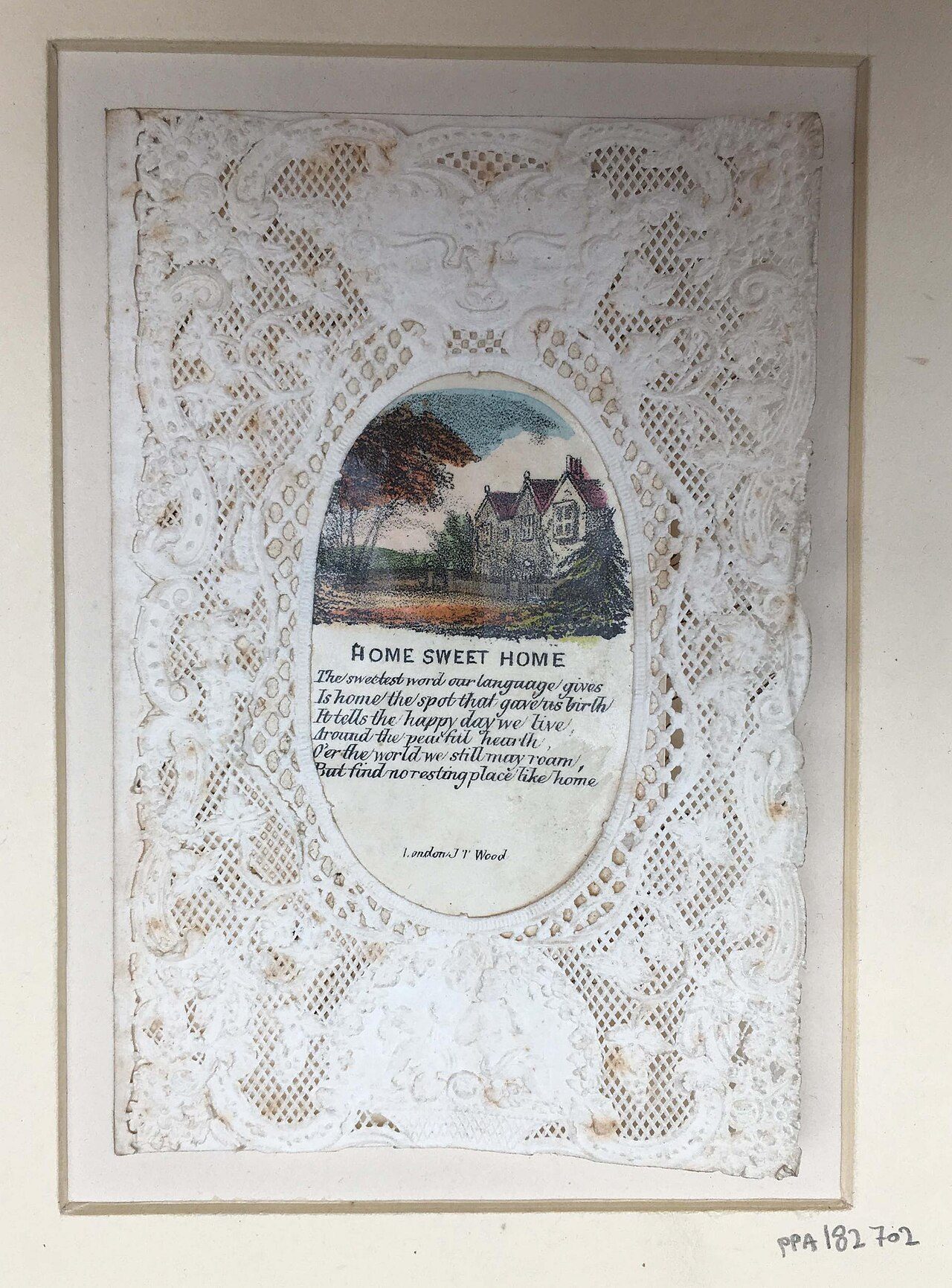
The industry begins with Esther A. Howland. In the 1840s, in Worcester, Massachusetts, Howland began selling the first mass-produced valentines in America - elaborate creations of real lace, ribbons and colourful pictures known as scrap, which earned her the name Mother of the Valentine. Smithsonian Magazine describes how she turned do-it-yourself cards into an industry: her valentines were assembled by an all-woman assembly line in her home, built up in layers of coloured paper under lace, often with a verse hidden inside rather than printed on the outside. Her firm, later the New England Valentine Company, published a Valentine Verse Book of 131 verses in 1879. In 1913 Hallmark began mass-producing valentines, completing the move from keepsake to industry.
Timeline
- About 270
One or more Christian martyrs named Valentine are executed under Claudius II; tradition places the death on 14 February.
- Late 5th century
Pope Gelasius I forbids Lupercalia; tradition credits him with fixing the feast of St Valentine on 14 February.
- 1380s
Chaucer's Parlement of Foules links St Valentine's Day with birds - and by extension lovers - choosing their mates: the first recorded romantic association.
- 1415
Charles, Duke of Orleans, writes a valentine poem to his wife from the Tower of London - the oldest valentine still in existence.
- 1500s
Formal written valentine messages appear; the custom spreads through the courts and then the wider public of Europe.
- Mid-1700s
Handwritten valentines and small tokens are exchanged by lovers and friends of all classes in Britain; printed cards follow by the late 1700s.
- 1840s
Esther A. Howland of Worcester, Massachusetts, begins selling the first mass-produced valentines in America.
- 1879
Howland's New England Valentine Company publishes its Valentine Verse Book, with 131 verses for senders to paste inside cards.
- 1913
Hallmark Cards of Kansas City begins mass-producing valentines, according to NPR.
- Today
More than 145 million cards a year are sent, on Hallmark figures reported by HISTORY, alongside flowers, candy and gifts worldwide.
Significance: One Day, Many Customs
Around the world the day has been adapted rather than simply copied. In Japan, women traditionally give chocolates on 14 February, and the favour is returned a month later, on 14 March, known as White Day; South Korea follows the same pattern, and adds Black Day on 14 April, when people who received nothing gather to eat noodles in black bean sauce. Wales keeps its own lovers' day separately: St Dwynwen's Day on 25 January honours Dwynwen, the Welsh patron saint of lovers. In Finland, by contrast, 14 February is widely treated as a day for friends as much as for lovers.
The common thread is not the saint but the gesture: a small, deliberate token, given on a fixed date. That is why the day survived the loss of its religious meaning. The feast gave it a date, Chaucer gave it a subject, and the card trade gave it a form anyone could afford.
Myths and disputes
Did Valentine's Day descend from Lupercalia? The claim is everywhere, and it is debated, not established. Lupercalia, held in mid-February, was a Roman fertility festival dedicated to Faunus and to Romulus and Remus, in which priests sacrificed a goat and a dog and ran through the streets striking bystanders with strips of the hides. Britannica says only that a link has been suggested, and that the holiday's true origin is vague at best; HISTORY notes that modern scholars dispute the Christianisation theory, given the few similarities between Lupercalia and the modern holiday. The dates sit close together, but no ancient or early medieval source connects the two festivals, and nearly a thousand years separate Lupercalia's suppression from the first romantic valentine.
Did Valentine sign his own last letter 'from your Valentine'? That, too, is legend. Britannica presents it as such: the imprisoned priest is said to have befriended his jailer's daughter, healed her blindness in some accounts, and signed a farewell letter to her with those words. A companion legend says he secretly married couples in defiance of an imperial ban, to spare the husbands from war. Both stories explain the day's later meaning beautifully, which is exactly why historians treat them cautiously: they are first recorded long after his death.
Legacy
Valentine's Day is a case study in how holidays are really made: not founded, but assembled. A martyr's feast supplied the date; a poet supplied the meaning; anonymous lovers supplied the written note; and a Worcester entrepreneur and the greeting-card industry supplied the scale.
Its endurance is the point. The day has outlived the saint's place in the Church calendar, crossed oceans and religions, and bent itself to local custom from White Day in Japan to St Dwynwen's Day in Wales - because the thing it asks is small and repeatable: choose one day, and tell someone, in writing, that they are chosen.
Sources
- Encyclopaedia Britannica - Valentine's Day
- HISTORY - Valentine's Day: Origins and Holiday Traditions
- Smithsonian Magazine - How to Make an Authentic Civil War Valentine
- NPR - The Dark Origins of Valentine's Day
- Encyclopaedia Britannica - Valentine (greeting card)
The facts on this page were checked against these sources on 19 November 2026. The History Trail's permanent pages are researched and written for this site; the live profiles elsewhere on The History Trail are assembled automatically from Wikipedia and Wikidata.
About the Author
Researched and written by the The History Trail Editorial Team — the accountable editorial function behind this site's permanent story pages. The team works from the published sources cited on each page; it does not invent historians, reviewers or credentials, and it corrects errors openly.
Fact Check
Every load-bearing fact on this page traces to one of the sources listed above, and significant claims link to their source in the text. Our checking method is described on the methodology page; errors can be reported via the corrections page.
Sources & Citations
Cite this page as: The History Trail Editorial Team, The History Trail — this article's title, publication and update dates are shown beneath its headline. The full source list appears under Sources above; the site's source standards are on the sources page.