
Holidays
International Holocaust Remembrance Day
International Holocaust Remembrance Day is observed every year on 27 January, the anniversary of the liberation of Auschwitz-Birkenau by the Soviet Red Army in 1945. Designated by the United Nations in 2005, it commemorates the six million Jews murdered in the Holocaust and the millions of other victims of Nazi persecution, and it commits member states to Holocaust education and to rejecting Holocaust denial.
At a Glance
- Date
- 27 January, every year
- Why this date
- On 27 January 1945 the Soviet Red Army liberated Auschwitz-Birkenau, the largest Nazi concentration and extermination camp, finding about 7,000 prisoners still alive there
- Designated by
- United Nations General Assembly Resolution 60/7, adopted on 1 November 2005
- First observed
- 27 January 2006, with a memorial ceremony at United Nations Headquarters in New York
- What the resolution requires
- Member states are urged to honour the victims, develop Holocaust education programmes, and reject any denial of the Holocaust; it also created the Holocaust and the United Nations Outreach Programme
- Who is remembered
- The six million Jews murdered in the Holocaust, and the millions of other victims of Nazi persecution, including Roma and Sinti, people with disabilities, and political prisoners
- Not the same as Yom HaShoah
- Israel's national Holocaust remembrance day falls on 27 Nisan in the Hebrew calendar, usually in April or May - a different date, first held in 1951 and set in law in 1959
Introduction
The day is kept in parliaments, museums, schools and at the United Nations itself, which leads the annual observance through the Holocaust and the United Nations Outreach Programme, established by the same resolution that created the day. Its purpose, in the resolution's terms, is to mobilise civil society for Holocaust remembrance and education in order to help prevent future acts of genocide. Ceremonies typically centre on survivor testimony, the reading of names, memorial prayer and silence, rather than on speeches alone.
The observance is deliberately international. The Holocaust was carried out across a continent by Nazi Germany and its collaborators, and its victims came from almost every European country. A single shared date was intended to give that memory a common anchor, while leaving each country free to keep its own national days of remembrance as well.
Why 27 January: The Liberation of Auschwitz-Birkenau
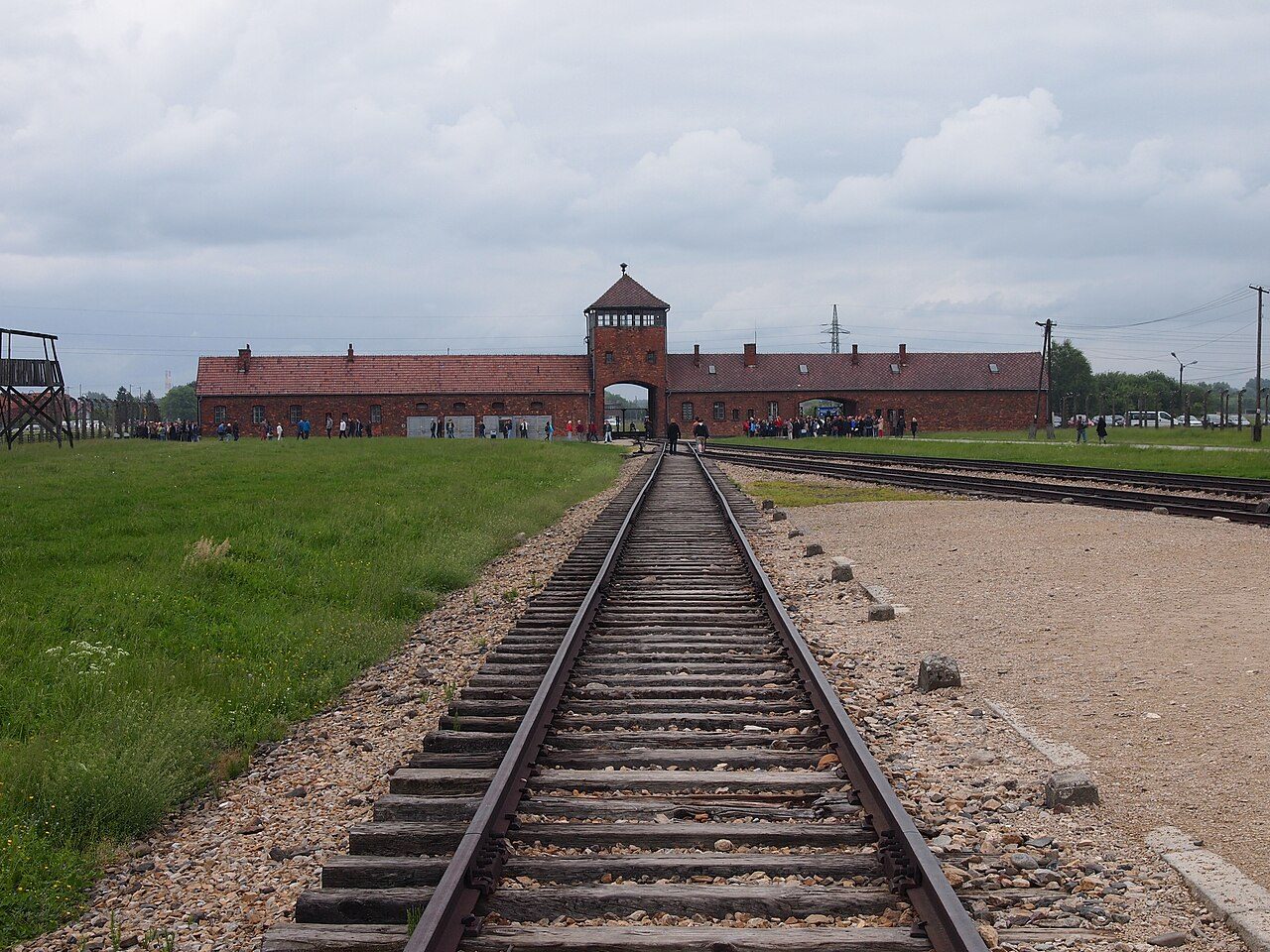
Auschwitz-Birkenau, in German-occupied Poland, was the largest of the Nazi concentration and extermination camps. More than a million people, most of them Jews, were murdered there. In January 1945, as the Red Army advanced, the SS evacuated about 58,000 prisoners from the camp complex on forced marches westward and destroyed evidence of the killings, blowing up gas chambers and crematoria and burning camp records, as the Auschwitz-Birkenau Memorial records.
When Red Army troops entered the grounds on 27 January 1945, they found about 7,000 prisoners there, most of them sick and at the limits of physical exhaustion. The date therefore marks not a victory parade but the moment the largest killing site of the Holocaust was opened to the world. Poland established a memorial on the site soon afterwards: the Auschwitz-Birkenau State Museum was created by an act of the Polish parliament on 2 July 1947, on the grounds of Auschwitz I and Auschwitz II-Birkenau.
Resolution 60/7 and the First Observance
On 24 January 2005 the United Nations General Assembly held a special session marking the sixtieth anniversary of the liberation of the Nazi concentration camps. On 1 November 2005 it adopted Resolution 60/7, which designated 27 January as the annual International Day of Commemoration in memory of the victims of the Holocaust. The resolution urged every member state to honour the memory of the victims and to develop educational programmes about the Holocaust, and it established the United Nations Outreach Programme to carry that work forward.
Resolution 60/7 also rejected any denial of the Holocaust as a historical event. That clause has remained central: in 2022 the General Assembly returned to the subject and adopted a further resolution condemning Holocaust denial and distortion. The first International Holocaust Remembrance Day was observed on 27 January 2006, with a memorial ceremony at United Nations Headquarters in New York; commemorations have been held there every year since, each under a chosen theme. Recent themes have included Home and Belonging in 2023, recognition of the extraordinary courage of victims and survivors in 2024, and Holocaust Remembrance for Dignity and Human Rights in 2025 and 2026.
Timeline
- 27 January 1945
The Soviet Red Army liberates Auschwitz-Birkenau, finding about 7,000 prisoners, most sick and exhausted, after the SS evacuated some 58,000 on forced marches.
- 2 July 1947
An act of the Polish parliament creates the Auschwitz-Birkenau State Museum on the grounds of the former camp.
- 1951 and 1959
Israel first holds a national Holocaust remembrance day in 1951 and establishes it in law in 1959 as Yom HaShoah, on 27 Nisan in the Hebrew calendar.
- 1953
Israel's Knesset establishes Yad Vashem in Jerusalem, entrusted with commemoration, documentation, research and education about the Holocaust.
- 1996
German President Roman Herzog proclaims 27 January Germany's Day of Remembrance for the Victims of National Socialism; a memorial hour is held in the German parliament.
- 24 January 2005
The UN General Assembly holds a special session for the sixtieth anniversary of the liberation of the Nazi camps.
- 1 November 2005
The General Assembly adopts Resolution 60/7, designating 27 January as the International Day of Commemoration in memory of the victims of the Holocaust and rejecting Holocaust denial.
- 27 January 2006
The first International Holocaust Remembrance Day is observed, with a memorial ceremony at UN Headquarters.
- 2022
The General Assembly adopts a further resolution condemning Holocaust denial and distortion and urging states and social media companies to act against it.
- Every 27 January
Observances are held at the United Nations, at Auschwitz-Birkenau, at Yad Vashem and the US Holocaust Memorial Museum, and in parliaments, schools and communities worldwide.
Education and Survivor Testimony
Remembrance on this day is built around evidence and witness. Yad Vashem, the World Holocaust Remembrance Center in Jerusalem, holds hundreds of millions of pages of documentation and the Central Database of Shoah Victims' Names, which records more than 4.8 million names, close to half of them from Pages of Testimony submitted by relatives and survivors. Its work rests, as the institution puts it, on collecting documents, filming survivors' testimonies and preserving the story of each victim as an individual rather than a number.
That emphasis matters more each year, because the number of living survivors is falling. The United Nations Outreach Programme works to ensure, in its words, that the voices of survivors are heard and heeded as a warning against the consequences of antisemitism, racism and other forms of discrimination and prejudice, and it supports remembrance and education activities through United Nations offices in more than 70 countries. The US Holocaust Memorial Museum describes the day in the same terms: the United Nations urges every member state to honour the victims of the Nazi era and to develop educational programmes to help prevent future genocides. Testimony, documents and names are the day's answer to denial: they make the record personal, checkable and difficult to erase.
Legacy
International Holocaust Remembrance Day has become the fixed point in the year when governments, not only Jewish communities, publicly take responsibility for remembering the Holocaust. It has also created a practical network: an outreach programme, annual themes, teaching materials in the United Nations' official languages, and ceremonies that put survivors, rather than officials, at the centre.
Its founders wrote its task into the resolution itself - remembrance and education, in order to help prevent future acts of genocide. Whether that hope is fulfilled is not something a single day can decide. What the day does ensure is that once a year, on the anniversary of the opening of Auschwitz-Birkenau, the victims are named, the record is stated, and denial is answered in public.
Sources
- United Nations - The Holocaust and the United Nations Outreach Programme
- United States Holocaust Memorial Museum - Museum Remembrance Events
- Yad Vashem - What Is Yad Vashem, the World Holocaust Remembrance Center
- Auschwitz-Birkenau State Museum - History of the Memorial
- United Nations - Holocaust Remembrance: A Commitment to Truth
The facts on this page were checked against these sources on 19 November 2026. The History Trail's permanent pages are researched and written for this site; the live profiles elsewhere on The History Trail are assembled automatically from Wikipedia and Wikidata.
About the Author
Researched and written by the The History Trail Editorial Team — the accountable editorial function behind this site's permanent story pages. The team works from the published sources cited on each page; it does not invent historians, reviewers or credentials, and it corrects errors openly.
Fact Check
Every load-bearing fact on this page traces to one of the sources listed above, and significant claims link to their source in the text. Our checking method is described on the methodology page; errors can be reported via the corrections page.
Sources & Citations
Cite this page as: The History Trail Editorial Team, The History Trail — this article's title, publication and update dates are shown beneath its headline. The full source list appears under Sources above; the site's source standards are on the sources page.