
Vehicles
Ford Mustang
Ford expected to sell 100,000 Mustangs a year. It took 22,000 orders on the first day, sold 417,000 in twelve months and built its millionth car inside two years. The Mustang did not just launch a model — it launched the pony car, and a nameplate that has never stopped production since.
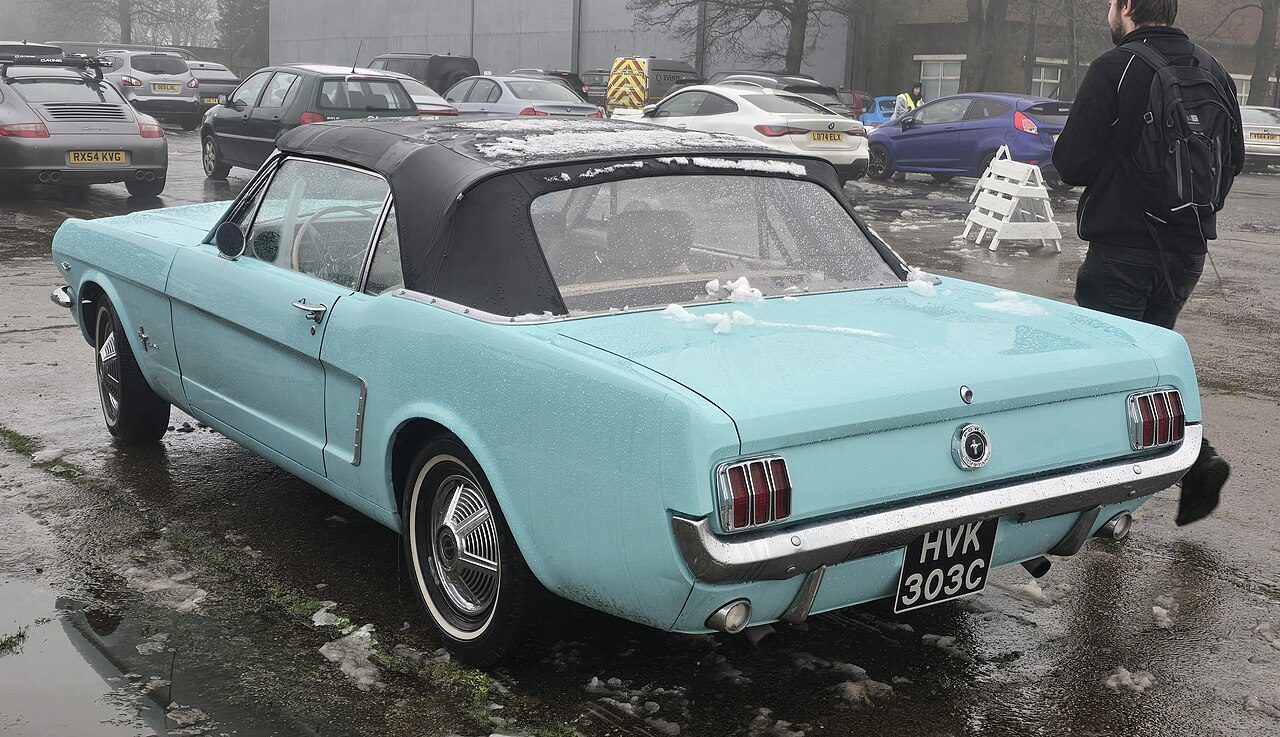
At a Glance
- Unveiled
- 17 April 1964, at the New York World's Fair
- Launch price
- From $2,368
- First-day orders
- 22,000 — against expected annual sales of about 100,000
- First-year sales
- About 417,000 in the first 12 months
- Millionth car
- Built in March 1966, under two years after launch
- Champion
- Lee Iacocca, Ford Division chief — the 'father of the Mustang'
- First production car
- A Wimbledon White convertible, built at the Rouge plant, Dearborn
- Total built
- The 10 millionth Mustang was built in August 2018
Introduction
On 17 April 1964, at the New York World's Fair, Ford unveiled a car it expected to sell about 100,000 of in a year. Dealers took 22,000 orders on the first day. Within twelve months, 417,000 Mustangs had been sold, and in March 1966 — less than two years after launch — the millionth Mustang rolled off the line. The Mustang had not just succeeded; it had invented a category, the 'pony car': a compact, stylish, affordable machine with a long bonnet, a short deck and a options list long enough for every buyer to build a different car.
The formula was championed by Lee Iacocca, the Ford Division chief later known simply as the father of the Mustang. Ford priced the car from $2,368, wrapped it in the imagery of the American West and the P-51 fighter that shared its name, and aimed it squarely at young buyers the industry had been ignoring. It worked so completely that the Mustang's launch remains the benchmark against which every car debut since has been measured.
Background
The Mustang began as experiments. The first car to carry the name, the 1962 Mustang I concept, was a tiny two-seat, mid-engine sports car named after the legendary P-51 Mustang fighter plane of the Second World War. The production car that followed was a very different machine — a four-seat coupe and convertible developed in just two years — but it kept the concept's spirit: sporty looks and personality at a price ordinary buyers could reach.
Production began ahead of the publicity. Between 10 February and 5 March 1964, Ford's Rouge plant built about 180 pre-production cars, practice cars that taught the line its work and were then shipped out so that every major dealer would have a Mustang to display on launch day. Regular production started on 9 March. Logically, the first cars built were sent to the farthest dealers — which is how Serial Number One, a Wimbledon White convertible, ended up 2,180 miles from Dearborn, on an island in the Atlantic: St John's, Newfoundland.
Timeline
- 1962
The Mustang I concept — a two-seat, mid-engine sports car named for the P-51 fighter — is the first car to carry the Mustang name.
- 10 February – 5 March 1964
About 180 pre-production Mustangs are built at the Rouge to train the line and supply dealers with display cars.
- 9 March 1964
The first regular production Mustang rolls off the assembly line at Dearborn.
- 14 April 1964
Airline pilot Stanley Tucker buys Serial Number One in St John's, Newfoundland — three days before the car is officially on sale.
- 17 April 1964
Mustang debuts at the New York World's Fair at $2,368; dealers take 22,000 orders on the first day.
- First 12 months
Sales reach about 417,000 — more than four times Ford's annual expectation.
- 2 March 1966
The millionth Mustang is built. Tucker trades Serial Number One for the millionth car, and Ford donates Number One to The Henry Ford museum.
- 1966
A Mustang is taken apart, lifted up the Empire State Building and reassembled on its 86th-floor observation deck.
- August 2018
Ford builds the 10 millionth Mustang, 54 years after the first.
Significance
The Mustang's significance is written in its competitors. Within a few years every American manufacturer fielded a pony car of its own, and the template — compact platform, dramatic styling, endless options, youth marketing — became a permanent part of the industry. The Mustang also proved that a car could be a personal statement at a mass-market price: buyers chose engines, colours, transmissions and trim to make factory cars that felt bespoke, a model of selling that carmakers still follow.
Culturally, the car escaped the showroom almost immediately. Its red, white and blue running-horse badge, its fastback silhouette and its name became shorthand for a particular American promise of freedom and speed, and the car has been in continuous production ever since — surviving fuel crises, emissions eras and the SUV age that killed most of its rivals. Few products of any kind have held a nameplate, a shape and a meaning intact for sixty years.
Legacy
Mustang is now in its seventh generation and has been the world's best-selling sports car for much of the past decade, with more than a million sold since the car went global in 2015 and more than ten million since 1964. Ford has stretched the name onto an electric crossover, the Mach-E — a move purists grumble about and Ford defends as the price of the nameplate's survival — while the V8 coupe remains the icon at the centre of the range.
The deeper legacy is the launch itself. A car developed in two years, priced for the young, unveiled at a world's fair and sold out before its first weekend became the industry's creation myth: proof that the right product, honestly priced and vividly presented, could move a market overnight. Every 'one more thing' product reveal since 1964 is chasing what Ford did at Flushing Meadows.
Sources
- The Henry Ford — Stanley Tucker and Ford Mustang Serial Number One
- Ford Motor Company — Mustang Background Facts (media fact sheet, via SlideShare)
- Ford Motor Company — Forty Years of Mustang Milestones (press release, via The Auto Channel)
- Wikipedia — Ford Mustang (corroboration)
The facts on this page were checked against these sources on 19 November 2026. The History Trail's permanent pages are researched and written for this site; the live profiles elsewhere on The History Trail are assembled automatically from Wikipedia and Wikidata.
About the Author
Researched and written by the The History Trail Editorial Team — the accountable editorial function behind this site's permanent story pages. The team works from the published sources cited on each page; it does not invent historians, reviewers or credentials, and it corrects errors openly.
Fact Check
Every load-bearing fact on this page traces to one of the sources listed above, and significant claims link to their source in the text. Our checking method is described on the methodology page; errors can be reported via the corrections page.
Sources & Citations
Cite this page as: The History Trail Editorial Team, The History Trail — this article's title, publication and update dates are shown beneath its headline. The full source list appears under Sources above; the site's source standards are on the sources page.