
Vehicles
Boeing 747 — the original Jumbo Jet
The Boeing 747 was the first airliner with two aisles, a partial second deck and room for hundreds of passengers. The Queen of the Skies turned long-haul flying from a luxury into a routine journey for millions.
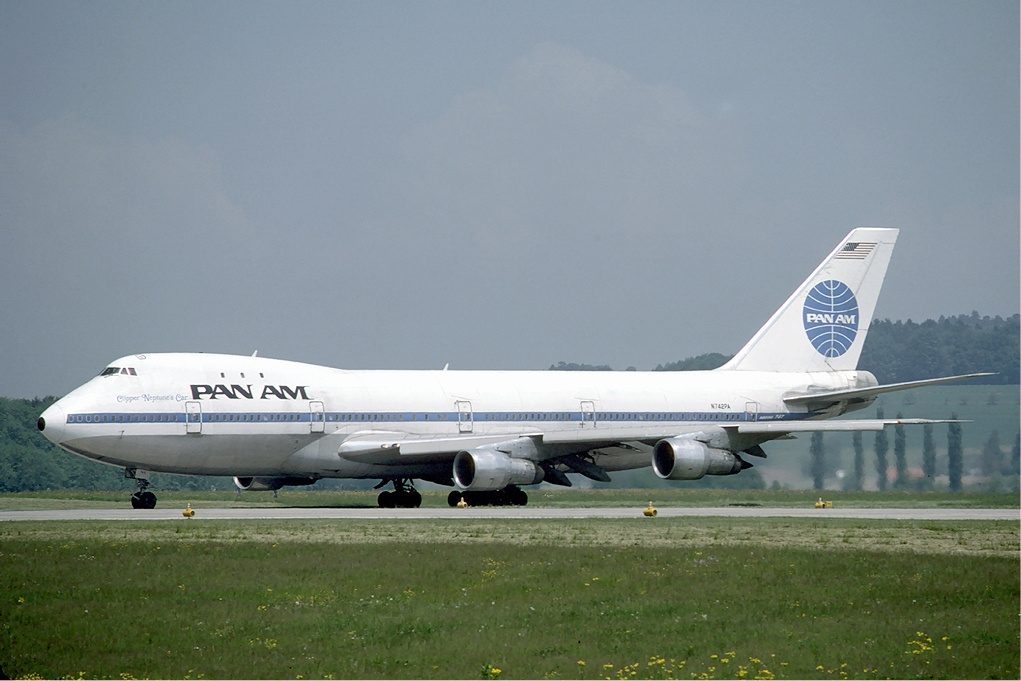
At a Glance
- First flight
- 9 February 1969
- Maker
- Boeing Commercial Airplanes, United States
- Entered service
- 22 January 1970, with Pan Am, New York to London
- Production
- 1967 to 2022; 1,574 aircraft built
- Layout
- Four engines, twin aisle, partial upper deck
- Typical cruise
- About Mach 0.85 on the widely used 747-400
- Nicknames
- Jumbo Jet; Queen of the Skies
Two and a Half Times a 707
Some aircraft are remembered for speed or beauty. The Boeing 747 is remembered for size, and for what that size made possible. When the first example was rolled out at Everett, Washington, on 30 September 1968, onlookers were looking at an airliner roughly two and a half times the capacity of the Boeing 707 it was meant to succeed, with a tail rising about as high as a six-storey building. Nothing in airline service had looked like it before.
Boeing calls the 747 the world's first twin-aisle aeroplane, and that simple fact explains its impact. Two aisles meant a wide cabin, ten seats across in economy, and a cost per seat low enough for airlines to cut long-haul fares. The aeroplane that journalists dubbed the Jumbo Jet did not just carry more people; it changed who could afford to fly between continents at all.
Production ran for 54 years, from 1967 until the final aircraft left Everett on 6 December 2022. In that time 1,574 aircraft were delivered to more than 100 customers, and the type also served as a freighter, a military command post, a space shuttle carrier and the presidential aircraft, Air Force One.
Pan Am Asks, Joe Sutter Answers
The 747 began with a request. In the mid-1960s Pan Am, then the most influential US international airline, wanted a jet far larger than its 707s so that each seat would cost less to operate. Boeing's design team, led from 1965 by engineer Joe Sutter, answered with a wide-body design built around a new generation of large, economical high-bypass turbofan engines, the first of them Pratt & Whitney's JT9D.
Pan Am committed early, ordering 25 aircraft in April 1966 before the design was complete. The gamble was enormous on both sides. Boeing had no building big enough to assemble the aeroplane, so it constructed an entirely new plant at Everett; the company notes that the factory remains the largest building in the world by volume. Thousands of engineers and mechanics worked at a pace that earned them the nickname 'the Incredibles'.
The design hedged its bets in a way that later proved wise. The flight deck was placed high, above the main cabin, so that the nose could one day swing upward and turn the aeroplane into a freighter. Boeing expected sleek supersonic airliners to take over passenger flying, leaving the 747 to haul cargo. History went the other way, but the raised cockpit gave the 747 its famous hump and a second career carrying freight that outlasted its passenger heyday.
Timeline
- 1965
Boeing engineer Joe Sutter moves to lead the design studies for a new, much larger airliner, the future 747.
- April 1966
Pan Am orders 25 Boeing 747s, becoming the launch customer and giving the programme its crucial first commitment.
- 1967
Production begins, and work proceeds on the vast new Everett factory in Washington built specially for the aeroplane.
- 30 September 1968
The first 747 is rolled out at Everett before the press and the airlines that had ordered it.
- 9 February 1969
The prototype makes its first flight, with test pilots Jack Waddell and Brien Wygle and flight engineer Jess Wallick on board.
- December 1969
After an intensive test programme, the 747 receives its certification, clearing it for airline service.
- 22 January 1970
Pan Am puts the 747 into scheduled service on the New York to London route, opening the wide-body era.
- 1980
The 500th Boeing 747 rolls out of the factory; it is delivered to Scandinavian Airlines.
- 23 August 1990
A new Air Force One, a modified 747-200B known as the VC-25, is delivered to the United States Air Force.
- 1993
Singapore Airlines takes delivery of the 1,000th 747, a total few had expected the type to reach.
- 8 February 2010
The 747-8 Freighter, the final generation of the family, makes its first flight.
- 6 December 2022
The last 747 ever built, a freighter for Atlas Air, rolls out of Everett, ending the 54-year production run.
Cheaper Seats Across Oceans
The 747's real achievement was economic rather than spectacular. By spreading the cost of a flight across several hundred seats, it brought down the price of intercontinental travel through the 1970s and beyond. Routes that had been the preserve of business travellers and the wealthy — London to New York, Los Angeles to Tokyo, Frankfurt to Singapore — became ordinary journeys, and airports, hotels and whole tourist industries grew up around the traffic the Jumbo made possible.
It also set the template every later wide-body followed: a twin-aisle cabin, high-bypass engines and a design that could be stretched, shrunk and converted between passenger and cargo work. Boeing records that the fleet accumulated more than 118 million flight hours, a measure of how completely the type became the default long-haul aircraft for a generation of airlines.
The Jumbo in the Freighter Age
Passenger 747s have now largely retired, replaced by twin-engine jets that burn less fuel, yet the type refuses to disappear. Freighters still cross the oceans nightly, and the 747 remains the basis of Air Force One. Its silhouette — hump, four engines, towering tail — is still the drawing a child makes when asked to sketch an airliner.
More than any record, the 747's legacy is a habit of mind: the assumption that ordinary people can cross the world in a day, affordably — an assumption that began in January 1970, when Pan Am's first Jumbo left New York for London.
Sources
- Boeing — Boeing 747-8 (official history and gallery)
- Encyclopaedia Britannica — Boeing 747
- Smithsonian Magazine — A&S Interview: Joe Sutter
- Wikipedia — Boeing 747 (corroboration)
The facts on this page were checked against these sources on 18 November 2026. The History Trail's permanent pages are researched and written for this site; the live profiles elsewhere on The History Trail are assembled automatically from Wikipedia and Wikidata.
About the Author
Researched and written by the The History Trail Editorial Team — the accountable editorial function behind this site's permanent story pages. The team works from the published sources cited on each page; it does not invent historians, reviewers or credentials, and it corrects errors openly.
Fact Check
Every load-bearing fact on this page traces to one of the sources listed above, and significant claims link to their source in the text. Our checking method is described on the methodology page; errors can be reported via the corrections page.
Sources & Citations
Cite this page as: The History Trail Editorial Team, The History Trail — this article's title, publication and update dates are shown beneath its headline. The full source list appears under Sources above; the site's source standards are on the sources page.