
Things
Wampanoag
The Wampanoag — the People of the First Light — have lived in what is now southeastern Massachusetts and eastern Rhode Island for more than 12,000 years. Epidemic, alliance, war and land loss cut their numbers catastrophically after 1616, yet two federally recognised Wampanoag tribes endure today.
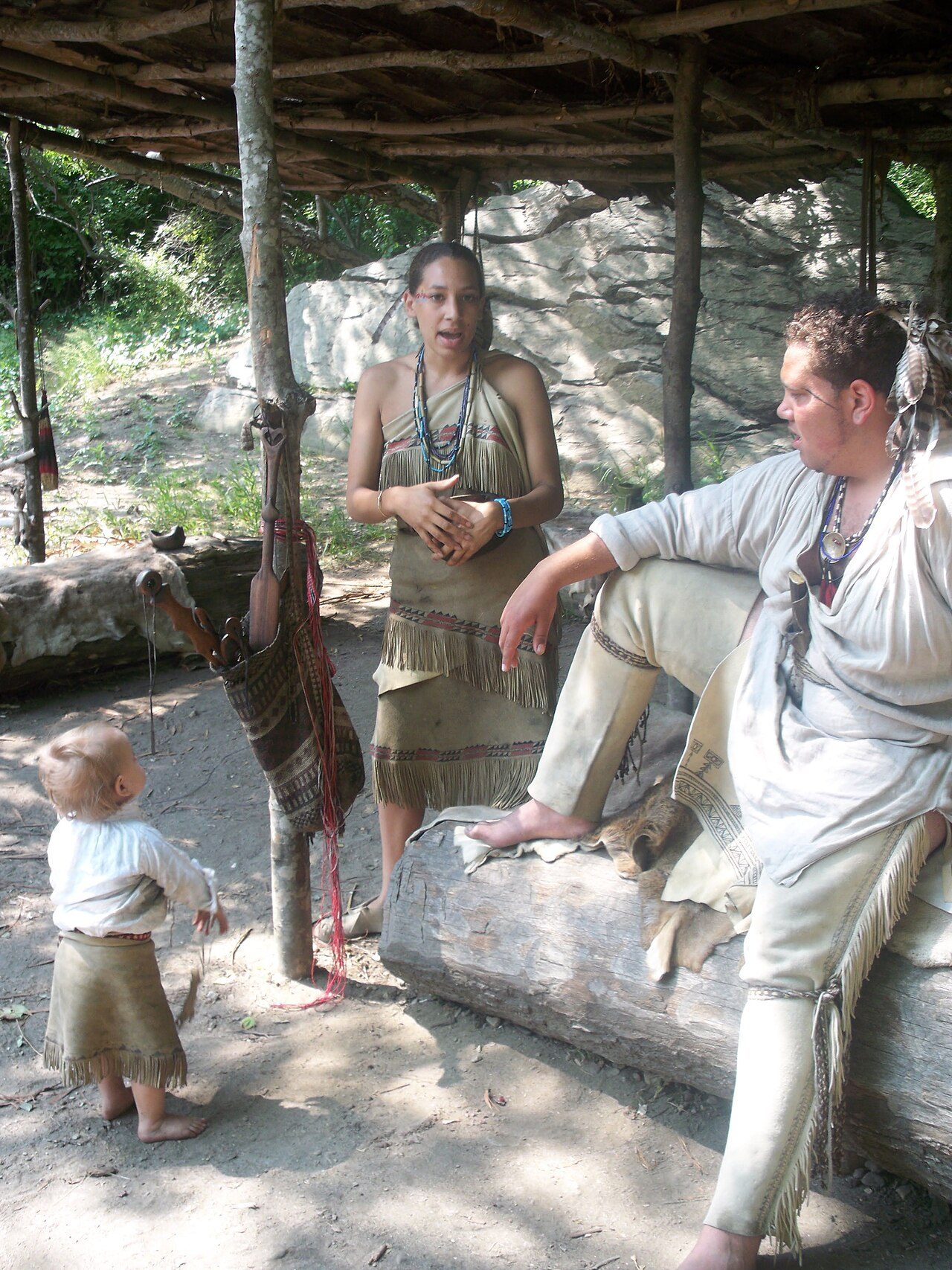
At a Glance
- Name
- Wampanoag, also rendered Wôpanâak — known as the People of the First Light
- Homeland
- Southeastern Massachusetts and eastern Rhode Island, including Cape Cod, Martha's Vineyard and Nantucket
- Presence
- At least 12,000 years in their homelands, by oral history and archaeology
- Before 1620
- As many as 40,000 people in 67 villages, according to Mayflower 400 UK
- The Great Dying
- 1616–1619 epidemics killed nearly three-quarters of the Wampanoag nation, the Smithsonian estimates
- Leader in 1621
- Ousamequin, the sachem the English called Massasoit
- Today
- Two federally recognised tribes: the Wampanoag Tribe of Gay Head (Aquinnah), recognised 1987, and the Mashpee Wampanoag Tribe, recognised 2007
Introduction
The Wampanoag are a Native American people of the Northeastern Woodlands whose homeland covers southeastern Massachusetts and eastern Rhode Island, including Cape Cod and the islands of Martha's Vineyard and Nantucket. They call themselves the People of the First Light — the people who live where the day begins — and their oral histories and the archaeological record place them in these homelands for at least 12,000 years. In the early 1600s they were a large, organised society: a network of communities under their own sachems, farming corn, beans and squash, fishing the coast, and numbering, by one widely used estimate, as many as 40,000 people in 67 villages.
Most outsiders meet the Wampanoag through a single year — 1621, when their leader Ousamequin allied with the Mayflower colonists and joined the harvest feast later called the First Thanksgiving. That year was real, and consequential, but it sits inside a far longer story: of epidemic catastrophe immediately before it, of a war of resistance two generations after it, and of survival, language revival and renewed federal recognition in our own time. The Wampanoag are not a people of the past tense.
Origins: Patuxet, Tisquantum and the Great Dying
European contact began long before the Mayflower, and much of it was violent. Explorers mapped the coast from 1524 onward; traders and fishermen followed, and some came as kidnappers, seizing Native people to sell or exhibit in Europe. In 1614 Captain Thomas Hunt lured twenty men from the village of Patuxet aboard his ship, among them a young man named Tisquantum, and seven more from Nauset, and carried them off to be sold in Spain. Tisquantum escaped, worked for an English trading company, spent time in London and Newfoundland, and in 1619 finally reached home — to find that his family and most of Patuxet were dead.
What killed them was the catastrophe Wampanoag history calls the Great Dying. Between 1616 and 1619, diseases brought from Europe — to which Native communities had no immunity — swept the Northeast coast. The Smithsonian's National Museum of the American Indian estimates that nearly three-quarters of the entire Wampanoag nation died; entire villages stood empty. Patuxet was one of them. The weakened Wampanoag were left exposed to the Narragansett, their powerful western neighbours, who had been far less affected. It was into this landscape of loss that the Mayflower sailed in November 1620 — and its passengers, finding cleared fields and an empty village site, built Plymouth on Patuxet itself.
Timeline
- 12,000+ years ago
Wampanoag ancestors are living and thriving in their Northeast coast homelands, as oral history and archaeology attest.
- 1614
Captain Thomas Hunt kidnaps twenty men from Patuxet, including Tisquantum, and seven from Nauset, to sell into slavery.
- 1616–1619
The Great Dying: epidemics from European traders kill nearly three-quarters of the Wampanoag nation.
- 1619
Tisquantum returns home with Captain Thomas Dermer's expedition and learns that his family and most of Patuxet have not survived.
- 1620–1621
English colonists settle the empty village of Patuxet as Plymouth; Ousamequin makes them allies by treaty and sends Tisquantum and Hobbamock to assist and observe them.
- Autumn 1621
Ousamequin and ninety men join the colonists' three-day harvest celebration, bringing five deer to the feast.
- 1622
Tisquantum, the alliance's indispensable interpreter, dies of a fever while guiding Governor Bradford.
- 1661–1662
Ousamequin dies; his son Wamsutta succeeds, is seized and marched to Plymouth at gunpoint, and dies days later in suspicious circumstances; his brother Metacom succeeds him.
- 1675–1676
King Philip's War: Metacom leads the Wampanoag and their allies against the colonies; he is killed in August 1676, and survivors are hunted, killed or sold into slavery as far away as Bermuda.
- 1970
Wamsutta Frank James declares Thanksgiving a National Day of Mourning at Plymouth, an observance kept every year since.
- 1987 and 2007
The Wampanoag Tribe of Gay Head (Aquinnah) and then the Mashpee Wampanoag Tribe regain federal recognition from the United States.
- 1993
Under linguist jessie little doe baird, Wampanoag communities begin the Wôpanâak Language Reclamation Project to bring their language back.
Significance
The alliance of 1621 was a considered act of statecraft. Ousamequin, leading a nation thinned by epidemic and pressed by the Narragansett, chose to bring the armed, hungry newcomers into the Wampanoag network rather than destroy or ignore them. The treaty pledged mutual support; Tisquantum's teaching on corn planting quite possibly saved the colony from starvation; and the harvest feast that autumn displayed the pact to both peoples. For roughly a generation, while Ousamequin lived, the arrangement held — the longest early peace between English colonists and a Native nation in New England.
Its collapse defines the second half of the story. As English settlement spread, colonists' livestock, fences, courts and land deeds squeezed the Wampanoag out of their own homelands. After Ousamequin's death, his sons Wamsutta and then Metacom — called King Philip by the English — inherited a deteriorating position. When Plymouth hanged three Wampanoag men in 1675 for the killing of the Christian convert John Sassamon, Metacom led the Wampanoag, Nipmuck, Pocumtuck and Narragansett in the war that bears his English name. Fourteen months of fighting devastated both sides; Metacom and the Pocasset leader Weetamoo were killed, and surviving Wampanoag were enslaved, dispersed or confined. Native power in southern New England was broken for centuries.
Legacy
The Wampanoag endured the centuries after 1676 by adaptation as much as resistance: working in whaling and fishing, serving in the American Revolution, and holding onto communities at Mashpee, Aquinnah and Herring Pond even as Massachusetts divided their reservations into individual allotments in 1850 and 1870 and non-Native buyers took the land. The modern era brought formal restoration. The town of Gay Head took back its Wampanoag name, Aquinnah, in 1998; the Native Land Conservancy, founded by Ramona Peters in 2012 as the first Native-run land conservation group east of the Mississippi, now protects ancestral sites, acquiring thirty-two acres in Kingston as Wampanoag Common Lands in 2022.
Today the Mashpee Wampanoag hold their annual powwow in July, the Aquinnah gather each September, and Wampanoag communities keep seasonal celebrations including Cranberry Day in the autumn. Two tribes hold federal recognition, and others, including the Herring Pond Wampanoag, continue to seek it. The people who watched the Mayflower arrive are, as their own phrase insists, still here — a nation whose history did not end at the feast for which it is most often remembered.
Sources
- Smithsonian National Museum of the American Indian — Timeline: The First Thanksgiving
- Mayflower 400 UK — Four hundred years of Wampanoag history
- Smithsonian Magazine — How to Tell the Thanksgiving Story on Its 400th Anniversary
- Plimoth Patuxet Museums — What did they eat at the 1621 harvest celebration?
- Encyclopaedia Britannica — Thanksgiving Day
The facts on this page were checked against these sources on 19 November 2026. The History Trail's permanent pages are researched and written for this site; the live profiles elsewhere on The History Trail are assembled automatically from Wikipedia and Wikidata.
About the Author
Researched and written by the The History Trail Editorial Team — the accountable editorial function behind this site's permanent story pages. The team works from the published sources cited on each page; it does not invent historians, reviewers or credentials, and it corrects errors openly.
Fact Check
Every load-bearing fact on this page traces to one of the sources listed above, and significant claims link to their source in the text. Our checking method is described on the methodology page; errors can be reported via the corrections page.
Sources & Citations
Cite this page as: The History Trail Editorial Team, The History Trail — this article's title, publication and update dates are shown beneath its headline. The full source list appears under Sources above; the site's source standards are on the sources page.