
Things
Toyota
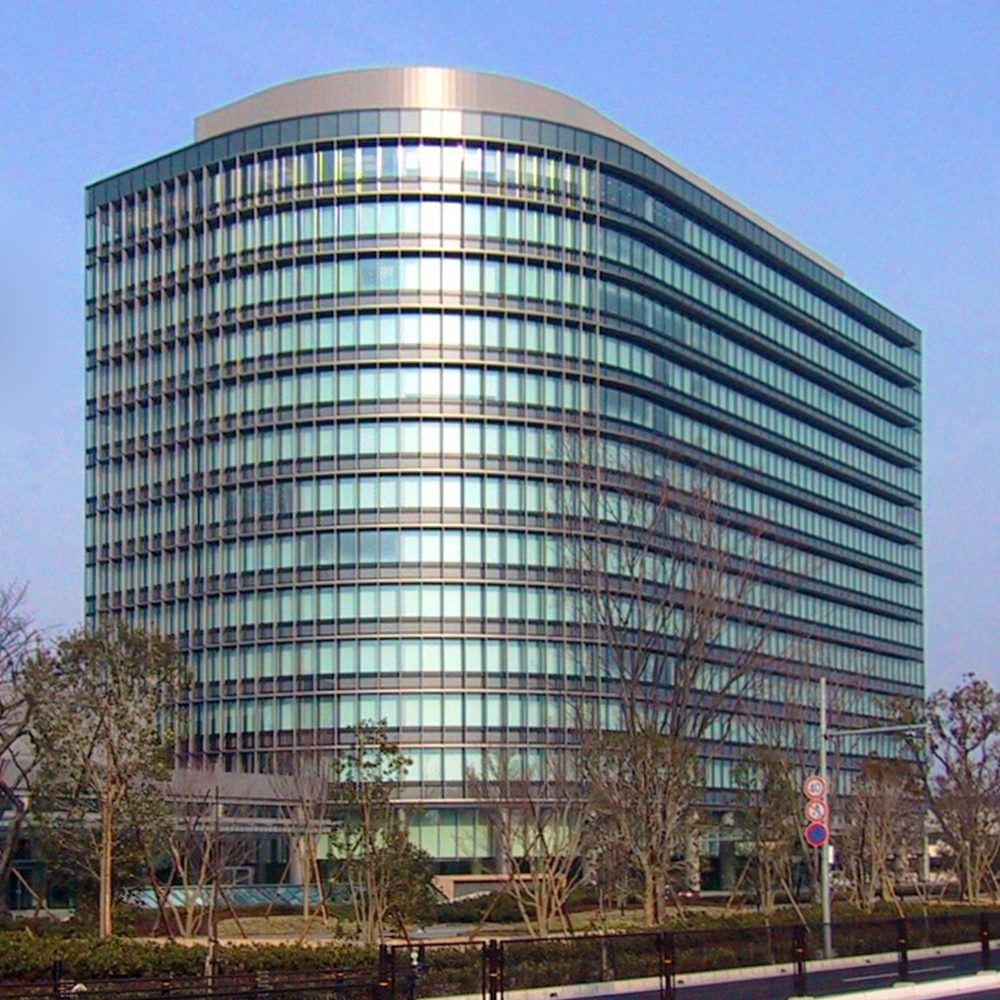
Toyota Motor Corporation is a Japanese automobile manufacturer headquartered in Toyota City, east of Nagoya. It began not with cars but with looms: Kiichiro Toyoda founded its automobile division inside his father's Toyoda Automatic Loom Works in 1933, its first passenger car, the Model AA, appeared in 1936, and the company was incorporated on 28 August 1937. It became the world's largest automobile manufacturer in 2008.
At a Glance
- Roots
- The automobile division of Toyoda Automatic Loom Works, founded in 1933 by Kiichiro Toyoda, son of loom inventor Sakichi Toyoda
- Incorporated
- 28 August 1937, as Toyota Motor Company, Ltd.; the present name, Toyota Motor Corporation, dates from a merger in 1982
- First car
- The Model AA sedan, released in 1936, before the company itself was incorporated
- Headquarters
- Toyota City, Aichi Prefecture, an industrial city east of Nagoya, Japan
- Landmark models
- Corolla (launched 1966), the luxury brand Lexus (1989), and the Prius (1997), the first mass-produced hybrid car
- The milestone
- In 2008 Toyota became the largest automobile manufacturer in the world for the first time, surpassing General Motors, according to Britannica
- The system
- The Toyota Production System, built on just-in-time production and jidoka, was later studied worldwide as lean manufacturing
Introduction
Toyota is the parent company of the Toyota Group, with headquarters in Toyota City and, Britannica records, about a thousand subsidiary companies and affiliates making automobiles, parts and commercial and industrial vehicles. Few large manufacturers can trace so unlikely a beginning: the world's biggest carmaker started as a maker of automatic looms for weaving cloth, and its founding family spelled its name differently from the company it created.
Its history is also a history of method. Toyota's cars reached the world through a production system developed under conditions of scarcity, and that system - studied, copied and renamed lean - may in the long run matter as much as any single model the company has built.
From Looms to Motor Cars
Sakichi Toyoda built his reputation on looms, above all the automatic loom he completed in 1924, whose self-stopping mechanism halted the machine when a thread broke rather than weave defective cloth. His son Kiichiro travelled to Europe and the United States in 1929 to investigate automobile production. On 1 September 1933, Toyota's own chronology records, Toyoda Automatic Loom Works established its Automobile Division under Kiichiro's direction, and research into petrol engines followed.
The first vehicle sold was the Model G1 truck, and in 1936 the division completed its first production passenger car, the Model AA sedan, as Britannica records. That September a public competition produced a new logo and the product name changed from Toyoda to Toyota. On 28 August 1937 the division was incorporated as the Toyota Motor Company, Ltd., headed by Kiichiro, and in 1938 the Koromo Plant - now the Honsha Plant - began operations on the site the headquarters still occupies.
War, Recovery and the American Market
During the Second World War Toyota suspended production of passenger cars and concentrated on trucks, Britannica records, and it emerged to wrecked facilities and a chaotic economy. Passenger car production resumed only in 1947, with the small Model SA. In the 1950s, seeking competitiveness, Toyota executives toured American manufacturers, including Ford, studied their production methods, and applied what they learned at home with, Britannica notes, a nearly immediate increase in efficiency.
The American market took longer to crack. Toyota Motor Sales, U.S.A. was established in 1957, but the Toyopet sedan released the following year was poorly received, Britannica records, because of its high price and lack of horsepower. The Land Cruiser four-wheel-drive vehicle was more successful, and the redesigned Corona, re-released for American drivers in 1965, marked the company's first major success in the United States. The Corolla, launched in Japan in 1966 and released in the United States in 1968, built the reputation for low-cost, fuel-efficient and reliable cars on which Toyota's expansion rested.
The Toyota Production System
Behind the models stood a way of making things assembled over decades. Toyota describes its production system as resting on two pillars. The first, jidoka, descends from Sakichi's looms: machines, and later workers, stop the process when a defect appears, so faults are fixed at their source rather than passed along. The second, just-in-time, was proposed by Kiichiro when the Koromo Plant opened: each process makes only what the next process needs, when it needs it, in the amount needed, rather than piling up stock.
The kanban card system that signals those needs was adopted at all Toyota plants in 1963. Western researchers who studied the system in the 1980s gave it a new name: a 1988 article by John Krafcik called it lean production, and the 1990 book The Machine That Changed the World carried the Toyota method to managers far beyond the car industry.
Timeline
- 1924
Sakichi Toyoda completes his automatic loom, with a mechanism that stops the machine when a thread breaks.
- 1 September 1933
Toyoda Automatic Loom Works establishes its Automobile Division under Kiichiro Toyoda.
- 1936
The Model AA, Toyota's first production passenger car, is completed; a public competition produces the Toyota name and logo.
- 28 August 1937
Toyota Motor Co., Ltd. is established as an independent company.
- 1938
The Koromo Plant (now the Honsha Plant) begins operations.
- 1947
Passenger car production resumes after the war with the small Model SA.
- 1957
Toyota Motor Sales, U.S.A., Inc. is established; the Toyopet follows in 1958 and is poorly received.
- 1966
The Corolla is launched in Japan; it reaches the United States in 1968.
- 1982
Toyota Motor Company and Toyota Motor Sales merge to form Toyota Motor Corporation.
- 1989
The luxury brand Lexus is launched.
- 1997
The Prius, the world's first mass-produced hybrid car, is launched in Japan.
- 2008
Toyota becomes the largest automobile manufacturer in the world for the first time, surpassing General Motors.
Significance
Toyota's significance runs on two tracks. As a carmaker, it carried Japanese manufacturing into markets once dominated by American and European firms, and models such as the Corolla and the Prius each reset what buyers expected - the first for affordable reliability, the second, in Britannica's words, as a best seller that propelled hybrids into the spotlight. In 2008 it passed General Motors to become the largest automobile manufacturer in the world for the first time.
As a manufacturer of anything, its influence may be wider still. The Toyota Production System became the reference point for lean manufacturing in industries from aerospace to hospitals, an export that required no shipping. The record also includes setbacks on the same scale: Britannica records an international safety recall of more than eight million vehicles in 2010, which temporarily halted production and sales of several top models - a reminder that a system built on stopping for defects is judged hardest when defects escape it.
Myths and disputes
Was Toyota founded as a car company in 1937? Neither half of that sentence is quite right. The enterprise began in looms, the automobile division dates from 1933, and the first Toyota car, the Model AA, was completed in 1936 - a year before the company that bears its name was incorporated. Even Toyota's own anniversary is not the incorporation date: the company's 75-year history explains that it celebrates 3 November, the day in 1938 when the Koromo Plant began operations and mass production of the AA started, as the anniversary of its foundation, while the registration of incorporation took place on 28 August 1937.
Why did Toyoda become Toyota? The founding family's name is Toyoda, and Britannica explains the change simply: the company's name was changed to Toyota, which has a more pleasing sound in Japanese. Toyota's own chronology adds the mechanism - the name and logo were established in September 1936 through a public suggestion process. Popular retellings add luckier explanations involving brush strokes; the documented record is the competition and the sound.
Legacy
Toyota's legacy is visible in three places. It is in the Corolla, a nameplate in continuous production since 1966. It is in the hybrid drivetrain the Prius carried into the mainstream in 1997, a quarter-century before electrification became the industry's common direction. And it is in the city outside the headquarters gates: Koromo, the town where Kiichiro built his first plant, renamed itself Toyota City in 1959, taking the name of the company that a loom works had spun off twenty-two years before.
Sources
- Encyclopaedia Britannica - Toyota Motor Corporation
- Toyota Motor Corporation - 75 Years of TOYOTA: Message
- Toyota Motor Corporation - 75 Years of TOYOTA: Overall Chronological Table, 1931-1940
- Toyota Motor Corporation - Annual Report 2007: Toyota Milestones
- Rework - The History of the Toyota Production System and Lean
The facts on this page were checked against these sources on 19 November 2026. The History Trail's permanent pages are researched and written for this site; the live profiles elsewhere on The History Trail are assembled automatically from Wikipedia and Wikidata.
About the Author
Researched and written by the The History Trail Editorial Team — the accountable editorial function behind this site's permanent story pages. The team works from the published sources cited on each page; it does not invent historians, reviewers or credentials, and it corrects errors openly.
Fact Check
Every load-bearing fact on this page traces to one of the sources listed above, and significant claims link to their source in the text. Our checking method is described on the methodology page; errors can be reported via the corrections page.
Sources & Citations
Cite this page as: The History Trail Editorial Team, The History Trail — this article's title, publication and update dates are shown beneath its headline. The full source list appears under Sources above; the site's source standards are on the sources page.