
Things
Metropolis
Metropolis is Fritz Lang's silent science-fiction epic, premiered in Berlin on 10 January 1927 and, at more than five million Reichsmarks, the most expensive film yet made. Cut down within months of its premiere, it spent eighty years as a masterpiece with a quarter missing - until a print found in Buenos Aires in 2008 let restorers rebuild it almost whole.
At a Glance
- The film
- German silent science-fiction epic directed by Fritz Lang, produced by UFA at the Babelsberg studios
- Premiere
- 10 January 1927, Ufa-Palast am Zoo, Berlin - original version 4,189 metres, about 153 minutes; the centenary falls on 10 January 2027
- Screenplay
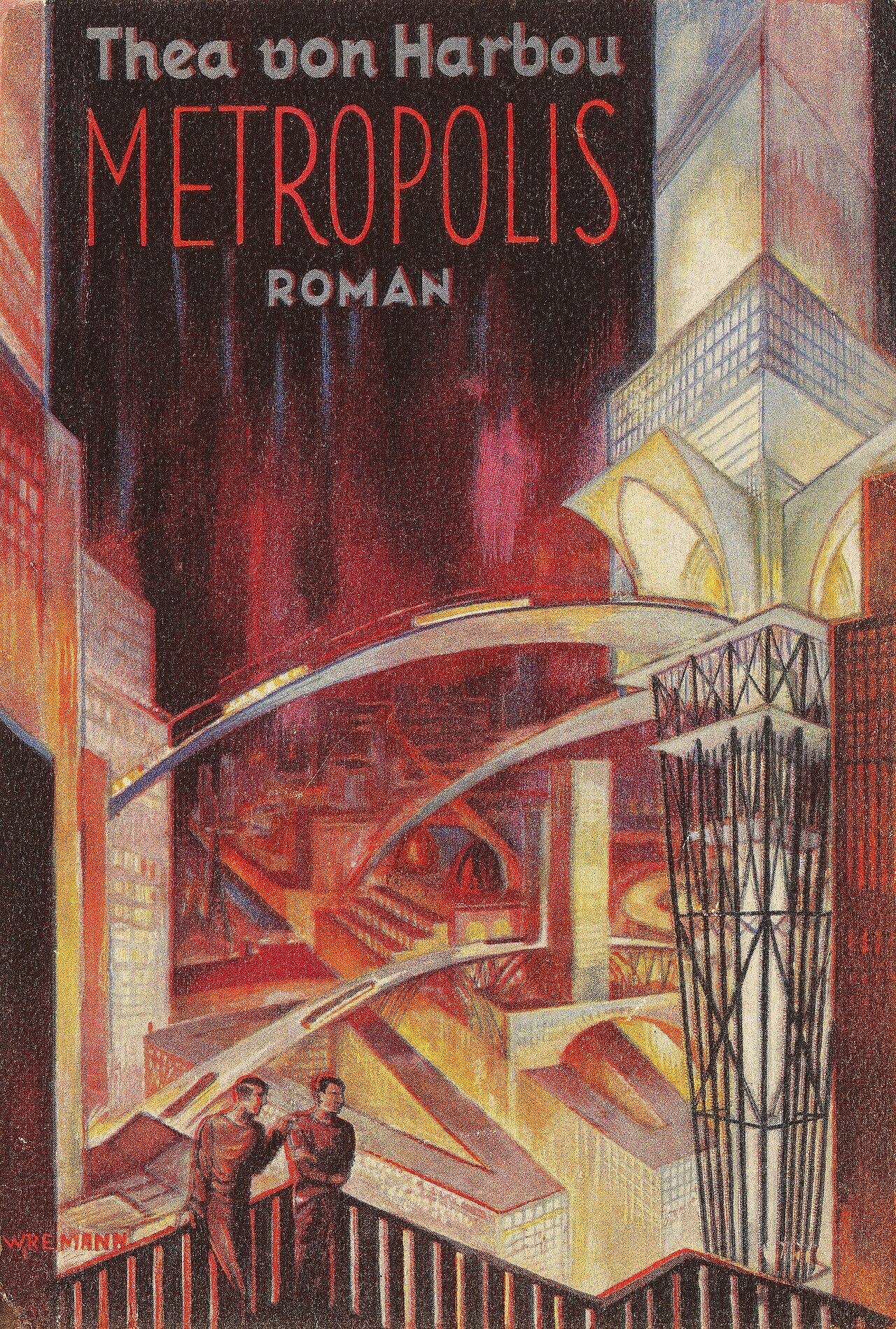
- Thea von Harbou, Lang's wife and collaborator, from her own 1925 novel written as a treatment for the film
- Cost
- About 5.3 million Reichsmarks by the most cited estimate (accounts run higher) - the most expensive film made up to that time
- The honour
- Inscribed on UNESCO's Memory of the World Register in 2001 - the first film ever admitted
- The rediscovery
- A 16mm negative of the original cut found in Buenos Aires in 2008 held about 25 minutes unseen since 1927; restored version premiered in 2010
Introduction
The film is set in a future city of towers, where the sons of the ruling class idle in pleasure gardens while an army of workers tends vast machines in caverns below ground. That single image - the city split vertically between those who plan and those who labour - was fixed in January 1927 and has never left the screen. Almost every futuristic city filmed since, from Blade Runner's Los Angeles to Brazil's bureaucratic maze, is drawn in its shadow, and its robot, the Maschinenmensch given a woman's face, is the ancestor of a century of screen androids.
Yet for most of its life, Metropolis was seen only in pieces: UFA cut it hard after a disappointing first run, and foreign versions cut and rewrote it further. The history of the film is therefore two stories at once: how Weimar Germany built the most ambitious film in the world, and how the world then spent ninety years putting it back together.
A New York Skyline and a Weimar Studio
The idea began with a skyline. Visiting New York in October 1924, the Austrian-born director Fritz Lang looked up at Manhattan's towers and, by his own later account, began to imagine a city of the future. His wife and closest collaborator, Thea von Harbou, turned the idea into the screenplay and, alongside it, a novel published in 1925 that was written as a treatment for the film. The motto she gave the story survives as the film's final intertitle: "The mediator between the head and the hands must be the heart."
The producer was Universum Film AG - UFA - Germany's great studio, working from its Babelsberg complex outside Berlin, with Erich Pommer producing. Weimar Germany in 1925 was in its brief, fragile season of stability, between hyperinflation and depression, and UFA intended Metropolis as a prestige weapon: a German film so large that the American studios would have to take notice. American money was already inside the deal - Parufamet, the company formed by Paramount and MGM, had lent UFA four million dollars.
The Most Expensive Film in the World
Filming ran from May 1925 to October 1926 - some 310 shooting days, with dozens of night shoots - on sets that mixed full-scale construction with miniatures married to live action by Eugen Schufftan's mirror process. Thousands of extras filled the streets and machine halls. Brigitte Helm played both the saintly Maria and her robot double, sealed for hours at a time into the robot's metal costume.
The cost is still argued over, because UFA's figures were argued over at the time. The estimate most often cited is about 5.3 million Reichsmarks; some accounts run to seven million. What is not disputed is the ranking: it was the most expensive film produced anywhere up to that time, and the most expensive silent film ever made. It did not earn the money back. UFA's finances buckled under it, and within months the nationalist press magnate Alfred Hugenberg had taken control of the studio.
Premiere, Applause and the Knife
Metropolis premiered on 10 January 1927 at the Ufa-Palast am Zoo in Berlin, in a version of 4,189 metres - about 153 minutes - with Gottfried Huppertz's score conducted by the composer himself. Turner Classic Movies records that the first audience burst into applause at the spectacle scenes and showered Lang and Helm with flowers afterwards. The critics, though, were divided, and divided loudly: H. G. Wells, reviewing the film in the New York Times, called it the silliest film he had seen.
The cuts began almost at once. After an unsuccessful four-month run, UFA withdrew the original version and released one shortened to 3,241 metres in the summer of 1927. The American version lost about a quarter of the film, and its story was rewritten by the playwright Channing Pollock. For decades afterwards, the Metropolis the world argued about was this amputated one, re-edited in country after country, until the premiere version was assumed lost for good.
Timeline
- October 1924
Fritz Lang visits New York and, by his own account, conceives the film from his first sight of the Manhattan skyline.
- 1925
Thea von Harbou's novel Metropolis is published, written alongside her screenplay; filming begins at UFA's Babelsberg studios in May.
- October 1926
Filming ends after some 310 shooting days; the cost has passed five million Reichsmarks, a record for any film.
- 10 January 1927
World premiere at the Ufa-Palast am Zoo, Berlin: the original version runs 4,189 metres, about 153 minutes.
- Summer 1927
After a four-month run, UFA withdraws the original and releases a version cut to 3,241 metres; foreign versions are cut and rewritten further.
- 1984
Giorgio Moroder's 87-minute edition, tinted and given a rock soundtrack, introduces the film to a new generation.
- 15 February 2001
Martin Koerber's digital restoration for the Friedrich-Wilhelm-Murnau Foundation premieres at the Berlin Film Festival.
- 2001
UNESCO inscribes Metropolis on the Memory of the World Register - the first film ever admitted to it.
- 1 July 2008
A 16mm negative of Lang's original cut is announced found at the Museo del Cine in Buenos Aires, holding about 25 minutes of footage unseen since 1927.
- 12 February 2010
The Murnau Foundation's near-complete restoration premieres at the Berlinale and is screened simultaneously at the Brandenburg Gate, within about five minutes of the 1927 length.
- 1 January 2023
The film's American copyright expires and Metropolis enters the public domain in the United States.
- 10 January 2027
The centenary of the Berlin premiere.
Significance
The BFI's judgement is that the DNA of huge swathes of science-fiction cinema is traceable in Lang's production: the mad scientist Rotwang and his creation fed into Hollywood's Frankenstein (1931), while the Art Deco city built from Schufftan's miniatures became the model for later dystopian cities, from Blade Runner (1982) to Brazil (1985). Britannica goes further on design, holding that no later film has surpassed Metropolis in its impact on production design.
It was also among the first feature-length science-fiction films, and it proved that the genre could carry a society's real anxieties: class war, mechanisation, and the fear that machines would be given human faces. Its politics were Weimar politics argued in pictures: a republic frightened of revolution from below and resentful of wealth above, offered a parable of mediation between head and hands.
Questions readers ask
How much did it really cost? Honestly, nobody can say exactly. UFA's bookkeeping and later publicity produced figures from five million Reichsmarks to seven million and beyond; historians treat about 5.3 million as the most defensible estimate, and the superlative as secure. What the money bought is up on the screen: seventeen months of shooting, thousands of extras, and sets built like architecture.
Did Lang like his own film? Not entirely. He later called its message naive - a fairytale, in the BFI's summary - objecting to the way the film dissolves its class conflict into a handshake brokered by the factory owner's son. Von Harbou's later path darkened the film's reputation further: she stayed in Germany and joined the Nazi Party, while Lang left in the 1930s for Paris and Hollywood.
Legacy: The Film That Kept Being Found
The rebuilding began in the archives. Enno Patalas reconstructed a version for the Munich film museum in the 1980s, and Moroder's pop-scored edition carried the film to young audiences. In 1998 the Friedrich-Wilhelm-Murnau Foundation commissioned Martin Koerber's restoration, premiered at Berlin in 2001; that year UNESCO inscribed the film on its Memory of the World Register, the first film ever admitted.
Then came the discovery archivists dream about. A 16mm negative identified in Buenos Aires in 2008 - a reduction of a print that had reached Argentina in the 1920s - held about 25 minutes of footage not seen since the premiere. The Murnau Foundation's restoration of 2010, made with the Deutsche Kinemathek and the Museo del Cine, brought Metropolis to within about five minutes of its original length; a few minutes are still missing and may always be. A century after the premiere, the film stands where UNESCO put it: the founding vision of the future city, and the standard against which film restoration itself is measured.
Sources
- UNESCO - Memory of the World: Metropolis - Sicherungsstuck Nr. 1
- BFI - Metropolis (1927)
- BFI - Metropolis at 90: 5 early sci-fi films that paved the way for Fritz Lang's classic
- Encyclopaedia Britannica - Metropolis
- Turner Classic Movies - Metropolis (1927)
- Berlinale - Metropolis (2010 restoration programme note)
The facts on this page were checked against these sources on 19 November 2026. The History Trail's permanent pages are researched and written for this site; the live profiles elsewhere on The History Trail are assembled automatically from Wikipedia and Wikidata.
About the Author
Researched and written by the The History Trail Editorial Team — the accountable editorial function behind this site's permanent story pages. The team works from the published sources cited on each page; it does not invent historians, reviewers or credentials, and it corrects errors openly.
Fact Check
Every load-bearing fact on this page traces to one of the sources listed above, and significant claims link to their source in the text. Our checking method is described on the methodology page; errors can be reported via the corrections page.
Sources & Citations
Cite this page as: The History Trail Editorial Team, The History Trail — this article's title, publication and update dates are shown beneath its headline. The full source list appears under Sources above; the site's source standards are on the sources page.