
Things
Indian rupee
The Indian rupee carries one of the oldest names in money — from the silver rupiya of the 16th century — yet almost everything about the modern currency is a deliberate act of the Indian state: a central bank in 1935, decimalisation in 1957, Gandhi's portrait, and a bespoke ₹ symbol in 2010.
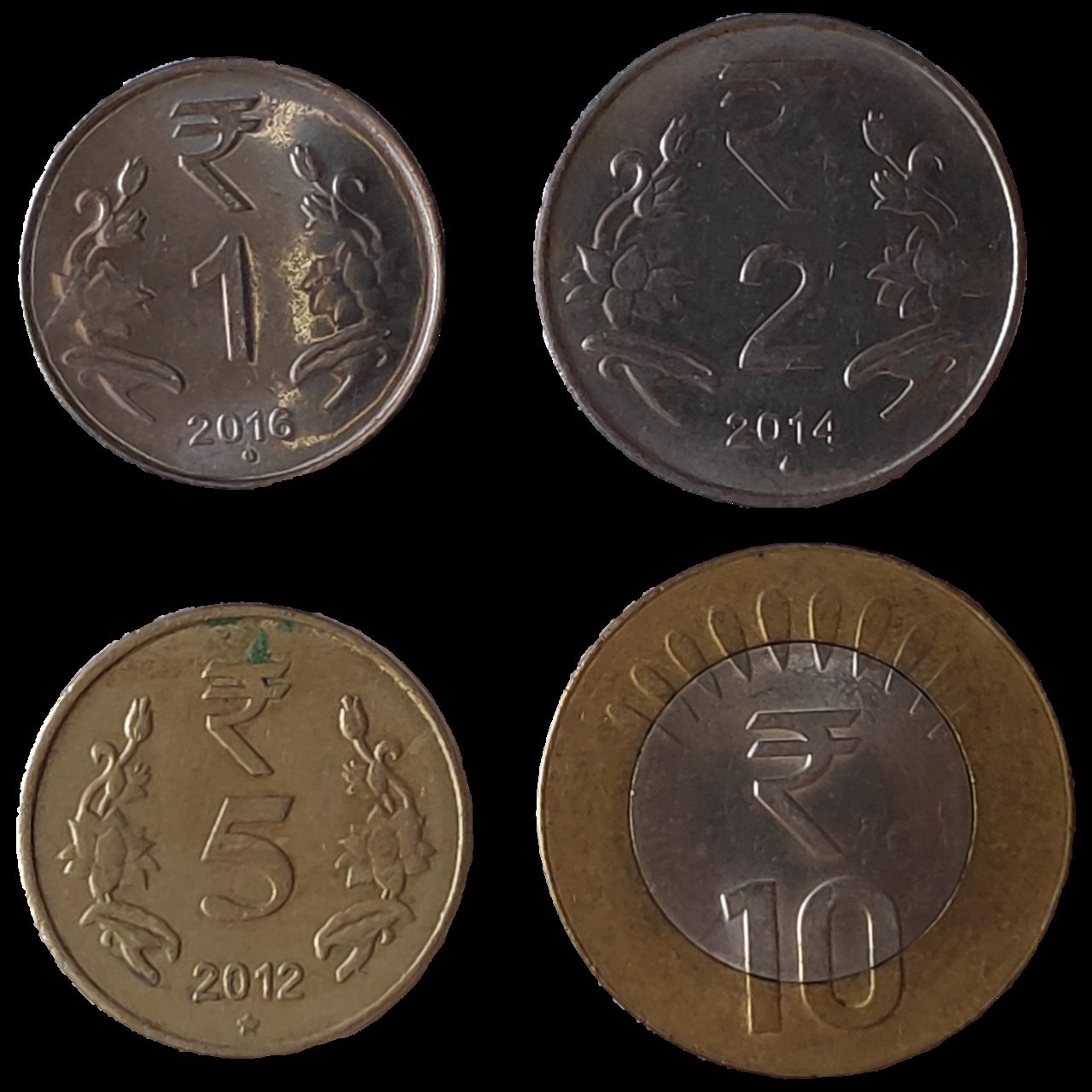
At a Glance
- Name
- From the silver rupiya issued under Sher Shah Suri in the 16th century
- Code and symbol
- INR; ₹ (adopted 2010, on notes and coins from 2011)
- Issuer
- Reserve Bank of India (notes of ₹2 and above); Government of India (₹1 note and all coins)
- RBI established
- 1 April 1935, under the Reserve Bank of India Act 1934
- First RBI note
- ₹5 note bearing King George VI, January 1938
- Decimalised
- 1 April 1957 — 1 rupee = 100 naye paise (16 annas before)
- Current series
- Mahatma Gandhi (New) Series, from November 2016
Introduction
The Indian rupee is the currency of India, divided into 100 paise and issued under the authority of the Reserve Bank of India, which holds the sole right to issue banknotes — with one standing exception: the one-rupee note is issued by the Government of India, which also makes all coins. It is among the world's most-used currencies by population, and its modern history is a compressed history of India itself: colonial paper money, a central bank created under British rule, independence imagery, decimal reform, and repeated redesigns against counterfeiters.
The name is far older than the institutions. The rupee descends from the rupiya, the silver coin issued during the reign of Sher Shah Suri in the 16th century, whose standard the Mughals and then the British adopted. Each later reformer — the government that monopolised note issue in 1861, the Reserve Bank founded in 1935 — inherited a word, and a silver reputation, already centuries old.
Background
The Reserve Bank of India was formally inaugurated on 1 April 1935, with its central office at Calcutta, empowered by the RBI Act of 1934 to issue notes. It continued issuing government notes until its own were ready; its first note, a five-rupee note bearing the portrait of King George VI, appeared in January 1938, followed that year by the ₹10, ₹100, ₹1,000 and ₹10,000. The George VI series continued through the war and, as a 'frozen series', until the new republic was ready to replace the king's head with its own symbols.
Independence posed the design question directly. Designs were prepared replacing the king with Mahatma Gandhi; in the final analysis, the RBI records, consensus chose the Lion Capital of Ashoka at Sarnath instead. The Government of India issued a new one-rupee note in 1949, the first Republic banknotes — ₹2, ₹5, ₹10 and ₹100 — followed in 1950, and Hindi was displayed prominently on notes from 1953. The money of the republic would be Indian in emblem and language, while keeping, for a few more years, the old arithmetic of annas.
Timeline
- 1861
The Paper Currency Act gives the Government of India the monopoly of note issue; the Victoria Portrait series follows.
- 1 April 1935
The Reserve Bank of India is inaugurated in Calcutta under the RBI Act 1934, taking charge of currency issue.
- January 1938
The RBI issues its first note, ₹5 with the portrait of George VI; higher denominations follow during 1938.
- 1949–1950
Independent India issues a new ₹1 note (1949) and the first Republic banknotes (1950), replacing the king's portrait with the Lion Capital of Ashoka.
- 1 April 1957
Decimalisation: under the amended Indian Coinage Act, the rupee is divided into 100 'naye paise' instead of 16 annas; 'naya' is dropped on 1 June 1964.
- October 1987
The ₹500 note is introduced with the portrait of Mahatma Gandhi — the design direction the currency would keep.
- 1996
The Mahatma Gandhi Series launches with new security features: changed watermark, windowed security thread, latent image and intaglio for the visually handicapped.
- 15 July 2010
The government adopts the ₹ symbol for the rupee; it is incorporated into banknotes and coins from 2011.
- 8 November 2016
The legal-tender status of the ₹500 and ₹1,000 Mahatma Gandhi Series notes is withdrawn overnight; the Mahatma Gandhi (New) Series, beginning with ₹500 and a new ₹2,000, replaces them.
- May 2023
The RBI announces withdrawal of the ₹2,000 note from circulation, while it remains legal tender.
Significance
Decimalisation in 1957 was the rupee's quiet revolution. The amended Coinage Act replaced a system in which a rupee held 16 annas, 64 pice or 192 pies with a clean hundred paise. School arithmetic, shop prices and railway fares all simplified at a stroke, and the 'naya paisa' — new paisa — bridged the change until 1964, when the coins simply became paise. Few reforms touch every citizen daily; this one did, and it has never been revisited.
The events of November 2016 showed the opposite face of state power over money. Withdrawing the ₹500 and ₹1,000 notes — the great majority of cash value in circulation — from legal tender at a day's notice, and replacing them with a redesigned series in new sizes and colours, was one of the largest currency operations ever attempted in a democracy. Together, 1957 and 2016 bookend the modern rupee: a currency repeatedly remade by law, and accepted each time by more than a billion users.
Legacy
The rupee's legacy is continuity through reinvention. The word has survived Mughal, Company, Crown, colonial-central-bank and republican issuers; the Lion Capital that replaced a king in 1950 still anchors the notes, now beside Gandhi's portrait and heritage motifs — the Red Fort, the Sun Temple at Konark, Mangalyaan — chosen for the Mahatma Gandhi (New) Series to display India's cultural heritage and scientific achievements. Each redesign argues, in miniature, about what the country is.
The system keeps evolving: star-series numbering to replace spoiled notes without breaking sequences, new anti-forgery features, stainless-steel and bimetallic coins, and, since December 2022, a central-bank digital rupee pilot. A currency named for a 16th-century silver coin now exists as paper, steel and code — which is, in its way, the whole story of Indian money.
Sources
- Reserve Bank of India — Monetary Museum: Republic India banknotes
- Reserve Bank of India — Monetary Museum: Republic India coinage and decimalisation
- Reserve Bank of India — Monetary Museum: British India and the first RBI issues
- Wikipedia — Indian rupee
The facts on this page were checked against these sources on 19 November 2026. The History Trail's permanent pages are researched and written for this site; the live profiles elsewhere on The History Trail are assembled automatically from Wikipedia and Wikidata.
About the Author
Researched and written by the The History Trail Editorial Team — the accountable editorial function behind this site's permanent story pages. The team works from the published sources cited on each page; it does not invent historians, reviewers or credentials, and it corrects errors openly.
Fact Check
Every load-bearing fact on this page traces to one of the sources listed above, and significant claims link to their source in the text. Our checking method is described on the methodology page; errors can be reported via the corrections page.
Sources & Citations
Cite this page as: The History Trail Editorial Team, The History Trail — this article's title, publication and update dates are shown beneath its headline. The full source list appears under Sources above; the site's source standards are on the sources page.