
Things
Coca-Cola
Coca-Cola was first served on 8 May 1886 at Jacobs' Pharmacy in Atlanta, Georgia, where pharmacist John Pemberton's syrup was mixed with carbonated water and sold for five cents a glass. Within two generations, bottling, a bottle recognisable in the dark and wartime distribution to American soldiers had made it the most famous drink on earth.
At a Glance
- First served
- 8 May 1886, at Jacobs' Pharmacy, Atlanta; about nine drinks a day were sold in the first year
- The name
- Suggested by Pemberton's bookkeeper Frank Robinson, who also penned the Spencerian script logo
- The builder
- Asa Griggs Candler bought control for a total of about $2,300 and incorporated the Coca-Cola Company in 1892
- Bottling
- First bottled by Joseph Biedenharn in Vicksburg in 1894; the 1899 Chattanooga contract granted US bottling rights for one dollar
- The bottle
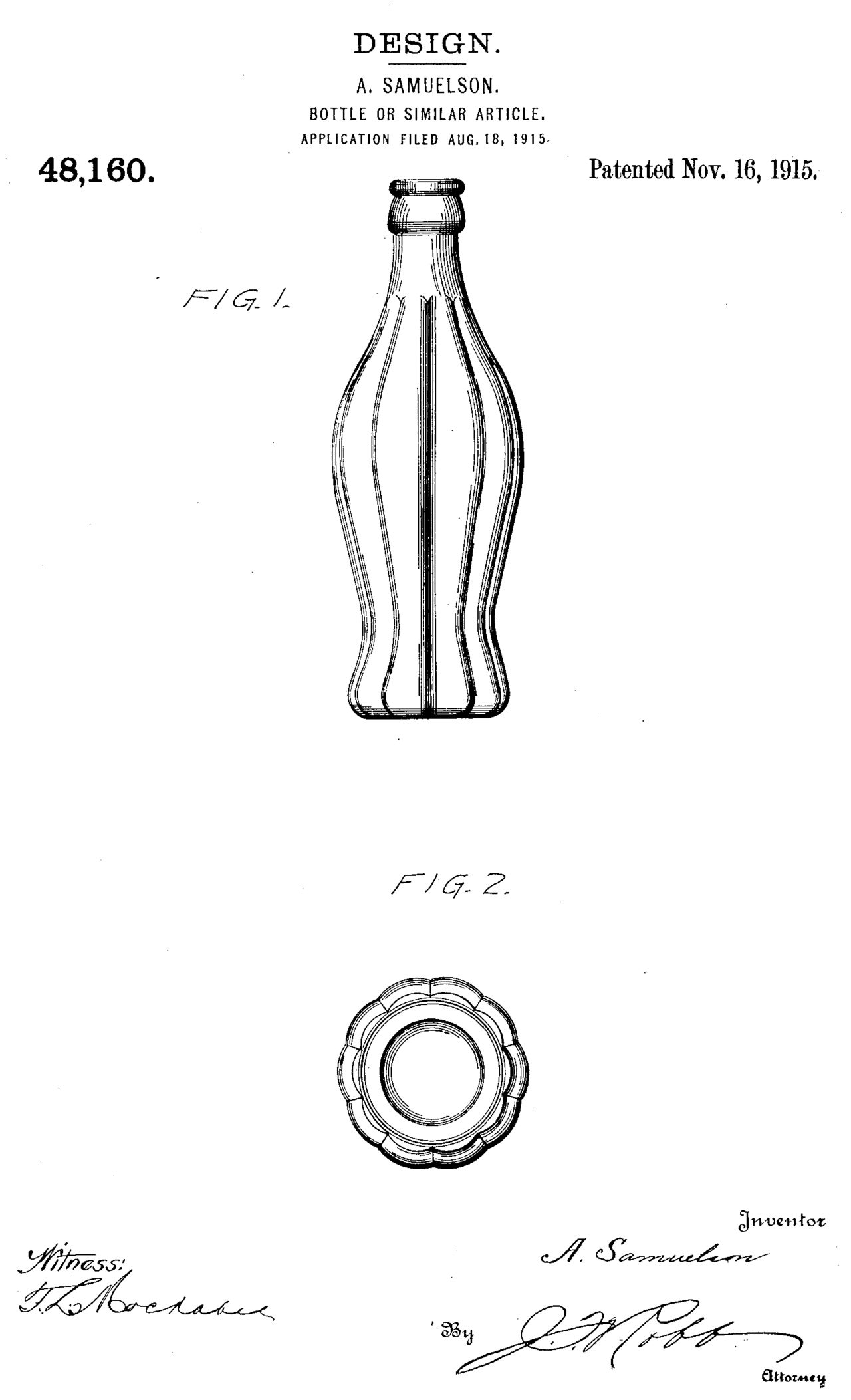
- The Root Glass contour design was patented in 1915 and introduced in 1916
- New Coke
- Launched 23 April 1985; the original formula returned as Coca-Cola Classic after 79 days, on 11 July 1985
Introduction
Coca-Cola's rise is a story less of invention than of distribution. Pemberton created a pleasant soda-fountain syrup; it was Candler's marketing, the bottlers' network and one famous bottle that carried it to, in the company's own phrase, within arm's reach of desire around the world.
An Atlanta Pharmacy, 1886
John Stith Pemberton, an Atlanta pharmacist, produced the syrup in 1886 and carried a jug of it to Jacobs' Pharmacy, where it was mixed with carbonated water, sampled and pronounced excellent. Britannica records that Pemberton originally touted the drink as a tonic for common ailments, based on cocaine from the coca leaf and caffeine-rich extracts of the kola nut - the two ingredients behind its name. His bookkeeper Frank Robinson suggested 'Coca-Cola' and wrote it in the flowing script that remains the trademark.
Pemberton never realised the drink's potential and sold off his interest in pieces before his death in 1888. Asa Griggs Candler, another Atlanta pharmacist, secured complete ownership by 1891 for a total outlay of $2,300, and incorporated the Coca-Cola Company in 1892. Candler marketed aggressively - coupons, calendars, branded everything - while treating the drink as a fountain product sold as syrup.
Bottling: The One-Dollar Revolution
The drink escaped the soda fountain in 1894, when Joseph Biedenharn of Vicksburg, Mississippi, put it into bottles so he could sell it beyond his candy store; Candler received a case of the bottles with little enthusiasm. The transformation came in 1899, when two Chattanooga lawyers, Benjamin Thomas and Joseph Whitehead, persuaded Candler to grant them the exclusive right to bottle Coca-Cola across most of the United States - for one dollar, which, the company's own history cheerfully notes, he never received. Their franchised bottling system spread the drink nationwide without the company building a single plant.
Bottling created a new problem: imitators in identical straight-sided bottles. In 1915 bottlers and the company briefed glassmakers to design a bottle so distinctive it could be recognised in the dark, or even broken on the ground. The Root Glass Company of Terre Haute, Indiana won; its fluted contour design was patented on 16 November 1915 and introduced in 1916, becoming one of the most recognisable packages ever made.
The franchise system scaled astonishingly fast. The company's own history counts just two bottlers in 1900 and about a thousand by 1920, each an independent local business bottling under contract. That structure - the company selling syrup and guarding the brand, local partners owning the plants, trucks and relationships - is why Coca-Cola could be simultaneously a single global trademark and, in town after town, a local employer. It also explains the contour bottle's legal importance: the shape itself was later granted trademark status, a rare honour for a package, because in a market of franchisees and imitators the bottle was the guarantee that the drink inside was genuine.
Santa, War and the World
From 1931 the illustrator Haddon Sundblom painted Santa Claus for Coca-Cola's Christmas advertising: a warm, life-sized, rosy-cheeked Santa drinking Coke. The paintings ran for more than three decades and standardised Santa's image worldwide - though, as the company itself now acknowledges, Coke did not invent the red suit, which artists including Thomas Nast had drawn decades earlier. Sundblom fixed one version of Santa in the global imagination.
The Second World War globalised the drink itself. Company president Robert Woodruff ordered that every man in uniform should get a bottle of Coca-Cola for five cents, wherever he was and whatever it cost the company. Coca-Cola built 64 bottling plants behind the lines overseas, and millions of servicemen carried the taste home - and into the countries where they had served. After the war, bottling spread through the newly opened markets those plants had seeded.
New Coke: The 79-Day Reversal
By the early 1980s Pepsi was winning blind taste tests and gaining share. On 23 April 1985 Coca-Cola replaced its 99-year-old formula with a sweeter 'New Coke' that had beaten both rivals in testing. The backlash was immediate and emotional: protest groups formed, and the company was flooded with complaints from drinkers who treated the change as a betrayal.
After 79 days the company capitulated. On 11 July 1985 it announced the return of the original formula as Coca-Cola Classic. The episode became the classic business-school lesson that a brand can be owned, emotionally, by its customers - and, in the end, the publicity and the public's reaffirmed loyalty left Coca-Cola stronger.
Timeline
- 8 May 1886
Pemberton's syrup is first served as Coca-Cola at Jacobs' Pharmacy, Atlanta, at five cents a glass.
- 1892
Asa Candler, having bought control for about $2,300, incorporates the Coca-Cola Company.
- 1894
Joseph Biedenharn bottles Coca-Cola for the first time, in Vicksburg, Mississippi.
- 1899
Thomas and Whitehead of Chattanooga obtain US bottling rights for one dollar.
- 16 November 1915
The Root Glass contour bottle design is patented; it reaches the market in 1916.
- 1931
Haddon Sundblom's Santa Claus paintings begin in Coca-Cola Christmas advertising.
- 1941-45
Woodruff's five-cent pledge to servicemen; 64 bottling plants are set up overseas during the war.
- 23 April 1985
New Coke replaces the original formula.
- 11 July 1985
After 79 days of protest, the original returns as Coca-Cola Classic.
Significance
Coca-Cola pioneered the modern branded consumer business: a secret syrup concentrate sold to independent bottlers, a trademark protected ferociously, and advertising that sold a feeling rather than a beverage. Its contour bottle, script logo and Santa became pieces of a shared global visual language, recognised in places where the drink itself arrived much later.
Legacy
The company Pemberton founded in a pharmacy now sells its products in more than 200 countries and territories. Its most durable inventions were not flavours but systems - franchised bottling, the trademarked package, the five-cent price held for over seventy years - and its most famous mistake, New Coke, remains the standing proof that those systems rest on the drinkers' attachment to the original.
Sources
- Encyclopaedia Britannica — The Coca-Cola Company
- The Coca-Cola Company (company source) — The Birth of a Refreshing Idea
- The Coca-Cola Company (company source) — Coca-Cola History
- World of Coca-Cola (company source) — The History of Santa: Did Coca-Cola Invent Santa Claus?
The facts on this page were checked against these sources on 19 November 2026. The History Trail's permanent pages are researched and written for this site; the live profiles elsewhere on The History Trail are assembled automatically from Wikipedia and Wikidata.
About the Author
Researched and written by the The History Trail Editorial Team — the accountable editorial function behind this site's permanent story pages. The team works from the published sources cited on each page; it does not invent historians, reviewers or credentials, and it corrects errors openly.
Fact Check
Every load-bearing fact on this page traces to one of the sources listed above, and significant claims link to their source in the text. Our checking method is described on the methodology page; errors can be reported via the corrections page.
Sources & Citations
Cite this page as: The History Trail Editorial Team, The History Trail — this article's title, publication and update dates are shown beneath its headline. The full source list appears under Sources above; the site's source standards are on the sources page.