
Things
Burger King
Burger King began in Jacksonville, Florida, in 1953 as Insta-Burger King, a small chain built around a fast broiler. Rebuilt by two Miami franchisees, given the Whopper in 1957 and sold on through a parade of owners, it grew into one of the world's largest hamburger chains — still defined by cooking over flame.
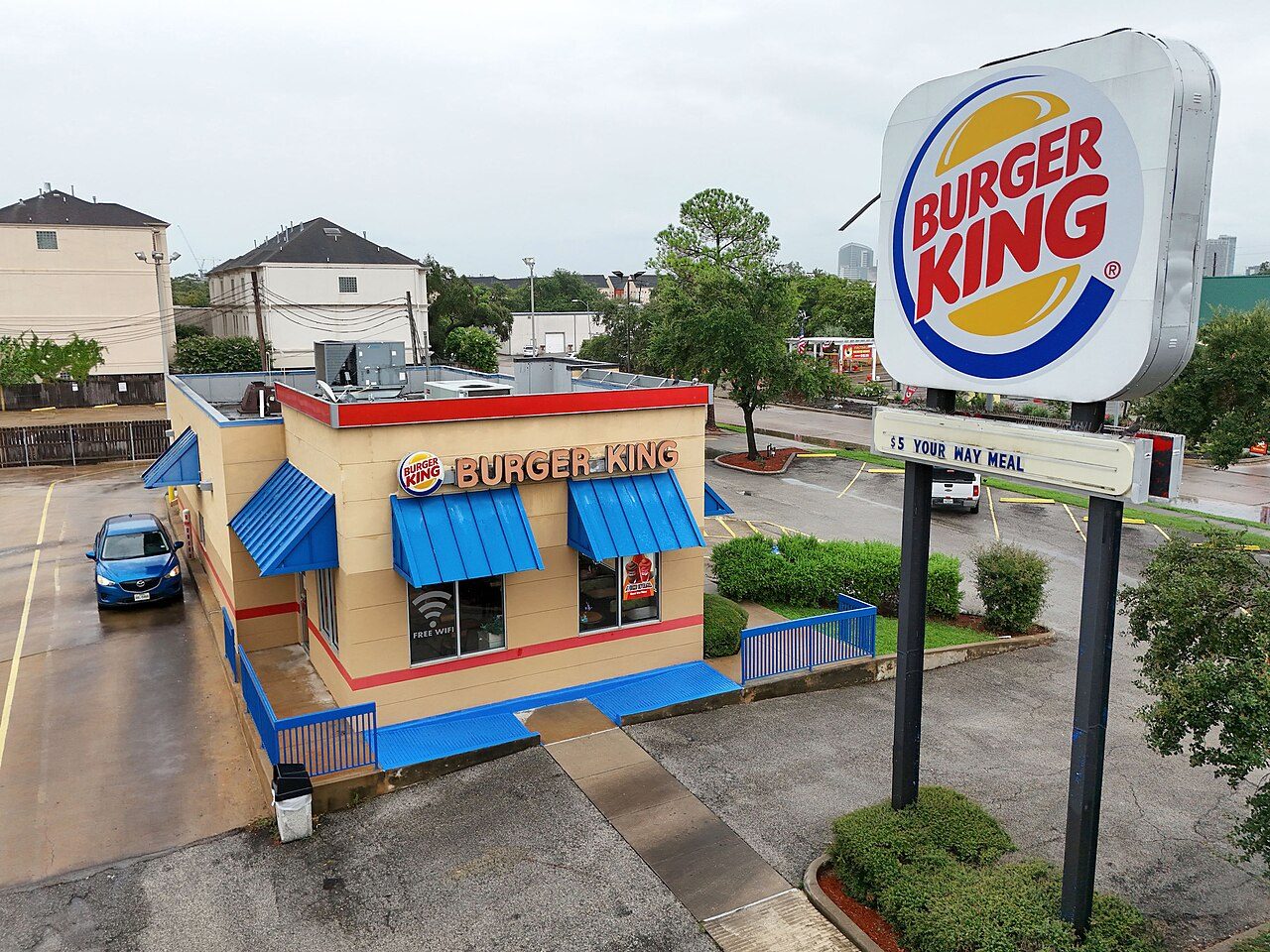
At a Glance
- Founded
- 23 July 1953, Jacksonville, Florida, as Insta-Burger King
- Founders
- Keith Kramer and Matthew Burns; rebuilt by Miami franchisees David Edgerton and James McLamore
- Signature product
- The Whopper, introduced in 1957 at 37 cents
- Cooking method
- Flame broiling — patties pass over open flame on a conveyor
- First big sale
- Sold to the Pillsbury Company in 1967, with more than 250 US restaurants
- Modern owners
- 3G Capital bought the chain in 2010; merged with Tim Hortons in 2014 to form Restaurant Brands International
- Scale today
- More than 19,000 restaurants in more than 120 countries and US territories, per the company
Introduction
Burger King is a global chain of hamburger fast-food restaurants headquartered in Miami-Dade County, Florida. It was founded on 23 July 1953 in Jacksonville, Florida, as Insta-Burger King, and it took its modern shape in Miami, where franchisees David Edgerton and James McLamore renamed it, rebuilt its broiler and, in 1957, created the Whopper — the large flame-grilled sandwich that still defines the brand.
The chain's identity rests on a single cooking decision: its burgers are broiled over flame rather than fried on a griddle. That difference carried Burger King through decades of expansion and a long sequence of owners — Pillsbury, Grand Metropolitan, Diageo, private-equity groups, Brazil's 3G Capital and, since 2014, Restaurant Brands International — to a system the company counts at more than 19,000 restaurants in more than 120 countries and territories.
Origins
The predecessor company was founded in Jacksonville in 1953 by Keith Kramer and Matthew Burns, who had visited the McDonald brothers' original restaurant in San Bernardino, California, and bought the rights to two pieces of equipment called Insta-Broilers. The ovens cooked burgers quickly, and the first restaurants built their name and menu around them: basic hamburgers, fries, soft drinks, milkshakes and desserts.
The Insta-Broilers proved troublesome, and the idea was rescued in Miami. Edgerton and McLamore, Cornell classmates who took a Miami franchise and opened their first restaurant there in December 1954, designed a mechanised gas grill — the flame broiler — that moved patties on a chain conveyor over the heating elements, marking them with grill lines like a charcoal fire. When the Jacksonville company ran into financial difficulties, the Miami partners bought it, restructured it and renamed it Burger King, completing their takeover by 1959.
Timeline
- 23 July 1953
Keith Kramer and Matthew Burns found Insta-Burger King in Jacksonville, Florida, built around the Insta-Broiler ovens.
- December 1954
David Edgerton and James McLamore open their first Insta-Burger King franchise in Miami and begin developing the flame broiler.
- 1957
McLamore creates the Whopper, a quarter-pound flame-grilled burger sold for 37 cents; it becomes the chain's signature product.
- 1959
Edgerton and McLamore complete their purchase of the struggling parent company, restructure it and run it as Burger King.
- 1967
The Pillsbury Company buys Burger King from Edgerton and McLamore for $18 million, by then grown to more than 250 restaurants in the United States; the chain ceases to be independent.
- 1989
British conglomerate Grand Metropolitan acquires Pillsbury, taking control of Burger King; its successor Diageo holds the chain from 1997.
- 2002
Diageo sells Burger King to a private-equity consortium led by Texas Pacific Group; the company returns to the stock market in 2006.
- 2010
Brazil-based 3G Capital acquires Burger King in a deal valued at about $3.26 billion and begins a restructuring around franchising.
- 2014
Burger King merges with Canadian coffee chain Tim Hortons in a deal worth roughly $11 billion, forming the Canadian-based parent company Restaurant Brands International, which still owns the brand today.
- 2026
The company reports more than 19,000 Burger King restaurants in more than 120 countries and US territories.
Significance
Burger King's significance in fast-food history is that it proved a challenger could be built on product difference rather than imitation. Where its great rival fried smaller burgers on a griddle, Burger King broiled a bigger one over flame and made size and customisation the offer: the Whopper was deliberately larger than competing sandwiches, and the flame broiler's conveyor design let volume and a grilled taste coexist in the same kitchen.
The company also became a case study in franchising and corporate ownership. It began as a franchise of someone else's concept, was taken over by its own franchisees, and then passed through food conglomerates, a drinks giant and successive investment firms, each restructuring it. Under 3G Capital the model shifted decisively toward franchised restaurants, and the 2014 creation of Restaurant Brands International placed Burger King inside one of the world's largest restaurant groups, alongside Tim Hortons, Popeyes and Firehouse Subs.
Legacy
More than seventy years after Jacksonville, the essentials of the brand are the ones fixed in Miami in the 1950s: flame-grilled beef, the Whopper at the head of the menu, and a franchised system that lets local operators run most restaurants. The company's own current description still leads with the same claim — a chain founded in 1954, in its telling, known as the home of the flame-grilled Whopper.
Burger King's longer legacy is as the durable second force in the burger business: rarely the largest chain, but persistent enough that its cooking method and its flagship sandwich became permanent fixtures of fast food, copied in form if never quite in name, in more than 120 countries. Its history also wrote a template others followed — a concept rescued by its own franchisees, a signature product invented to answer a rival across the street, and a brand strong enough to survive seven changes of ownership without losing the one idea it started with: a burger cooked over fire.
Sources
- Burger King Company LLC — press release, via PR Newswire (company's own account of the brand, 2026)
- Burger King — company profile, LinkedIn (company's own description)
- History of Burger King — Wikipedia (orientation and dates cross-check)
- LoveMoney — How Burger King really became fast food royalty
- Franchise Digit News — Burger King UK opening, reporting RBI's 2026 restaurant counts
The facts on this page were checked against these sources on 19 November 2026. The History Trail's permanent pages are researched and written for this site; the live profiles elsewhere on The History Trail are assembled automatically from Wikipedia and Wikidata.
About the Author
Researched and written by the The History Trail Editorial Team — the accountable editorial function behind this site's permanent story pages. The team works from the published sources cited on each page; it does not invent historians, reviewers or credentials, and it corrects errors openly.
Fact Check
Every load-bearing fact on this page traces to one of the sources listed above, and significant claims link to their source in the text. Our checking method is described on the methodology page; errors can be reported via the corrections page.
Sources & Citations
Cite this page as: The History Trail Editorial Team, The History Trail — this article's title, publication and update dates are shown beneath its headline. The full source list appears under Sources above; the site's source standards are on the sources page.