
Things
Boxing Day
Boxing Day is the public holiday of 26 December in Britain and much of the Commonwealth, named not for the sport of boxing but for boxes: the church alms boxes opened for the poor on St Stephen's Day, and the 'Christmas boxes' of money and gifts that employers gave servants and tradespeople for the day after Christmas.
At a Glance
- Date
- 26 December; if it falls on a weekend, the public holiday moves to the following Monday
- Also
- St Stephen's Day, the feast of the first Christian martyr
- The name
- From alms boxes opened for the poor and 'Christmas boxes' given to servants and tradesmen — not from the sport of boxing
- Documented
- Samuel Pepys's diary records tradesmen collecting their Christmas boxes in December 1663
- Made official
- The Bank Holidays Act 1871 made 26 December a bank holiday in England, Wales and Ireland
- Today
- A fixture of the sporting calendar — a full football programme and the Boxing Day Test in Melbourne — and the start of the sales
Introduction
For most of Britain and the Commonwealth, Christmas does not end on 25 December. The next day, 26 December, is Boxing Day — a public holiday now given over to sport, shopping and leftover food, but built on an older economy of obligation and thanks. It is also, in the church calendar, the feast of St Stephen, the first Christian martyr, a day associated for centuries with giving to the poor.
The name is the puzzle. It has nothing to do with the sport of boxing, and the honest answer is that two kinds of box, both opened or handed over on the day after Christmas, probably share the credit: the alms box in the church, and the Christmas box carried home by servants, apprentices and tradesmen.
Background: St Stephen's Day and the Alms Box
Through the year, coins dropped into the alms boxes kept in churches, collecting donations for the relief of the parish poor. By long custom those boxes were opened on St Stephen's Day, 26 December, and their contents distributed to the poor. The day thus carried a charitable charge long before it had its modern name: the feasting of Christmas Day was followed, deliberately, by a day for those who had not feasted.
St Stephen's own story fitted the date. Stephen, stoned to death in the New Testament's Acts of the Apostles, was remembered as a distributor of food to widows and the poor — and, by later tradition, as patron saint of horses, which is one reason horses and hunting run through the day's older customs. Britannica notes that the feast and the holiday have shared 26 December throughout the holiday's history.
Christmas Boxes: The Servants' Holiday
The second box belonged to the world of service. Servants were needed at their employers' houses on Christmas Day itself, so their own celebration — and their reward — came a day late. On 26 December employers presented staff, and the tradespeople who had served the house all year, with a 'Christmas box': money, food or gifts in a box. The custom is documented across the seventeenth, eighteenth and nineteenth centuries; Samuel Pepys's diary entry for 19 December 1663 records tradesmen collecting their Christmas boxes, an expense householders clearly expected every year.
The habit of tipping those who serve you survived the great houses that created it. Bonuses to postmen, refuse collectors and other service workers continued into the modern era — though, as Britannica notes, they are now usually given before Christmas rather than on the day itself. What the Victorians added was official status: the Bank Holidays Act 1871 made 26 December, when it fell on a weekday, a bank holiday in England, Wales and Ireland. The name itself was already old — the Oxford English Dictionary's earliest attestation of 'Boxing Day' dates from 1743 — and Scotland made the day an additional bank holiday only in 1974.
Timeline
- 1st century CE
Stephen, remembered as a distributor of food to the poor, is stoned to death; the early Church keeps his feast on 26 December.
- Middle Ages
Alms boxes in churches, filled with donations through the year, are by custom opened on St Stephen's Day and their contents given to the poor.
- 19 December 1663
Samuel Pepys's diary records tradesmen collecting their 'Christmas boxes' — the custom already an expected annual expense.
- 1743
The Oxford English Dictionary's earliest attestation of 'Boxing Day': the day after Christmas, when tradespeople and employees received a Christmas box.
- 26 December 1860
Sheffield FC play Hallam FC in a Boxing Day fixture regarded as the world's oldest football derby.
- 26 December 1866
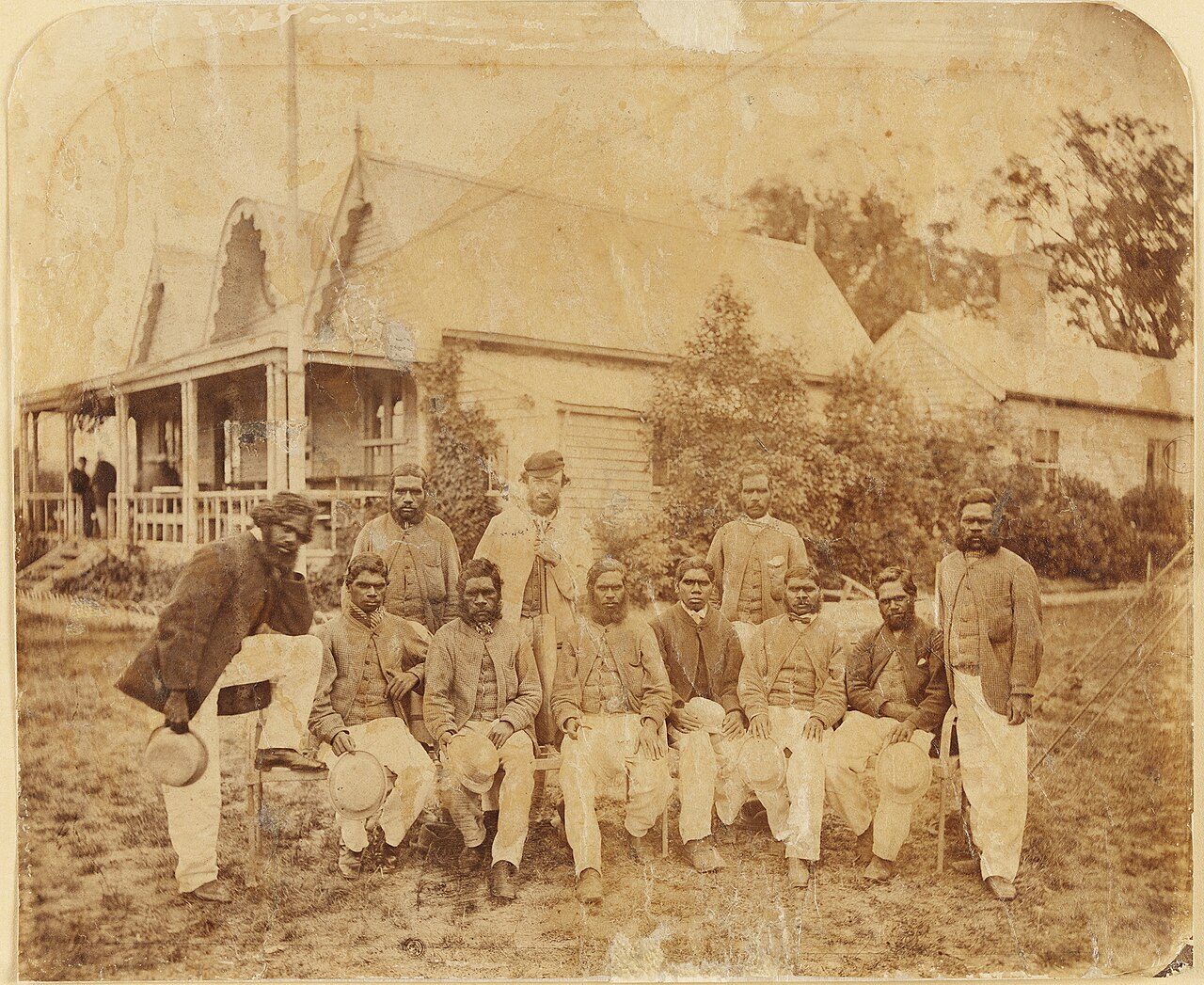
An Aboriginal cricket team meets the Melbourne Cricket Club at the MCG on Boxing Day before some 8,000 spectators — the seed of the Boxing Day Test.
- 1871
The Bank Holidays Act makes 26 December a bank holiday in England, Wales and Ireland.
- 1974
Boxing Day becomes an additional bank holiday in Scotland.
- 2005
Traditional Boxing Day foxhunting is transformed after hunting legislation takes effect in England and Wales; hunts meet for trail hunting instead.
Significance
Boxing Day is a fossil of a society organised by obligation. In a world of masters and servants, the Christmas box was part wage, part thank-you and part insurance — a year's service acknowledged in cash on a fixed day — and the alms box made the same point to the parish poor. The holiday survived the world that made it because the day off itself became the point: when the servants' hall emptied into suburbs and factories, 26 December remained as the year's second helping of rest.
Its geography tells the same story. Boxing Day is kept in Britain and across the Commonwealth — Australia, Canada, New Zealand and beyond — but it was not perpetuated by the English in the American colonies, and the United States never adopted it. Where the British world of domestic service and parish charity went, the holiday followed; where it did not, 26 December stayed an ordinary working day.
Myths and disputes
Was Boxing Day named after the sport of boxing? No. Prize-fighting has no connection with the date; the name belongs to boxes of money and goods, not to fists. The coincidence misleads because the day later became famous for sport — but the sport arrived centuries after the name, filling a holiday that already existed.
Was it the day for packing the decorations away — boxing up Christmas? That explanation is a modern folk tale with the sequence backwards. Decorations traditionally stayed up until Twelfth Night, and no early source connects the name with clearing the house. The boxes in the record are alms boxes and Christmas boxes, and both were about giving, not tidying.
A third caution: historians cannot prove a single origin. Britannica lists both the alms box and the servants' box among the explanations, and both customs are genuinely documented on the same date. The name probably stuck because the two reinforced each other — a day when every box in the parish, sacred and domestic, was opened at once.
Legacy
Today the boxes are mostly gone, but the day they named is immovable. In England a full programme of football fixtures is a Boxing Day institution; in Melbourne the Boxing Day Test, beginning each 26 December at the MCG, is among the best-attended events in world cricket; in Sydney the great yacht race to Hobart starts the same day; hunts still meet, walkers still walk, and the sales that now dominate the day's headlines are simply the newest tenants of an old holiday. The charity has faded into commerce — but the shape of the day, generosity and leisure the morning after the feast, is still recognisably the one the alms boxes made.
Sources
- Encyclopaedia Britannica — Boxing Day
- HISTORY (UK) — Why is December 26th called Boxing Day?
- Wikipedia — Boxing Day
- ESPN — The first Boxing Day classic
The facts on this page were checked against these sources on 19 November 2026. The History Trail's permanent pages are researched and written for this site; the live profiles elsewhere on The History Trail are assembled automatically from Wikipedia and Wikidata.
About the Author
Researched and written by the The History Trail Editorial Team — the accountable editorial function behind this site's permanent story pages. The team works from the published sources cited on each page; it does not invent historians, reviewers or credentials, and it corrects errors openly.
Fact Check
Every load-bearing fact on this page traces to one of the sources listed above, and significant claims link to their source in the text. Our checking method is described on the methodology page; errors can be reported via the corrections page.
Sources & Citations
Cite this page as: The History Trail Editorial Team, The History Trail — this article's title, publication and update dates are shown beneath its headline. The full source list appears under Sources above; the site's source standards are on the sources page.