
Things
The Disappearance of Agatha Christie
On the night of 3 December 1926, the crime writer Agatha Christie drove away from her home and vanished. Her car was found abandoned at Newlands Corner; eleven days later she was recognised at a Harrogate hotel, registered under another name, saying she could remember nothing.
At a Glance
- Disappeared
- Night of 3 December 1926, from her home at Sunningdale, Berkshire
- Car found
- 4 December 1926, at Newlands Corner, Surrey — bonnet buried in bushes, with her fur coat, a dressing case and her driving licence inside
- Found
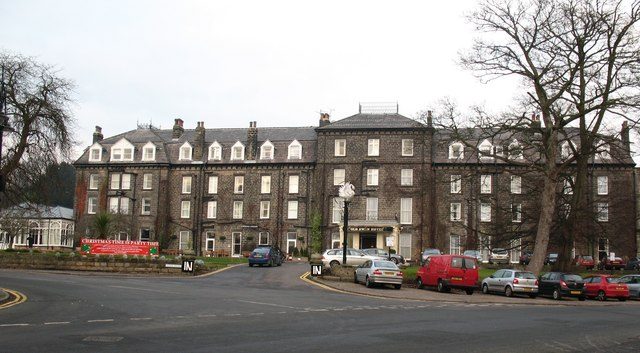
- 14 December 1926, at the Swan Hydropathic Hotel, Harrogate, Yorkshire
- Registered as
- Under the surname Neele — the surname of her husband's lover, Nancy Neele
- Duration
- Eleven days
- Her account
- Amnesia: she said she had suffered a complete loss of memory and could give no account of the missing days
- Cost of the search
- About £25, according to the Surrey officer's later report to the Home Office
Introduction
Agatha Christie disappeared on the night of Friday 3 December 1926, driving away alone from Styles, her home at Sunningdale in Berkshire, after her marriage had collapsed. She was 36, and famous: The Murder of Roger Ackroyd, published that year, had made her reputation. The next morning her Morris car was found abandoned at Newlands Corner in Surrey, half-way down a grassy slope with its bonnet buried in bushes. Inside were a fur coat, a dressing case of clothes and her driving licence. For eleven days Britain searched for her; on 14 December she was recognised at the Swan Hydropathic Hotel in Harrogate, where she had registered under the surname of her husband's lover. She said she remembered nothing.
Those are the documented facts, and they are stranger than most of her plots. Everything beyond them — why she went, what state she was in, what she intended — remains disputed a century later. Christie herself never fully explained the episode publicly, and left no public account of it; the explanations offered at the time and since are theories, and they are presented here as theories, not as findings.
Background
The disappearance came at the end of a year of grief and collapse. In April 1926 Christie's mother died at Ashfield, the family home, and Christie was left clearing out the house alone while struggling to write. The official Christie biography records that, separated by distance and strained by grief, she and her husband Archie drifted apart as Archie fell in love with Nancy Neele, a fellow golfer and friend of the family, and came to want a divorce. The National Archives' account of the police file adds that, following an argument between husband and wife on 3 December, Archie left to spend the weekend with friends.
What Christie did that evening is recorded in the Surrey police's own report, preserved at the National Archives. William Kenward of the Surrey Constabulary wrote that he learned the lady 'had left her home at Sunningdale in the Car, late the previous evening, under rather unusual circumstances', and that 'Mrs. Christie had been very depressed and that just before leaving in the Car, she had gone upstairs and kissed her little daughter who was in bed asleep'. Her daughter Rosalind was seven. Kenward received word of the abandoned car at 11 a.m. on 4 December, and the search began.
Timeline
- April 1926
Christie's mother, Clara, dies; Christie clears the family home at Ashfield while her marriage to Archie is breaking down.
- 1926
The Murder of Roger Ackroyd is published and defines Christie's career — the book that makes her famous in the year she vanishes.
- 3 December 1926
After an argument, Archie Christie leaves for the weekend; late that night Agatha kisses her sleeping daughter and drives away from Sunningdale.
- 4 December 1926
Her Morris car is found at Newlands Corner, bonnet in the bushes, headlights still burning; a witness, McAlister, says he helped a sparsely dressed lady, acting strangely, start its engine at 6.20 that morning.
- 4–9 December 1926
Surrey police, special constables and civilian volunteers search the Downs around Newlands Corner, including a second large search on 9 December, without result.
- December 1926
Newspapers circulate theories — suicide, murder by her husband, a publicity stunt — much of which the police later say was 'without foundation'.
- 14 December 1926
Eleven days after she vanished, a member of the public recognises Christie staying at the Swan Hydro hotel in Harrogate; she is suffering memory loss and can give no account of what happened.
- 9 February 1927
Kenward reports to the Home Office: the search cost about £25, the number of police involved was greatly exaggerated in the press, and no aeroplanes were used by the police.
Significance
The search became a national sensation, and the press coverage was itself part of the story. Kenward's letter to the Home Office was written precisely because the response had been questioned: his purpose, the National Archives notes, was to show that the police effort had been proportionate. He recorded that about three dozen regular police, drawn from quiet districts, searched on the two main days, helped by special constables and volunteers; that reports of aeroplanes, divers and multiple police forces were inaccurate; and that 'a good deal of press matter circulated in connection with the case was without foundation'. The letter was used to brief the Home Secretary's answer to a question in Parliament from an MP, Neil Maclean, on 25 February 1927.
The episode mattered beyond the headlines because it was never resolved. Archie Christie told enquirers that his wife was suffering from a nervous disorder and memory loss, and declined to contribute to the search costs, saying it was entirely a police matter. Christie resumed her career — she would marry the archaeologist Max Mallowan in 1930 and write for another half-century — but she did not discuss the eleven days, and the question of what happened in December 1926 followed her reputation for the rest of her life.
Myths and disputes
The first theory is the one the family maintained: genuine amnesia. Christie, on being found, could give no account of herself, and her husband described a complete loss of memory. Later writers have given this a clinical name: the National Archives records that her biographer Andrew Norman argues she was in a 'fugue' state caused by trauma or depression, and Surrey Police's own centenary account describes the same idea as a temporary amnesia known as 'dissociative fugue', brought on by a depressed and confused state of mind. This remains a theory offered by others about her condition; no document proves it.
The rival theories are also documented, and also unproven. Some contemporaries believed her actions were deliberate — the National Archives summarises this view as holding that they were 'perhaps designed to cause distress and embarrassment to her husband', and Surrey Police note that many believed she was trying to frame Archie, pointing to her registering under his lover's surname. Cynics at the time, and since, called the whole episode a publicity stunt to sell novels. The police file supports none of these readings over the others, and it disproves some of the legend's furniture: the vast searches, aircraft and posses of later retellings were press exaggerations. What the record establishes is a departure, an abandoned car, eleven days in Harrogate under another name, and a woman who said she could not remember.
Legacy
A century on, the disappearance is the most famous real-life mystery attached to any crime writer, retold whenever Christie's life is told — Surrey Police mark December 2026 as its centenary, and the National Archives still presents Kenward's letter as the case's clearest record. Its endurance comes from the gap at its centre: the one person who could have explained it chose, for fifty more years of writing, to leave this single plot unresolved.
For readers, the episode has become a lens on the woman behind the detectives — the grief of 1926, a marriage ending, and a writer under strain — rather than a puzzle with a solution. The honest verdict is the one both the police file and Surrey Police's account reach: the mystery has never been solved, and on the surviving evidence it cannot be.
Sources
- The National Archives — Police report on the disappearance of Agatha Christie (HO 45/25904)
- Surrey Police & Crime Commissioner — Agatha Christie's mysterious disappearance
- Agatha Christie Ltd (official site) — About Agatha Christie: a difficult period, 1925–1928
- Encyclopaedia Britannica — Agatha Christie (divorce and disappearance)
The facts on this page were checked against these sources on 19 November 2026. The History Trail's permanent pages are researched and written for this site; the live profiles elsewhere on The History Trail are assembled automatically from Wikipedia and Wikidata.
About the Author
Researched and written by the The History Trail Editorial Team — the accountable editorial function behind this site's permanent story pages. The team works from the published sources cited on each page; it does not invent historians, reviewers or credentials, and it corrects errors openly.
Fact Check
Every load-bearing fact on this page traces to one of the sources listed above, and significant claims link to their source in the text. Our checking method is described on the methodology page; errors can be reported via the corrections page.
Sources & Citations
Cite this page as: The History Trail Editorial Team, The History Trail — this article's title, publication and update dates are shown beneath its headline. The full source list appears under Sources above; the site's source standards are on the sources page.