
People
Muhammad Ali Jinnah
Jinnah spent the first half of his career trying to unite Hindus and Muslims inside one India, and the second half concluding it could not be done. The constitutional lawyer who disliked mass agitation built a nation largely by argument, negotiation and sheer tenacity.
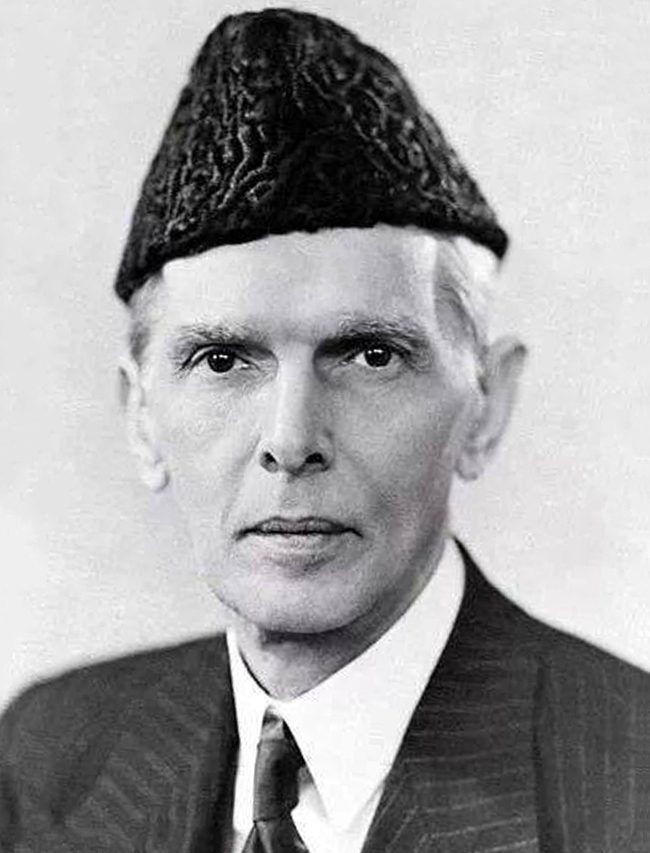
At a Glance
- Born
- Karachi, India (now Pakistan) — he maintained 25 December 1876; see note on the disputed date
- Died
- 11 September 1948, Karachi
- Trained as
- Barrister, Lincoln's Inn, London — called to the bar in 1895, aged 19
- Joined Muslim League
- 1913, once assured it shared Congress's goal of India's emancipation
- Known as
- Quaid-i-Azam; revered in Pakistan as the father of the nation
- Office
- First governor-general of Pakistan, 1947–48
- Signature achievement
- The Lahore Resolution of March 1940 and the creation of Pakistan in 1947
Introduction
Muhammad Ali Jinnah was the eldest of seven children of Jinnahbhai Poonja, a prosperous Karachi merchant, and his wife Mithibai. The family belonged to the Khoja caste, Hindus who had converted to Islam centuries earlier. After home teaching, Jinnah was sent in 1887 to the Sind Madrasat al-Islam in Karachi and later to the Christian Missionary Society High School, where at sixteen he passed the matriculation examination of the University of Bombay. His father, advised by an English friend, meant to send him to England for business experience. Jinnah had already decided to become a barrister instead.
In London he joined Lincoln's Inn and was called to the bar in 1895 at the age of nineteen, despite two severe bereavements in those years — the deaths of his wife, married before he left in the custom of the time, and of his mother. He studied the British political system closely, visited the House of Commons often, and was greatly influenced by the liberalism of William Gladstone.
Background
Returning to Karachi in 1896, Jinnah found his father's business in decline and had to depend on himself. He built a legal practice in Bombay, slowly and with difficulty, and turned actively to politics nearly a decade later, entering through the 1906 session of the Indian National Congress at Calcutta. In 1910 he was elected to the Imperial Legislative Council, beginning a long parliamentary career. Influenced by nationalist leaders such as Gopal Krishna Gokhale, he aspired in this period to become, in effect, a Muslim Gokhale — raising India's status while developing a shared Indian nationhood, with Muslim interests considered inside Indian nationalism rather than against it.
That balancing act defined his early fame. Jinnah joined the All-India Muslim League only in 1913, when authoritatively assured it was as devoted as Congress to India's political emancipation. His efforts to bring Hindus and Muslims into political union earned him Gokhale's title: the best ambassador of Hindu-Muslim unity. Largely through his work, Congress and the League held joint annual sessions, culminating in the Lucknow Pact of 1916, a joint constitutional reform demand in which Congress accepted the separate electorates Muslims had been granted in 1909. For a moment, one negotiator genuinely seemed to hold both sides together.
Timeline
- 25 December 1876
Jinnah's own stated birth date, in Karachi — though Karachi school records give 20 October 1875.
- 1895
Called to the bar at Lincoln's Inn, London, aged nineteen, after studying the British parliamentary system at close quarters.
- 1910
Elected to the Imperial Legislative Council — the start of a long parliamentary career.
- 1913
Joins the All-India Muslim League, having been assured it shares Congress's commitment to India's emancipation.
- 1916
The Lucknow Pact: Congress and the Muslim League present a joint scheme of constitutional reform.
- 1920
Opposed to Gandhi's noncooperation movement, Jinnah leaves both Congress and the Home Rule League.
- 1930–1935
Frustrated by failure, Jinnah settles in London practising before the Privy Council, then is persuaded to return and head a reconstituted Muslim League.
- 22–23 March 1940
At Lahore, the Muslim League adopts its resolution to form a separate Muslim state — Pakistan.
- 1947
Pakistan emerges as an independent state; Jinnah becomes its first governor-general.
- 11 September 1948
Jinnah dies in Karachi, the city of his birth, just over a year after independence.
Significance
Jinnah's significance lies in a reversal few politicians survive reputationally intact. The ambassador of Hindu-Muslim unity became, by the late 1930s, convinced that a Muslim homeland on the subcontinent was the only way to safeguard Muslim interests and the Muslim way of life. What he feared was not primarily religious persecution but permanent exclusion: once power passed into the close-knit structure of Hindu social organisation, he argued, Muslims would be shut out of advancement within a united India. He therefore converted the Muslim League — for years a divided, overshadowed body — into a powerful instrument for unifying Muslims into a nation.
The method matched the man. Against him stood Gandhi, Nehru and a British government intent on maintaining India's unity, and the Pakistan idea was first ridiculed, then tenaciously opposed. Jinnah answered not with mass marches, which he distrusted, but with campaigning, constitutional argument and negotiation, leading the movement with such skill and tenacity that ultimately both Congress and the British government had no option but to agree to partition. Pakistan emerged as an independent state in 1947 — a country argued into existence, in large part, by a lawyer.
Legacy
Jinnah became the first head of the new state and was revered not merely as its governor-general but as the father of the nation. Faced with the serious problems of a young country, he tackled them with authority, working hard until age and disease overpowered him in Karachi in 1948, barely thirteen months after independence. He did not live to see the state he founded settle its constitution or its borders' consequences; the founding was the achievement, and it consumed him entirely.
In Pakistan he is Quaid-i-Azam, the Great Leader, his portrait the state's defining image. The record suggests both were: a man whose principles, constitutional method and minority safeguards among them, stayed constant while his conclusion about where those principles could survive changed completely.
Sources
- Encyclopaedia Britannica — Mohammed Ali Jinnah
- Encyclopaedia Britannica — Mahatma Gandhi (the Congress side of the story)
- UK Parliament — Jinnah and the Muslim League (Parliamentary Archives)
The facts on this page were checked against these sources on 19 November 2026. The History Trail's permanent pages are researched and written for this site; the live profiles elsewhere on The History Trail are assembled automatically from Wikipedia and Wikidata.
About the Author
Researched and written by the The History Trail Editorial Team — the accountable editorial function behind this site's permanent story pages. The team works from the published sources cited on each page; it does not invent historians, reviewers or credentials, and it corrects errors openly.
Fact Check
Every load-bearing fact on this page traces to one of the sources listed above, and significant claims link to their source in the text. Our checking method is described on the methodology page; errors can be reported via the corrections page.
Sources & Citations
Cite this page as: The History Trail Editorial Team, The History Trail — this article's title, publication and update dates are shown beneath its headline. The full source list appears under Sources above; the site's source standards are on the sources page.