
On This Day
September 3 in History
At 11 a.m. on Sunday 3 September 1939, Neville Chamberlain told the British people by radio that 'this country is at war with Germany'; France declared war the same day. The guarantee to Poland had come due, and Europe's local war became general. September 3 is also the day the Treaty of Paris ended the American Revolutionary War in 1783, Fleming noticed penicillin in 1928, and Viking 2 landed on Mars in 1976.
Choose another date: open the On This Day calendar to browse events, births and deaths for any day of the year.
At a Glance
- The ultimatum
- Britain's final note required Germany to withdraw from Poland by 11 a.m. on 3 September 1939; no undertaking was received
- The announcement
- Prime Minister Neville Chamberlain broadcast to the nation from the Cabinet Room at 10 Downing Street at 11:15 a.m.
- France follows
- France, having delivered its own ultimatum, declared war on Germany later the same day
- The first loss
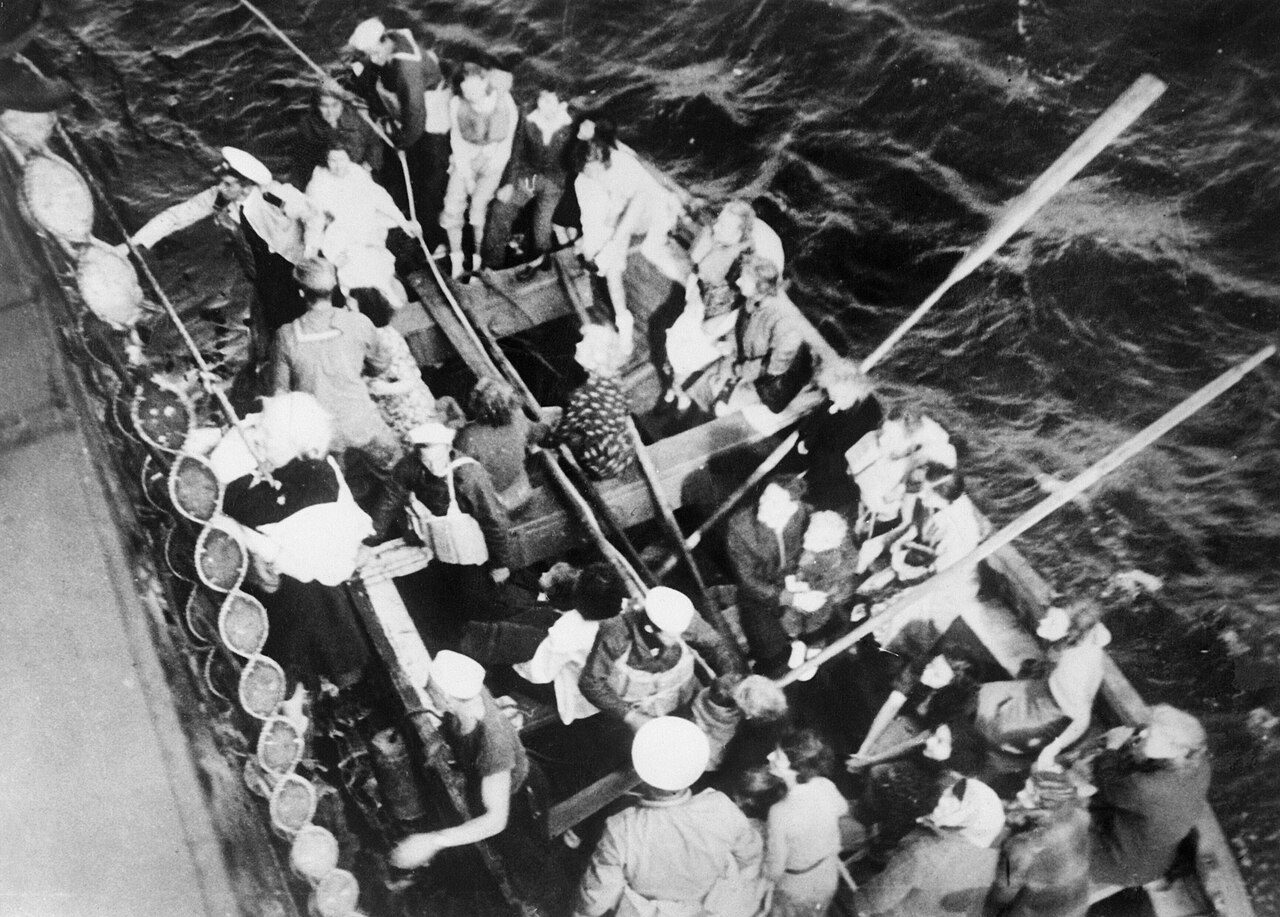
- That evening the British liner Athenia was torpedoed by the German submarine U-30 off Ireland; more than 100 of those aboard died
- What followed
- Months of 'Phoney War' on land in the west, while the real war at sea — the Battle of the Atlantic — began at once
- The earlier promise
- Britain had publicly guaranteed Polish independence on 31 March 1939, formalised in an alliance signed on 25 August
Events on this day
- 1189Richard I, the Lionheart, is crowned king of England at Westminster Abbey.
- 1658Oliver Cromwell, Lord Protector of England, Scotland and Ireland, dies in London — on the anniversary of his victories at Dunbar and Worcester.
- 1777The Stars and Stripes is said to be flown in battle for the first time, at the skirmish of Cooch's Bridge in Delaware.
- 1783The Treaty of Paris is signed, by which Britain recognises the independence of the United States and the American Revolutionary War formally ends.
- 1914Giacomo della Chiesa is elected Pope Benedict XV, a month into the First World War.
- 1928Returning to his London laboratory, Alexander Fleming notices that a mould has killed the staphylococci on a discarded culture plate — the observation that leads to penicillin.
- 1939Britain and France declare war on Germany — the featured story above.
- 1943The British Eighth Army crosses the Strait of Messina to land in Calabria, beginning the Allied invasion of mainland Italy; Italy's secret armistice is agreed the same day.
- 1971Qatar becomes independent of Britain, with Doha as its capital.
- 1976NASA's Viking 2 lander touches down on Mars at Utopia Planitia and begins photographing the surface.
- 2004The Beslan school siege in Russia ends in explosions and a storming of the building; more than 300 hostages die, many of them children.
Born on this day
- 1856Louis Sullivan — American architect, pioneer of the skyscraper and mentor of Frank Lloyd Wright.
- 1875Ferdinand Porsche — Austrian-German engineer who founded Porsche and designed the Volkswagen Beetle.
- 1905Carl David Anderson — American physicist and Nobel laureate who discovered the positron.
- 1965Charlie Sheen — American actor of Platoon, Wall Street and Two and a Half Men.
Died on this day
- 1658Oliver Cromwell — English soldier and statesman who led Parliament to victory in the Civil War and ruled as Lord Protector.
- 1962E. E. Cummings — American poet known for his experimental typography and lowercase style.
- 1970Vince Lombardi — American football coach who led the Green Bay Packers to five NFL championships.
- 1991Frank Capra — Italian-American director of It Happened One Night and It's a Wonderful Life.
The featured story: Britain and France declare war on Germany, 3 September 1939
The morning of Sunday 3 September 1939 was the deadline. Britain's ambassador in Berlin had handed the German government a final note: unless Germany undertook by 11 o'clock to withdraw its troops from Poland, a state of war would exist. Crowds gathered in Downing Street under a bright sky. In the Cabinet Room, Prime Minister Neville Chamberlain — the man who a year earlier had returned from Munich promising 'peace for our time' — sat before a microphone, and at 11:15 he told the country that no such undertaking had been received, 'and that consequently this country is at war with Germany.' France delivered its own ultimatum and declared war that afternoon.
The declarations honoured a promise made in the spring. On 31 March 1939, after Germany swallowed what remained of Czechoslovakia, Chamberlain had guaranteed Polish independence in the House of Commons; on 25 August, with invasion obviously imminent, Britain signed a formal alliance with Poland. Hitler had gambled that the Western powers would not fight for a country they could not reach, as they had not fought for Czechoslovakia. This time he was wrong about the declarations — though Poland's allies could do almost nothing to help Poland itself, and the gamble very nearly paid off anyway.
For most Britons the war's first day brought air-raid sirens (a false alarm minutes after Chamberlain's broadcast), evacuation trains full of children, and blackout curtains. Then, for months, almost nothing happened on land in the west — the 'Phoney War'. But at sea there was nothing phoney about it. That same evening, some 250 miles north-west of Ireland, the submarine U-30 found the Donaldson liner Athenia, bound from Liverpool to Montreal with more than 1,400 people aboard, many of them evacuees and refugees. Mistaking the zig-zagging, blacked-out liner for an armed merchant cruiser, her commander fired. Athenia took fourteen hours to sink; more than a hundred of those aboard, including children, were lost. Germany denied responsibility and tried to blame Britain; the truth emerged only after the war.
The declarations of 3 September set the frame of the conflict to come. The British Empire and Commonwealth rallied — Australia and New Zealand declared war the same day, South Africa and Canada within the week — and what had begun as a German-Polish war became, in law and in fact, a European and imperial war. It would last six years almost to the day, ending only with the ceremony aboard USS Missouri on 2 September 1945. Chamberlain, who had staked his reputation on avoiding this moment, formed a war government that evening, bringing Winston Churchill back into office as First Lord of the Admiralty; the Admiralty signalled the fleet a single word of celebration: 'Winston is back.'
Why this date matters
September 3 is a day of formal beginnings and formal endings. A war is declared in 1939 and another is legally closed in 1783; a pope is elected in 1914 and a republic's protector dies in 1658; a tiny Gulf state becomes independent in 1971 and a robot lands on Mars in 1976. Its most consequential entry may be its quietest: a bacteriologist in 1928 looking twice at a spoiled petri dish instead of throwing it away, and noticing that the mould had done what no medicine of the age could do.
Sources
- Encyclopaedia Britannica — On This Day: September 3
- HISTORY — This Day in History: September 3
- Wikipedia — British declaration of war on Germany (1939)
- Wikipedia — September 3
The facts on this page were checked against these sources on 19 November 2026. The History Trail's permanent pages are researched and written for this site; the live profiles elsewhere on The History Trail are assembled automatically from Wikipedia and Wikidata.
About the Author
Researched and written by the The History Trail Editorial Team — the accountable editorial function behind this site's permanent story pages. The team works from the published sources cited on each page; it does not invent historians, reviewers or credentials, and it corrects errors openly.
Fact Check
Every load-bearing fact on this page traces to one of the sources listed above, and significant claims link to their source in the text. Our checking method is described on the methodology page; errors can be reported via the corrections page.
Sources & Citations
Cite this page as: The History Trail Editorial Team, The History Trail — this article's title, publication and update dates are shown beneath its headline. The full source list appears under Sources above; the site's source standards are on the sources page.