
On This Day
September 29 in History
On 29 September 1923 the League of Nations' Mandate for Palestine, held by Britain, came into force — the legal instrument that committed Britain to establish a Jewish national home in Palestine while promising to protect the rights of its existing, majority Arab population, a dual obligation whose tensions shaped the Middle East for a century. September 29 is also the day London's Metropolitan Police first patrolled and Enrico Fermi was born.
Choose another date: open the On This Day calendar to browse events, births and deaths for any day of the year.
At a Glance
- The promise
- The Balfour Declaration of 1917 had pledged British support for a 'national home for the Jewish people' in Palestine
- The instrument
- The League of Nations approved the Mandate's terms in 1922; it came into force on 29 September 1923
- The dual obligation
- The Mandate also required safeguarding the civil and religious rights of Palestine's existing non-Jewish communities
- The territory
- The Mandate covered Palestine west of the Jordan; the emirate of Transjordan, east of the river, was administered separately
- The administration
- Britain governed through a high commissioner in Jerusalem for twenty-five years
- The end
- Britain handed the problem to the United Nations in 1947; the Mandate ended with Israel's declaration of independence in May 1948
Events on this day
- 1789The United States War Department establishes a small regular army of several hundred men, the foundation of the U.S. Army.
- 1829London's Metropolitan Police, founded by Home Secretary Robert Peel, begins patrolling — the first modern professional police force.
- 1911Italy declares war on the Ottoman Empire, beginning the Italo-Turkish War over Libya.
- 1916Newspapers report that John D. Rockefeller's oil fortune has passed one billion dollars, making him the world's first reported billionaire — though the figure was an estimate.
- 1923The British Mandate for Palestine comes into force — the featured story above.
- 1954The CERN convention comes into force, establishing the European Organization for Nuclear Research in Geneva.
- 1957An explosion at the Soviet Mayak nuclear plant contaminates the region around Kyshtym; the disaster is concealed for nearly two decades.
- 1988The shuttle Discovery lifts off on mission STS-26, NASA's return to flight after the Challenger disaster.
- 2005John Roberts is sworn in as chief justice of the United States.
Born on this day
- 1547Miguel de Cervantes — Spanish novelist whose Don Quixote is often called the first modern novel.
- 1758Horatio Nelson — British admiral who won at the Nile and Copenhagen and died at Trafalgar.
- 1901Enrico Fermi — Italian-American physicist who built the first nuclear reactor and received the Nobel Prize for Physics.
- 1935Jerry Lee Lewis — American rock-and-roll pioneer at the piano, 'the Killer'.
- 1943Lech Wałęsa — Polish shipyard electrician who led Solidarity and became president of post-communist Poland.
Died on this day
- 1560Gustav I (Gustav Vasa) — king who founded modern Sweden and made it an independent hereditary monarchy.
- 1902Émile Zola — French novelist of the Rougon-Macquart cycle and author of the open letter 'J'accuse…!'.
- 1913Rudolf Diesel — German inventor of the diesel engine, who disappeared from a Channel steamer at night and was found dead at sea.
- 2010Tony Curtis — American actor of Some Like It Hot and The Defiant Ones.
The featured story: the British Mandate for Palestine comes into force, 29 September 1923
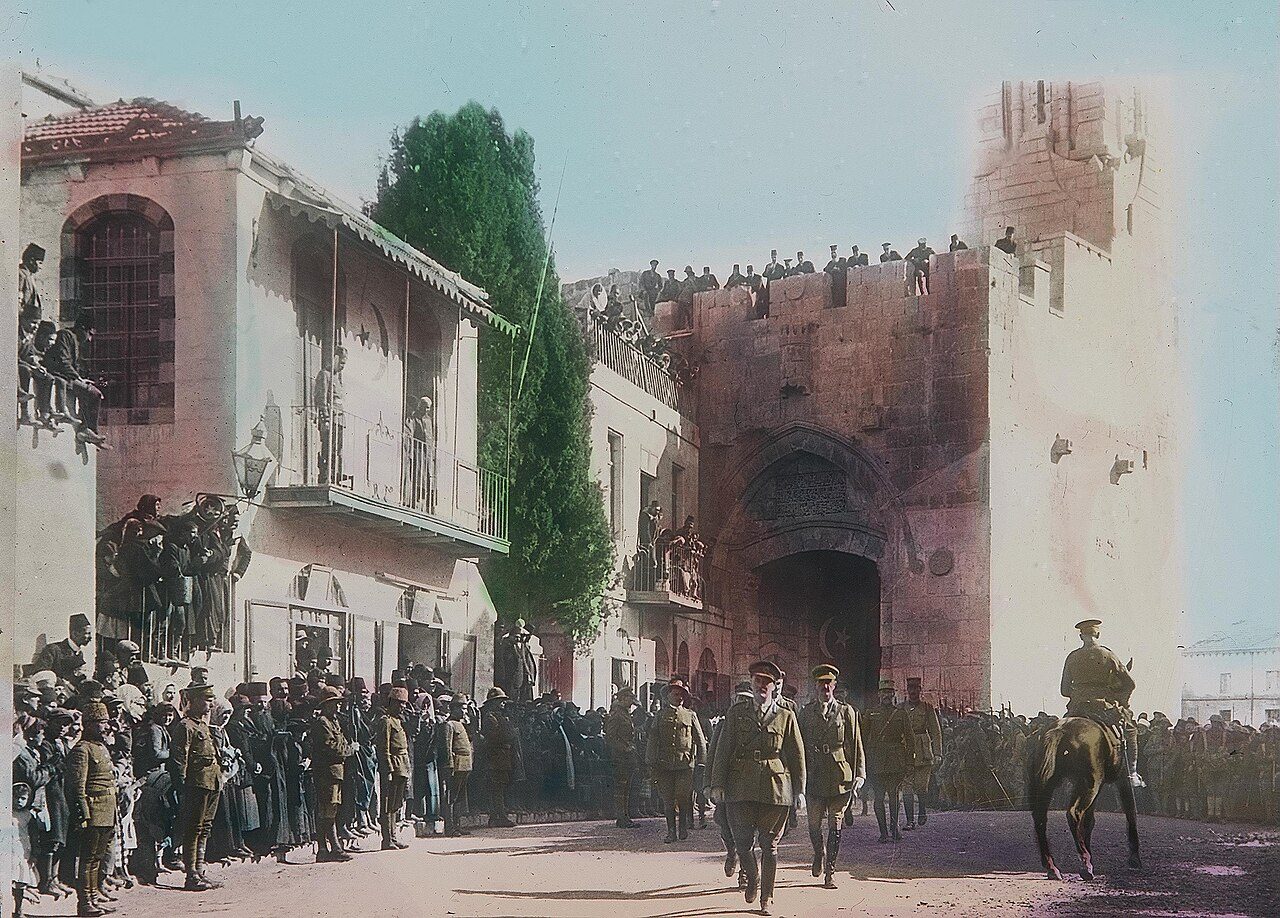
The Mandate for Palestine was an attempt to write two promises into one law. Britain had taken Palestine from the Ottoman Empire in the First World War — General Allenby entered Jerusalem in December 1917 — and in the Balfour Declaration of November 1917 the British government had already promised to view with favour 'the establishment in Palestine of a national home for the Jewish people,' adding that nothing should be done to prejudice the civil and religious rights of the existing non-Jewish communities, who then formed the overwhelming majority of the population. After the war, the victors converted their conquests into League of Nations 'mandates' — colonies in trust, in theory — and Palestine was assigned to Britain.
The Mandate's text, approved by the League's Council in 1922 and in force from 29 September 1923, wrote the Balfour promise into international law. Britain, as mandatory power, undertook to place the country under conditions securing the Jewish national home, to facilitate Jewish immigration and settlement, and to make Hebrew an official language alongside English and Arabic — while also safeguarding the rights and position of all inhabitants, developing self-governing institutions, and protecting holy places. East of the Jordan river, the territory of Transjordan was administered separately and excluded from the national-home provisions, a first partition of the mandate on the ground.
Governing on those terms proved impossible to do to everyone's satisfaction, and often to anyone's. Jewish immigration and land purchase built the institutions of a future state; Arab opposition, expressed in riots in 1920, 1921 and 1929 and in the full-scale revolt of 1936–39, demanded an end to both. Britain oscillated — encouraging immigration, then restricting it in the 1939 White Paper on the eve of the Holocaust, then trying to stop survivors reaching Palestine after the Second World War — while commissions proposed partition and withdrew the proposals. Each community concluded that British promises had been made to it and broken.
In 1947, exhausted and bankrupt, Britain handed the mandate back to the United Nations, whose partition plan the Jewish leadership accepted and Arab leaders rejected. The Mandate legally expired at midnight on 14–15 May 1948; Israel declared independence as it ended, and the war that followed fixed borders that remain contested. Almost every argument heard about the region since — over legitimacy, promises, partition and rights — has its documentary root in the instrument that took effect on 29 September 1923, and in the contradiction its drafters wrote into its first articles.
Why this date matters
September 29 is a day of charters and the forces they create. A mandate takes legal effect in 1923; a police force takes the streets in 1829; a physics laboratory is chartered at CERN in 1954; a tiny regular army is authorised in 1789. Its pattern is the power of paper: documents signed in committee rooms that put soldiers, scientists and policemen in motion for decades. The date is a standing lesson that the most consequential events are sometimes the ones with no crowd and no photograph — just an instrument coming into force.
Sources
- Encyclopaedia Britannica — On This Day: September 29
- HISTORY — This Day in History: September 29
- Wikimedia — On This Day feed: September 29
- Wikimedia Commons — File: General Allenby reviewing an honour guard in Jerusalem (1917)

The facts on this page were checked against these sources on 19 November 2026. The History Trail's permanent pages are researched and written for this site; the live profiles elsewhere on The History Trail are assembled automatically from Wikipedia and Wikidata.
About the Author
Researched and written by the The History Trail Editorial Team — the accountable editorial function behind this site's permanent story pages. The team works from the published sources cited on each page; it does not invent historians, reviewers or credentials, and it corrects errors openly.
Fact Check
Every load-bearing fact on this page traces to one of the sources listed above, and significant claims link to their source in the text. Our checking method is described on the methodology page; errors can be reported via the corrections page.
Sources & Citations
Cite this page as: The History Trail Editorial Team, The History Trail — this article's title, publication and update dates are shown beneath its headline. The full source list appears under Sources above; the site's source standards are on the sources page.