
On This Day
October 27 in History
On 27 October 1904 New York City opened its first subway — 9.1 miles from City Hall to 145th Street — and Mayor George B. McClellan drove the first train himself, refusing to hand over the controls. October 27 is also the day the Federalist Papers began, Reagan launched his political career, and Theodore Roosevelt and Sylvia Plath were born.
Choose another date: open the On This Day calendar to browse events, births and deaths for any day of the year.
At a Glance
- The line
- The IRT's first route: 9.1 miles and 28 stations, from City Hall to 145th Street in Manhattan
- The first train
- Departed City Hall at 2:35 p.m. on 27 October 1904, with Mayor George B. McClellan at the controls
- The fare
- A nickel — unchanged for more than forty years
- The first evening
- More than 100,000 New Yorkers rode the subway after it opened to the public at 7 p.m.; some contemporary counts put the figure near 150,000
- The showpiece
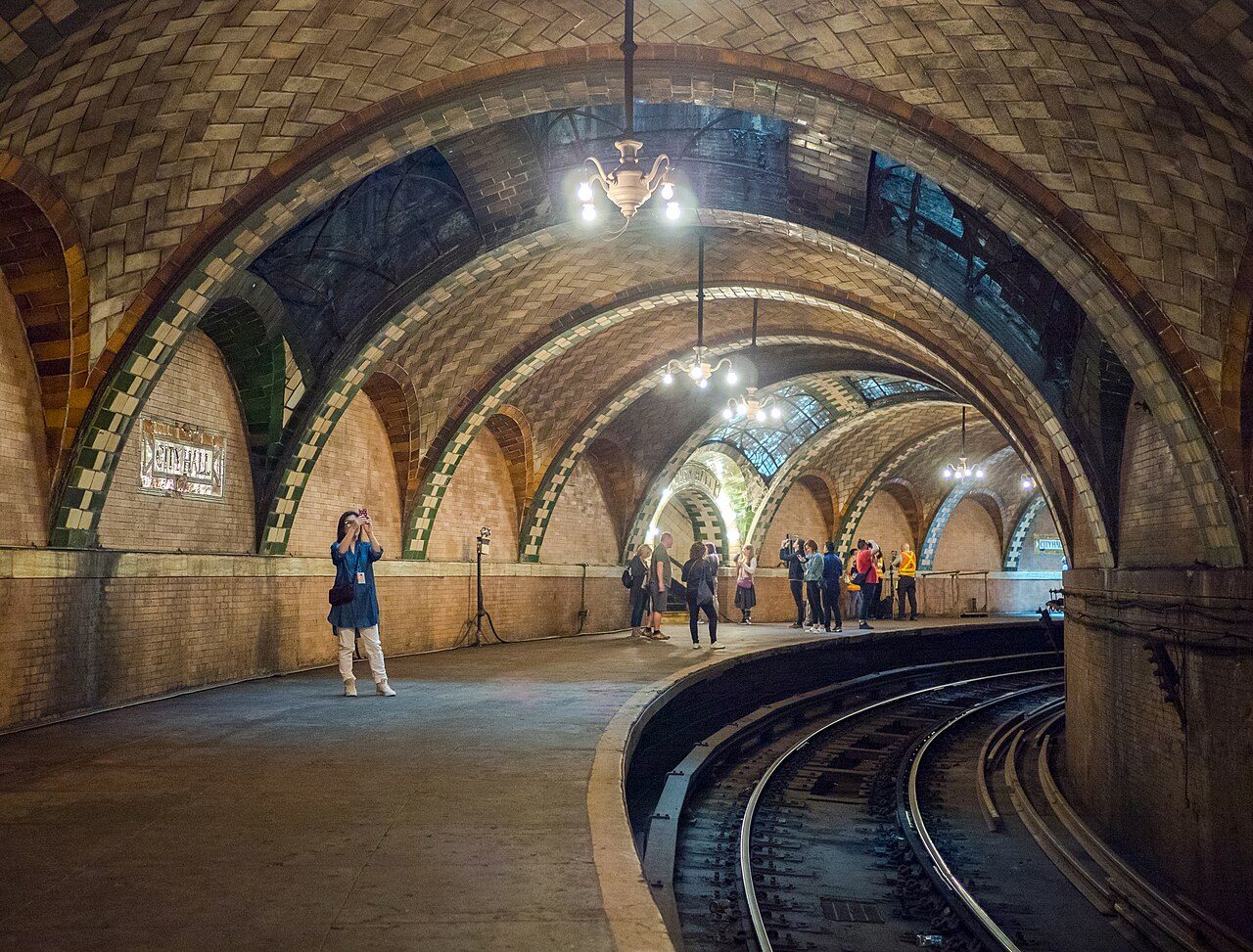
- City Hall station, vaulted in Guastavino tile, was closed on 31 December 1945 and survives as a ghost station
Events on this day
- 1787The first of the Federalist Papers is published in a New York newspaper, signed 'Publius' — Alexander Hamilton's opening argument for the new U.S. Constitution.
- 1795The United States and Spain sign Pinckney's Treaty, fixing the Florida boundary at the 31st parallel and opening the Mississippi to American trade.
- 1810The United States annexes West Florida, taking the former Spanish colony between the Mississippi and the Pearl River.
- 1904New York City's first subway line opens, running 9.1 miles from City Hall to 145th Street — the featured story above.
- 1919President Wilson vetoes the Volstead Act, the Prohibition enforcement law; the House of Representatives overrides him the same day.
- 1962At the height of the Cuban Missile Crisis, Soviet naval officer Vasili Arkhipov refuses to consent to firing a nuclear torpedo from submarine B-59, and is credited with helping avert a nuclear launch.
- 1964Ronald Reagan delivers his televised 'A Time for Choosing' speech for Barry Goldwater, launching his own political career.
- 1991Turkmenistan declares independence from the Soviet Union.
Born on this day
- 1858Theodore Roosevelt — born in New York City at 28 East 20th Street; the 26th president of the United States.
- 1914Dylan Thomas — Welsh poet of 'Do not go gentle into that good night'.
- 1917Oliver Tambo — South African lawyer and politician who led the African National Congress in exile.
- 1932Sylvia Plath — American poet and novelist, born in Boston, author of The Bell Jar.
Died on this day
- 1505Ivan III — Grand Prince of Moscow, 'the Great', who threw off the Tatar yoke and tripled his state's territory; succeeded by Vasily III.
- 1553Michael Servetus — Spanish physician and theologian, burned at the stake in Geneva for heresy.
- 2013Lou Reed — American singer and songwriter of the Velvet Underground, dead in Southampton, New York, at 71, of liver disease.
The featured story: the New York City subway opens, 27 October 1904
On 27 October 1904, New York City went underground. The Interborough Rapid Transit Company's first subway line — 9.1 miles and twenty-eight stations, running from City Hall up Manhattan to 145th Street — opened after four years of digging through rock, water mains and the foundations of the crowded city above. New York had watched Boston open America's first subway seven years earlier and London run underground trains since 1863; now the largest city in the United States had a system of its own, built to relieve streets so congested that crossing midtown at rush hour could take the better part of an hour. The fare was a nickel, and it would stay a nickel for more than four decades.
The opening ceremony produced the day's enduring story. The first official train left City Hall station at 2:35 in the afternoon, and at the controls, by right of office, sat Mayor George B. McClellan. The mayor was supposed to hand over to a professional motorman after a token start. Instead, delighted, he refused — 'Mayor-Motorman', the papers called him — and drove the train himself up the west side to 103rd Street, running, by most accounts, rather well. Below the dignitaries' train, the showpiece City Hall station gleamed with vaulted Guastavino tile, brass chandeliers and a curved platform built to impress: the subway was not merely transport, it was a civic monument, proof that New York could build like an imperial capital.
When the line opened to the public at seven that evening, the city poured in. More than 100,000 people rode the subway before the night was out — contemporary counts vary, some putting the figure nearer 150,000 — queuing for the novelty of it, riding downtown and back for pleasure, marvelling at the speed. A journey that took an hour in a horse-drawn streetcar now took minutes. Within a few years the subway had redrawn the map of the possible city: workers could live in Harlem, the Bronx and Brooklyn and still reach jobs in Manhattan, and New York's explosive outward growth — the apartment-house city of the twentieth century — ran along the subway's steel arteries.
The system never stopped growing, through the Dual Contracts, the independent IND lines and unification under the city in 1940, into the network New Yorkers know today. The little City Hall station where it began was closed on the last day of 1945, its sharp curve made obsolete by longer trains, and survives as a ghost station glimpsed from passing trains — the preserved cradle of the largest rapid transit system in the Americas. Every New Yorker's commute, every tourist's bewildered map-check, descends from the afternoon a mayor refused to give up the controls.
Why this date matters
October 27 is a day about who gets a say. In 1787 'Publius' began arguing, in print, that Americans should ratify a constitution; in 1919 Congress overruled its own president to impose Prohibition on a country that had not finished arguing about it; in 1962, aboard a cornered submarine, one officer's refusal to agree may have kept the Cold War from turning hot. And in 1904 the date gave the ordinary New Yorker a new say in the geography of daily life — the nickel ride that let a working family choose a home miles from the factory. Arguments, vetoes and one famous train ride: this is a date on which decisions, once taken, moved millions. Even its births carry the theme of the contested voice: a president who hugely expanded his office's reach, a Welsh poet who made his language sing against the odds, and an American poet who fought, in print, for a voice entirely her own.
Sources
- Encyclopaedia Britannica — On This Day: October 27
- HISTORY — What Happened on October 27
- Theodore Roosevelt Association — Theodore Roosevelt chronology
- Encyclopaedia Britannica — Sylvia Plath
- Wikimedia — On This Day feed: October 27
The facts on this page were checked against these sources on 19 November 2026. The History Trail's permanent pages are researched and written for this site; the live profiles elsewhere on The History Trail are assembled automatically from Wikipedia and Wikidata.
About the Author
Researched and written by the The History Trail Editorial Team — the accountable editorial function behind this site's permanent story pages. The team works from the published sources cited on each page; it does not invent historians, reviewers or credentials, and it corrects errors openly.
Fact Check
Every load-bearing fact on this page traces to one of the sources listed above, and significant claims link to their source in the text. Our checking method is described on the methodology page; errors can be reported via the corrections page.
Sources & Citations
Cite this page as: The History Trail Editorial Team, The History Trail — this article's title, publication and update dates are shown beneath its headline. The full source list appears under Sources above; the site's source standards are on the sources page.