
On This Day
March 19 in History
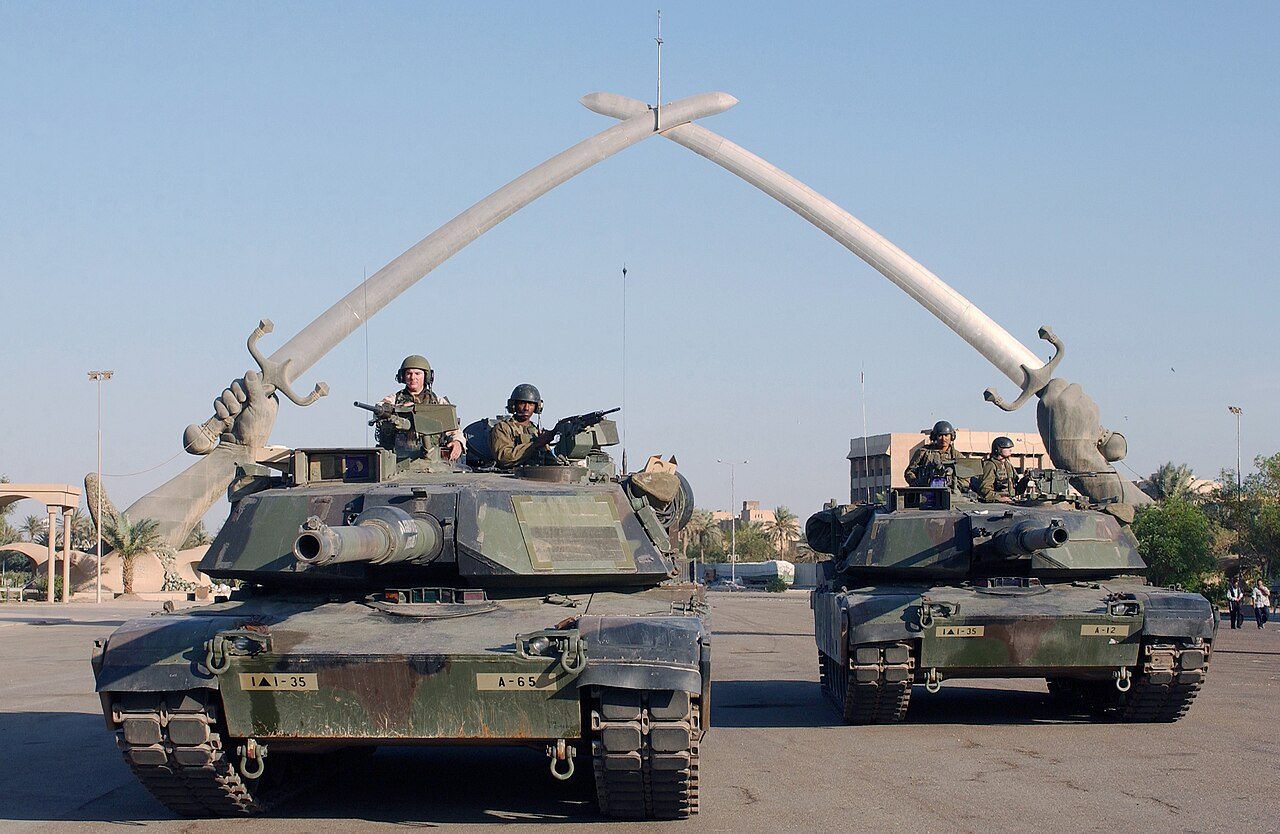
On the evening of 19 March 2003, Washington time, President George W. Bush told the world that American and coalition forces had begun military operations in Iraq. The first bombs fell on Baghdad before dawn local time, opening a war whose occupation phase would last until 2011. March 19 is also the day the Sydney Harbour Bridge opened in 1932 and the U.S. Senate finally rejected the Treaty of Versailles in 1920.
Choose another date: open the On This Day calendar to browse events, births and deaths for any day of the year.
At a Glance
- The ultimatum
- On 17 March 2003 Bush gave Saddam Hussein 48 hours to leave Iraq; Saddam refused (Britannica)
- The announcement
- Bush announced the start of operations in a televised address on the evening of 19 March, Washington time
- First strikes
- The attack opened in the early hours of 20 March, Baghdad time, with precision bombs aimed at a bunker where Saddam was believed to be meeting (Britannica)
- The coalition
- United States and British forces led the invasion, with smaller contingents from Australia, Poland and other countries
- The fall of Baghdad
- Iraqi resistance in the capital collapsed on 9 April 2003
- The long war
- Major combat was declared over on 1 May 2003, but occupation and insurgency continued until the U.S. withdrawal in December 2011; Britannica puts American military deaths at some 4,500
Events on this day
- 1279Mongol forces destroy the Song fleet at the Battle of Yamen, ending China's Song dynasty.
- 1687The French explorer Robert de La Salle is murdered by his own men in Texas while searching for the mouth of the Mississippi.
- 1831The City Bank of New York is robbed of $245,000 — the first documented bank robbery in United States history.
- 1865The Battle of Bentonville begins in North Carolina, the last major Confederate offensive of the Civil War.
- 1882The foundation stone of Antoni Gaudí's Sagrada Família basilica is laid in Barcelona; the church is still unfinished.
- 1918The United States Congress establishes standard time zones and approves daylight saving time.
- 1920The U.S. Senate rejects the Treaty of Versailles for the second and final time, keeping America out of the League of Nations.
- 1932The Sydney Harbour Bridge opens in Australia, then the world's widest long-span bridge.
- 1945A Japanese air attack sets the carrier USS Franklin ablaze off Japan, killing 724 of her crew; the ship survives and reaches port under her own power.
- 1945Hitler issues the 'Nero Decree', ordering the destruction of Germany's own infrastructure before the advancing Allies.
- 1982Argentine scrap-metal workers land on South Georgia and raise their flag, an opening move of the Falklands War.
- 2003President Bush announces the invasion of Iraq; the first bombs fall on Baghdad within hours — the featured story above.
Born on this day
- 1813David Livingstone — Scottish missionary and explorer whose journeys opened central Africa to European eyes.
- 1821Richard Francis Burton — English explorer and linguist, translator of the Arabian Nights.
- 1848Wyatt Earp — American lawman of the Wild West, famed for the gunfight at the O.K. Corral.
- 1891Earl Warren — chief justice of the United States whose Supreme Court reshaped American civil rights law.
- 1933Philip Roth — American novelist of Portnoy's Complaint and American Pastoral.
- 1947Glenn Close — American actress, star of Fatal Attraction and Dangerous Liaisons.
- 1955Bruce Willis — American actor, star of the Die Hard films.
Died on this day
- 235Severus Alexander — Roman emperor, murdered with his mother by his own troops, ending the Severan dynasty.
- 1286Alexander III of Scotland — king of Scots whose death in a fall from his horse plunged his kingdom into a succession crisis.
- 1950Edgar Rice Burroughs — American author, creator of Tarzan and of Barsoom's John Carter.
- 1987Louis de Broglie — French physicist and Nobel laureate who proposed that matter, like light, has wave properties.
- 1997Willem de Kooning — Dutch-American painter, a leader of abstract expressionism.
- 2008Arthur C. Clarke — English science-fiction author of 2001: A Space Odyssey and visionary of the communications satellite.
The featured story: the Iraq War begins, 19 March 2003
The road to war ran through the ruins of 11 September 2001. In the months that followed, the administration of President George W. Bush argued that Saddam Hussein's Iraq — accused of hiding weapons of mass destruction and of links to terrorism — was a threat the United States could not leave standing. In November 2002 the UN Security Council passed Resolution 1441, demanding that Iraq readmit weapons inspectors and comply with earlier resolutions. Inspectors returned but found no stockpiles; the United States and Britain, unconvinced, massed an invasion force around Iraq's borders while diplomacy ran out.
On 17 March 2003 Bush declared an end to diplomacy and issued an ultimatum: Saddam Hussein and his sons had 48 hours to leave Iraq or face war. Saddam refused. On the evening of 19 March, Washington time, Bush addressed the nation and the world: American and coalition forces, he announced, were 'in the early stages of military operations to disarm Iraq, to free its people and to defend the world from grave danger'. Even as he spoke, the opening attack was being prepared — precision-guided bombs aimed at a Baghdad bunker complex where Saddam was believed to be meeting his senior staff, dropped in the early hours of 20 March, Baghdad time.
The ground invasion followed from Kuwait within days. Iraqi forces were rapidly defeated: British troops secured Basra in the south while American columns drove on the capital, and on 9 April 2003 resistance in Baghdad collapsed and U.S. forces took control of the city, pulling down Saddam's statue in Firdos Square before the world's cameras. On 1 May, standing beneath a 'Mission Accomplished' banner, Bush declared an end to major combat operations. The conventional war had taken six weeks.
The war itself lasted eight more years. No weapons of mass destruction were ever found. The occupation that followed the invasion dissolved into insurgency and sectarian civil war; Britannica records some 4,500 American service members killed and some 32,000 wounded across the conflict, with Iraqi deaths far higher and still disputed. The United States completed its withdrawal in December 2011. Whether the war 'began' on 19 or 20 March depends on which capital's clock you use — a fitting ambiguity for a conflict whose justifications are argued about to this day.
Why this date matters
March 19 is a date of thresholds crossed in public. A cornerstone laid in Barcelona in 1882 began a church still rising; a bridge opened in Sydney in 1932 joined a city to itself; a Senate vote in 1920 closed America's door to the League of Nations, and an ultimatum's expiry in 2003 opened a war whose consequences have not closed yet. Even its disasters are threshold events — a great carrier burning within sight of Japan in 1945, a dictator ordering his own country destroyed rather than surrendered. The date specialises in moments after which return becomes impossible.
Sources
- Encyclopaedia Britannica — On This Day: March 19
- HISTORY — What Happened on March 19
- Encyclopaedia Britannica — Iraq War (summary)
- Encyclopaedia Britannica — Iraq War: Occupation and Continued Warfare
The facts on this page were checked against these sources on 19 November 2026. The History Trail's permanent pages are researched and written for this site; the live profiles elsewhere on The History Trail are assembled automatically from Wikipedia and Wikidata.
About the Author
Researched and written by the The History Trail Editorial Team — the accountable editorial function behind this site's permanent story pages. The team works from the published sources cited on each page; it does not invent historians, reviewers or credentials, and it corrects errors openly.
Fact Check
Every load-bearing fact on this page traces to one of the sources listed above, and significant claims link to their source in the text. Our checking method is described on the methodology page; errors can be reported via the corrections page.
Sources & Citations
Cite this page as: The History Trail Editorial Team, The History Trail — this article's title, publication and update dates are shown beneath its headline. The full source list appears under Sources above; the site's source standards are on the sources page.