
On This Day
June 19 in History
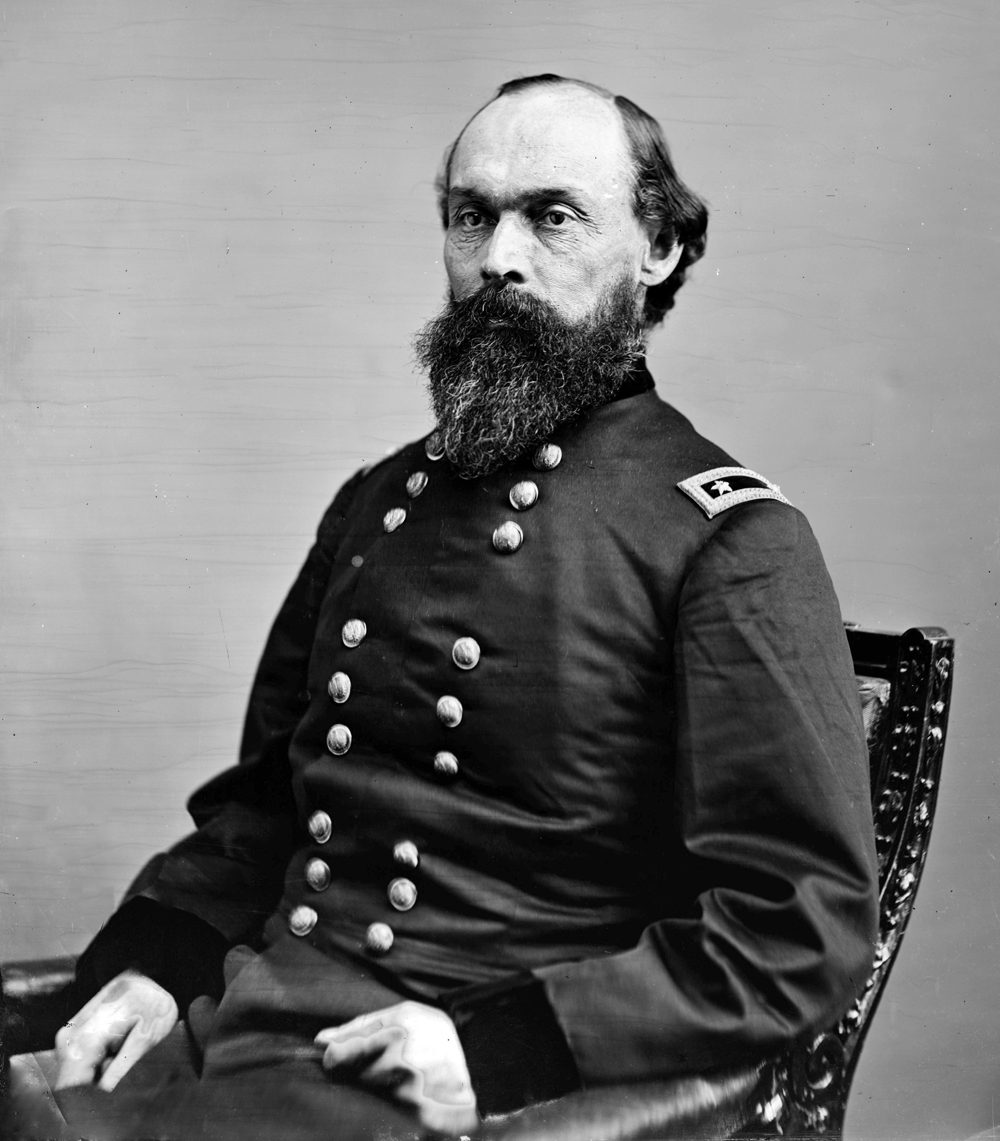
On 19 June 1865 Union general Gordon Granger issued General Order No. 3 in Galveston, announcing that all enslaved people in Texas were free — two and a half years after emancipation had been proclaimed. The day became Juneteenth. June 19 is also the day the Rosenbergs were executed, Maximilian of Mexico was shot, and the first Father's Day was held.
Choose another date: open the On This Day calendar to browse events, births and deaths for any day of the year.
At a Glance
- The order
- General Order No. 3, issued by Maj. Gen. Gordon Granger at Galveston, Texas, on 19 June 1865
- The words
- 'The people of Texas are informed that, in accordance with a proclamation from the Executive of the United States, all slaves are free'
- The delay
- Two and a half years after the Emancipation Proclamation took effect on 1 January 1863, and two months after Lee's surrender
- The people
- An estimated 250,000 enslaved people in Texas, the last major enslaved population to receive the news with an army to enforce it
- The first celebration
- 19 June 1866 in Texas; freedpeople later bought 'emancipation grounds', including Houston's Emancipation Park in 1872
- The recognition
- Texas made Juneteenth a state holiday in 1980; it became a US federal holiday in 2021
Events on this day
- 1846The first recorded baseball game under modern rules is played at the Elysian Fields in Hoboken, New Jersey.
- 1865Freedom is announced to the enslaved people of Texas by General Order No. 3 — the featured story above.
- 1867Emperor Maximilian of Mexico is executed by firing squad at Queretaro, ending France's Mexican adventure.
- 1910The first Father's Day is celebrated, in Spokane, Washington, at the urging of Sonora Smart Dodd.
- 1934Congress passes the Communications Act, creating the Federal Communications Commission.
- 1944The Battle of the Philippine Sea opens — the 'Great Marianas Turkey Shoot', which destroys Japanese naval air power.
- 1953Julius and Ethel Rosenberg are executed at Sing Sing for conspiring to pass atomic secrets to the Soviet Union.
- 1961Kuwait gains independence from Britain, ending the 1899 protectorate agreement.
- 1963Valentina Tereshkova returns safely to Earth after 48 orbits aboard Vostok 6.
- 1978The comic strip Garfield, by Jim Davis, is published for the first time.
Born on this day
- 1623Blaise Pascal — French mathematician and physicist whose work spans probability, hydraulics and the philosophy of faith.
- 1903Lou Gehrig — American baseball immortal, the Yankees' 'Iron Horse', whose name became synonymous with the disease that killed him.
- 1945Aung San Suu Kyi — Myanmar democracy leader, Nobel Peace laureate, later deposed and detained by the military she had faced down.
- 1947Salman Rushdie — Indian-born British novelist of Midnight's Children and The Satanic Verses.
- 1978Zoe Saldana — American actress, star of Avatar and Guardians of the Galaxy, among the highest-grossing film actors ever.
Died on this day
- 1820Joseph Banks — English naturalist who sailed with Cook on the Endeavour and presided over the Royal Society for 41 years.
- 1867Maximilian I — Austrian archduke made emperor of Mexico by Napoleon III, executed at 34 after his empire collapsed.
- 1937J. M. Barrie — Scottish creator of Peter Pan, dead at 77.
- 1993William Golding — English novelist of Lord of the Flies and Nobel laureate, dead at 81.
- 2013James Gandolfini — American actor whose Tony Soprano redefined television, dead of a heart attack at 51.
The featured story: freedom is announced in Texas — Juneteenth, 19 June 1865
On 19 June 1865, two months after Robert E. Lee's surrender and two and a half years after the Emancipation Proclamation took effect, Major General Gordon Granger arrived in Galveston, Texas, with some 2,000 Union troops and issued his General Order No. 3. Its opening sentence was read aloud and posted around the city: 'The people of Texas are informed that, in accordance with a proclamation from the Executive of the United States, all slaves are free.' For the estimated 250,000 enslaved people in Texas — many of them deliberately kept in ignorance by owners who had moved west precisely to escape emancipation — the Civil War's promise finally became fact.
Texas had been the Confederacy's refuge: remote from the fighting, it had received a flood of slaveholders fleeing Union advances with the people they held, swelling the enslaved population even as freedom advanced elsewhere. The Proclamation of 1 January 1863 had applied to Texas in law, but law without an army to enforce it changed nothing on the ground. Granger's order supplied the army. It also spoke, remarkably for a military order, of 'an absolute equality of personal rights and rights of property between former masters and slaves' — before advising the freedpeople, in the paternal language of the day, to stay where they were and work for wages.
Many did not stay. In what freedpeople called 'the scatter', thousands left the plantations at once to test their freedom, to search for family members sold away, or simply to see the next town as free people. Others were met with violence by former owners determined that nothing should change. But the day itself was kept: on 19 June 1866 the first anniversary celebrations were held in Texas, organised by freedpeople through their churches, with readings of the Proclamation, prayer, feasting and games. Where white authorities barred public parks, Black communities pooled their money and bought land of their own — Houston's Emancipation Park, purchased in 1872, still hosts the celebration.
The observance spread with the Great Migration until 'Juneteenth' — the compressed name the day had acquired — was kept across the country. Texas made it a state holiday in 1980, the first state to do so, and on 17 June 2021 President Biden signed the law making Juneteenth National Independence Day a federal holiday, 156 years after Granger's order was read in Galveston. It is the oldest nationally celebrated commemoration of the end of slavery in the United States — and a standing reminder that a right announced and a right delivered can be years apart.
Why this date matters
June 19 is the date on which delayed promises come due. Its centrepiece is a freedom proclaimed in 1863 and delivered in 1865; around it sit an emperor executed when his borrowed empire expired, a spy couple executed at the height of a cold war's certainty, and the first Father's Day — a commemoration that itself took sixty years to win federal recognition. Even the day's lighter entries share the theme of things arriving later than expected: a cosmonaut landing safely, a comic strip beginning a half-century run. Few dates teach so plainly that the announcement is not the achievement.
Sources
- Encyclopaedia Britannica — On This Day: June 19
- HISTORY — What Happened on June 19
- HISTORY — Slavery's end announced in Texas on 'Juneteenth'
- National Archives — National Archives Safeguards Original 'Juneteenth' General Order
- Encyclopaedia Britannica — General Order No. 3
The facts on this page were checked against these sources on 19 November 2026. The History Trail's permanent pages are researched and written for this site; the live profiles elsewhere on The History Trail are assembled automatically from Wikipedia and Wikidata.
About the Author
Researched and written by the The History Trail Editorial Team — the accountable editorial function behind this site's permanent story pages. The team works from the published sources cited on each page; it does not invent historians, reviewers or credentials, and it corrects errors openly.
Fact Check
Every load-bearing fact on this page traces to one of the sources listed above, and significant claims link to their source in the text. Our checking method is described on the methodology page; errors can be reported via the corrections page.
Sources & Citations
Cite this page as: The History Trail Editorial Team, The History Trail — this article's title, publication and update dates are shown beneath its headline. The full source list appears under Sources above; the site's source standards are on the sources page.