
On This Day
February 29 in History
On 29 February 1992 voting opened in Bosnia and Herzegovina's independence referendum — the leap-day poll, boycotted by most Bosnian Serbs, in which 99.7 percent of votes cast backed leaving Yugoslavia, setting the republic on the road to statehood and war. February 29 is also the day Hattie McDaniel became the first African American Oscar winner and the Kerner Commission reported on America's race riots.
Choose another date: open the On This Day calendar to browse events, births and deaths for any day of the year.
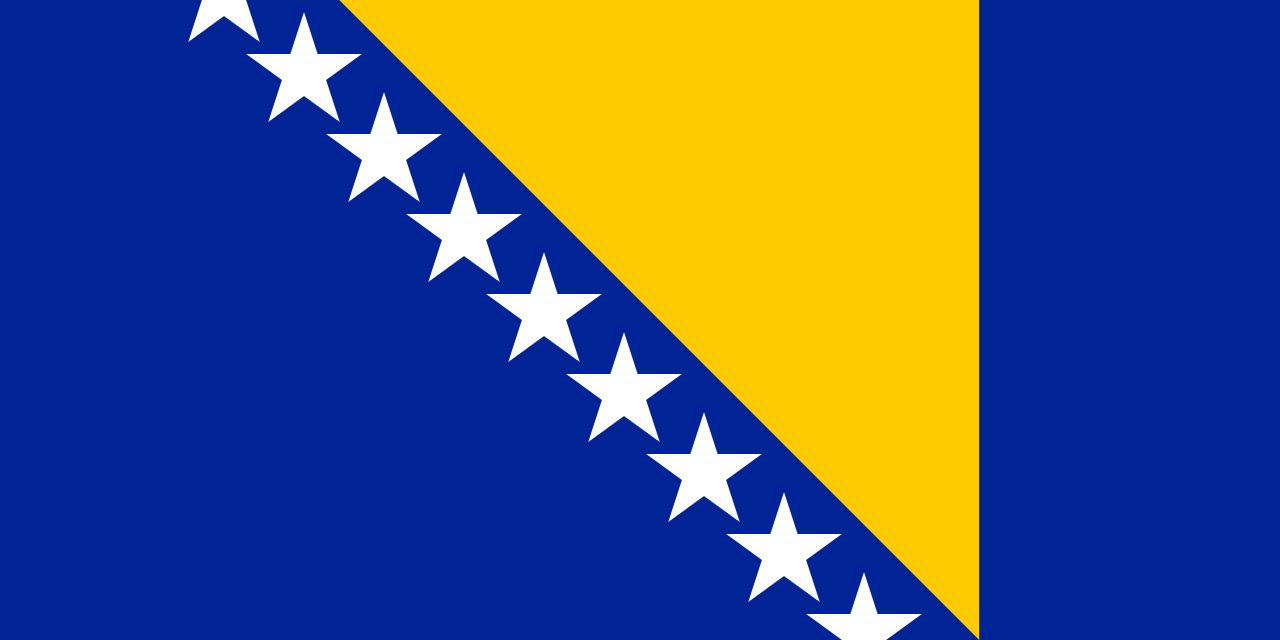
At a Glance
- The vote
- Referendum held 29 February – 1 March 1992, required by the European Community as a condition of recognition
- The boycott
- Most Bosnian Serbs, on their leaders' instructions, refused to vote
- The result
- Turnout was about 64 percent; 99.7 percent of votes cast were for independence
- The proclamation
- President Alija Izetbegović proclaimed independence on 3 March 1992
- Recognition
- The European Community and the United States recognised Bosnia on 6 April 1992; it joined the United Nations on 22 May
- The consequence
- War followed within weeks, including the siege of Sarajevo, and lasted until the Dayton agreement of 1995
Events on this day
- 1692The first arrest warrants of the Salem witch trials are issued in Massachusetts, naming among the accused Tituba, an enslaved woman in the Parris household.
- 1704French and Native forces raid the English frontier town of Deerfield, Massachusetts, during Queen Anne's War; dozens of inhabitants are killed and more than a hundred marched captive to Canada.
- 1916The British armed merchant ship Alcantara and the German raider Greif fight in the North Sea and sink each other, in one of the First World War's strangest naval duels.
- 1940Hattie McDaniel wins the Academy Award for best supporting actress for Gone with the Wind, becoming the first African American to win an Oscar, as the film takes eight Academy Awards.
- 1968The Kerner Commission releases its report on the American race riots of 1967, blaming white racism as their primary cause and warning of a nation splitting into two societies, separate and unequal.
- 1980Gordie Howe scores his 800th goal in the National Hockey League, the first player in the league's history to reach that mark.
- 1992Voting begins in Bosnia and Herzegovina's independence referendum — the featured story above.
- 2004The Lord of the Rings: The Return of the King wins eleven Academy Awards, equalling the all-time record for a single film.
Born on this day
- 1468Paul III — the last of the Renaissance popes, who called the Council of Trent and approved the Jesuit order.
- 1736Ann Lee — English religious leader known as Mother Ann, who carried the Shaker movement to America.
- 1792Gioachino Rossini — Italian composer of The Barber of Seville and William Tell, born in Pesaro on the leap day he loved to joke about.
- 1860Herman Hollerith — American inventor whose punch-card tabulating machines founded the data-processing industry and, through his company, led to IBM.
- 1904Jimmy Dorsey — American clarinettist and saxophonist who, with his brother Tommy, led one of the great big bands.
- 1916Dinah Shore — American singer and television host, among the most popular entertainers of the 1940s and 1950s.
Died on this day
- 468Hilarius — pope from 461, remembered for strengthening the authority of the Roman see in the western church.
- 2004Jerome Lawrence — American playwright who, with Robert E. Lee, wrote Inherit the Wind and Auntie Mame.
- 2012Davy Jones — English singer and actor who found fame as a member of the Monkees, dead at 66.
The featured story: Bosnia and Herzegovina votes for independence, 29 February 1992
February 29 is the rarest date in the calendar, and in 1992 it carried the birth of a country. The Socialist Federal Republic of Yugoslavia was coming apart: Slovenia and Croatia had declared independence in 1991 and fought short wars to keep it, and Bosnia and Herzegovina — the most mixed of the Yugoslav republics, where Bosnian Muslims, Orthodox Serbs and Catholic Croats had lived intermingled for centuries — faced a choice it could not postpone. Staying in a Yugoslavia increasingly dominated from Belgrade meant one future; leaving meant another, and the republic's Serb leadership, backed by the Yugoslav People's Army, made clear it would resist secession by force. The European Community, whose recognition was the prize, required a referendum as the democratic test of the republic's will. The vote was set for the leap weekend: polling opened on Saturday 29 February 1992 and continued on Sunday 1 March.
The referendum divided Bosnia as sharply as it measured it. The republic's government in Sarajevo, led by President Alija Izetbegović, campaigned for a sovereign, independent Bosnia within its existing borders. Most Bosnian Croats supported independence too. But the Bosnian Serb leadership called a boycott, urging Serbs to stay home, and in the areas it controlled voting barely happened at all. The result, when it came, was therefore both overwhelming and incomplete: turnout was about 64 percent of the electorate, and of the votes cast, 99.7 percent were for independence. On 3 March 1992, Izetbegović proclaimed the republic's independence. Barricades were already going up in Sarajevo, and within days the first shelling by Serb forces began around the capital — the opening of a siege that would last nearly four years.
The world's recognition followed the script the referendum had been staged to satisfy, and it changed nothing on the ground. On 6 April 1992 the European Community and the United States recognised Bosnia and Herzegovina as an independent state; on 22 May it took its seat at the United Nations. By then the war was fully begun. What followed — the ethnic cleansing of whole regions, the siege of Sarajevo, the massacre at Srebrenica in 1995, and a death toll in the tens of thousands — became the worst violence in Europe since the Second World War, ended only by the Dayton peace agreement in late 1995. The state proclaimed that March still exists, its politics still organised along the lines the referendum exposed.
The leap-day vote is therefore remembered two ways at once: as a legitimate democratic act — a clear majority of those voting choosing independence, under international rules set in advance — and as the moment a country's fractures were counted in public for the first time, with one of its three peoples largely refusing to be counted at all. Both readings are true, and Bosnia has lived inside their tension ever since. That the count happened on 29 February, a date that exists only in leap years, gives the country's founding an oddly fitting quality: a birthday that, like the state itself, returns only intermittently, and is argued about whenever it comes round.
Why this date matters
February 29 exists to keep the calendar honest: without it, the seasons would drift a day every four years, and within centuries winter would fall in June. A date that occurs only to correct the count has gathered a suitably strange little history — witch-trial warrants in 1692, a frontier massacre in 1704, two warships sinking each other in 1916, and a scattering of leapling birthdays, from a Renaissance pope to Rossini, who liked to celebrate his birthdays four years apart in style. Its weightiest entry fits the pattern: in 1992 the rarest date hosted a referendum that was itself an act of counting, one that created a country and revealed, in the same tally, exactly where it was broken.
Sources
- Encyclopaedia Britannica — On This Day: February 29
- HISTORY — This Day in History: February 29
- Kennedy Center — On This Day in the Arts: February 29
- The Book of Days — February 29 almanac
The facts on this page were checked against these sources on 19 November 2026. The History Trail's permanent pages are researched and written for this site; the live profiles elsewhere on The History Trail are assembled automatically from Wikipedia and Wikidata.
About the Author
Researched and written by the The History Trail Editorial Team — the accountable editorial function behind this site's permanent story pages. The team works from the published sources cited on each page; it does not invent historians, reviewers or credentials, and it corrects errors openly.
Fact Check
Every load-bearing fact on this page traces to one of the sources listed above, and significant claims link to their source in the text. Our checking method is described on the methodology page; errors can be reported via the corrections page.
Sources & Citations
Cite this page as: The History Trail Editorial Team, The History Trail — this article's title, publication and update dates are shown beneath its headline. The full source list appears under Sources above; the site's source standards are on the sources page.