
On This Day
February 12 in History
On 12 February 1912 an edict issued in the name of the six-year-old Xuantong Emperor — Puyi — formally ended his reign, and with it more than two thousand years of imperial rule in China. A republic had already been proclaimed under Sun Yat-sen, and the child's abdication cleared the way for a new order. February 12 is also, by an extraordinary coincidence, the shared birthday of Abraham Lincoln and Charles Darwin, both born on this day in 1809.
Choose another date: open the On This Day calendar to browse events, births and deaths for any day of the year.
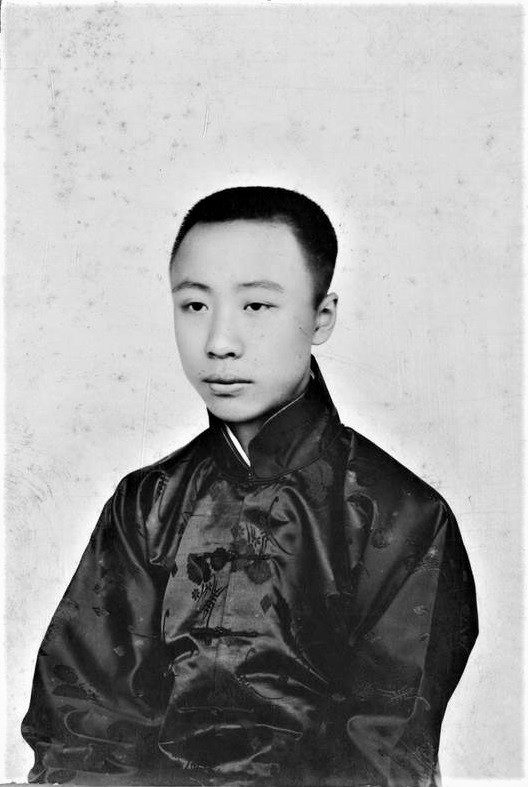
At a Glance
- The emperor
- Puyi, enthroned in 1908 at the age of two as the Xuantong Emperor of the Qing dynasty
- The revolution
- 1911 — Sun Yat-sen's republican revolution spreads; a provisional republican government is formed at Nanjing
- The abdication
- 12 February 1912 — the Imperial Edict of Abdication is issued on Puyi's behalf by the Empress Dowager Longyu
- What it ended
- 267 years of Qing (Manchu) rule and more than 2,000 years of imperial government in China
- The settlement
- Puyi is allowed to keep his title and residence in the Forbidden City, where he lives until his expulsion in 1924
- Afterwards
- Puyi later rules the Japanese puppet state of Manchukuo (1934–45), is imprisoned, and ends his life as a citizen and gardener in Beijing
Events on this day
- 1818Chile formally declares independence from Spain, exactly one year after patriot forces won the decisive Battle of Chacabuco.
- 1851Edward Hargraves finds gold near Bathurst, New South Wales, setting off the Australian gold rushes.
- 1909The National Association for the Advancement of Colored People (NAACP) is founded in New York, growing into America's oldest major civil rights organisation.
- 1912The last emperor of China abdicates, ending more than 2,000 years of imperial rule — the featured story above.
- 1924George Gershwin's Rhapsody in Blue is performed for the first time, at Aeolian Hall in New York City, with the composer at the piano.
- 1941German General Erwin Rommel arrives in Tripoli, Libya, with the newly formed Afrika Korps to support Italy in North Africa.
- 1947Christian Dior presents his first collection in Paris; its cinched waists and full skirts are christened the New Look.
- 1994Thieves break into the National Gallery in Oslo and steal Edvard Munch's The Scream, leaving a note thanking the museum for its poor security.
- 1999The U.S. Senate acquits President Bill Clinton on both articles of impeachment, ending his trial.
- 2002Former Yugoslav president Slobodan Milosevic goes on trial for war crimes at The Hague.
- 2019The country formerly known as Macedonia officially becomes the Republic of North Macedonia, ending a long naming dispute with Greece.
Born on this day
- 1809Abraham Lincoln — 16th president of the United States, who preserved the Union through the Civil War and emancipated enslaved people.
- 1809Charles Darwin — English naturalist whose theory of evolution by natural selection, set out in On the Origin of Species, transformed biology.
- 1934Bill Russell — American basketball centre who won 11 NBA championships with the Boston Celtics, more than any player in league history.
- 1938Judy Blume — American author beloved for children's and young-adult novels such as Tales of a Fourth Grade Nothing.
- 1980Christina Ricci — American actress who rose to fame as Wednesday Addams in The Addams Family films.
Died on this day
- 1554Lady Jane Grey — the nine-days queen of England, beheaded at the Tower of London at about 16 after Mary I secured the throne.
- 1804Immanuel Kant — German philosopher whose Critique of Pure Reason reshaped modern philosophy, dead in Königsberg, the city he never left.
- 1976Sal Mineo — American actor of Rebel Without a Cause, murdered outside his Los Angeles home at 37.
- 2000Charles M. Schulz — American cartoonist, creator of Peanuts, dead in California on the eve of his final Sunday strip.
The featured story: the last emperor of China abdicates, 12 February 1912
The emperor who ended two thousand years of Chinese imperial history was six years old, and he did not sign anything. On 12 February 1912 the Empress Dowager Longyu, acting for the child emperor Puyi, issued the Imperial Edict of Abdication, formally surrendering the sovereignty of the Qing dynasty to the new Republic of China. With that single document, an institution that had organised Chinese life since the third century BC — through dynasties of glory and collapse — came to a negotiated end at a palace desk in Beijing.
Puyi had been placed on the throne in 1908, aged two, after the death of the Guangxu Emperor. His reign was never more than a symbol: real power lay with regents and dowagers while the empire strained under foreign pressure, debt and internal revolt. In October 1911 an uprising at Wuchang spread province by province, and on 1 January 1912 Sun Yat-sen proclaimed the Republic of China at Nanjing. The Qing court still held Beijing and the north, and the commander Yuan Shikai held the army. The abdication was the bargain that joined the two halves without a war for the capital: Yuan pressed the court to yield, the court yielded, and Yuan became president of the republic.
The terms were strikingly gentle. Under the Articles of Favourable Treatment, Puyi kept his imperial title, a large allowance, his servants and his home in the Forbidden City, where a miniature court continued behind its walls for another twelve years, until a warlord expelled him in 1924. Few fallen dynasties in world history have been pensioned off so politely — a contrast with the fate of the Romanovs in Russia six years later, and one reason the Chinese revolution of 1911–12, for all its chaos, avoided an immediate bloodbath at its centre.
Puyi's own story refused to end in 1912. In 1917 he was briefly restored to the throne for twelve days. In 1932 Japan installed him in Manchuria, first as chief executive and then as emperor of the puppet state of Manchukuo, a role that ended with Soviet capture in 1945 and years of imprisonment. Pardoned in 1959, he finished his life as an ordinary citizen of the People's Republic, working as a gardener in Beijing and writing an autobiography. He died in 1967 — the last emperor of China, who had begun as a god-king and ended as a ticket-taker's colleague, his whole life a measure of the century his abdication began.
Why this date matters
February 12 is a day of endings and improbable beginnings. An empire of two millennia closed its books in 1912, while in 1809 two boys born on opposite sides of the Atlantic — a Kentucky log-cabin child and a comfortable Shrewsbury doctor's son — began lives that would remake politics and science. The day also founded the NAACP in 1909, gave Gershwin his Rhapsody in Blue in 1924 and Dior his New Look in 1947, and in 1994 lost The Scream to thieves who mocked the museum's security. Few dates hold an ending as large, and a coincidence as neat, in the same twenty-four hours.
Sources
- Encyclopaedia Britannica — On This Day: February 12
- HISTORY — What Happened on February 12
- Smithsonian Magazine — How Lincoln and Darwin Shaped the Modern World
- Encyclopaedia Britannica — The Scream (Edvard Munch)
The facts on this page were checked against these sources on 19 November 2026. The History Trail's permanent pages are researched and written for this site; the live profiles elsewhere on The History Trail are assembled automatically from Wikipedia and Wikidata.
About the Author
Researched and written by the The History Trail Editorial Team — the accountable editorial function behind this site's permanent story pages. The team works from the published sources cited on each page; it does not invent historians, reviewers or credentials, and it corrects errors openly.
Fact Check
Every load-bearing fact on this page traces to one of the sources listed above, and significant claims link to their source in the text. Our checking method is described on the methodology page; errors can be reported via the corrections page.
Sources & Citations
Cite this page as: The History Trail Editorial Team, The History Trail — this article's title, publication and update dates are shown beneath its headline. The full source list appears under Sources above; the site's source standards are on the sources page.