
On This Day
August 22 in History
On 22 August 1485 Henry Tudor defeated and killed King Richard III at the Battle of Bosworth Field in Leicestershire, ending the Wars of the Roses and founding the Tudor dynasty. August 22 is also the day the English Civil War began, the first Geneva Convention was signed, and the Mona Lisa theft was discovered.
Choose another date: open the On This Day calendar to browse events, births and deaths for any day of the year.
At a Glance
- The battle
- Fought near Market Bosworth, Leicestershire, on 22 August 1485
- The loser
- Richard III, the last Plantagenet king and the last English king killed in battle
- The winner
- Henry Tudor, Earl of Richmond, who became Henry VII
- The turning point
- The Stanley family's late intervention against Richard, after his desperate charge at Henry
- The result
- The Wars of the Roses effectively ended and the Tudor dynasty began
- The echo
- Richard's remains were found under a Leicester car park in 2012 and reburied in Leicester Cathedral in 2015
Events on this day
- 1485Henry Tudor defeats and kills Richard III at the Battle of Bosworth Field, ending the Wars of the Roses and founding the Tudor dynasty — the featured story above.
- 1642King Charles I raises his standard at Nottingham, formally beginning the English Civil War.
- 1776British forces land on Long Island, New York, opening the campaign that would drive Washington's army from the city.
- 1849Austria attacks Venice with unmanned balloon bombs, often described as the first aerial bombardment.
- 1862President Abraham Lincoln replies to Horace Greeley's abolitionist editorial, insisting his paramount object is to save the Union.
- 1864Twelve nations sign the first Geneva Convention, establishing neutral care for wounded soldiers and the Red Cross emblem.
- 1911The theft of the Mona Lisa from the Louvre is discovered, a day after Vincenzo Perugia walked out with the painting.
- 1922Irish leader Michael Collins is killed in an ambush at Beal na Blath, County Cork, during the Irish Civil War.
- 1932The BBC begins experimental television-era Empire Service broadcasting, the ancestor of the World Service.
- 1962French president Charles de Gaulle survives an assassination attempt at Petit-Clamart, his Citroen DS escaping on shredded tyres.
- 1989Nolan Ryan of the Texas Rangers becomes the first pitcher in major league history to record 5,000 career strikeouts.
- 1992On the second day of the Ruby Ridge standoff in Idaho, an FBI sniper kills Vicki Weaver, escalating a national controversy.
Born on this day
- 1862Claude Debussy — French composer whose Prelude to the Afternoon of a Faun and Clair de lune reshaped modern music.
- 1893Dorothy Parker — American poet and critic, the Algonquin Round Table's sharpest wit.
- 1904Deng Xiaoping — Chinese leader who opened China's economy to the world after 1978.
- 1908Henri Cartier-Bresson — French photographer who defined photojournalism and the idea of the decisive moment.
- 1920Ray Bradbury — American author of Fahrenheit 451 and The Martian Chronicles.
- 1934Norman Schwarzkopf — American general who commanded coalition forces in the 1991 Gulf War.
- 1935Annie Proulx — American author of The Shipping News and Brokeback Mountain.
- 1963Tori Amos — American singer-songwriter and pianist known for Little Earthquakes.
Died on this day
- 1485Richard III — last Plantagenet king of England, killed at Bosworth Field at 32.
- 1922Michael Collins — Irish revolutionary leader and government minister, shot in an ambush at 31.
- 2011Jack Layton — Canadian opposition leader who had just led the New Democratic Party to its best-ever federal result.
The featured story: the Battle of Bosworth Field, 22 August 1485
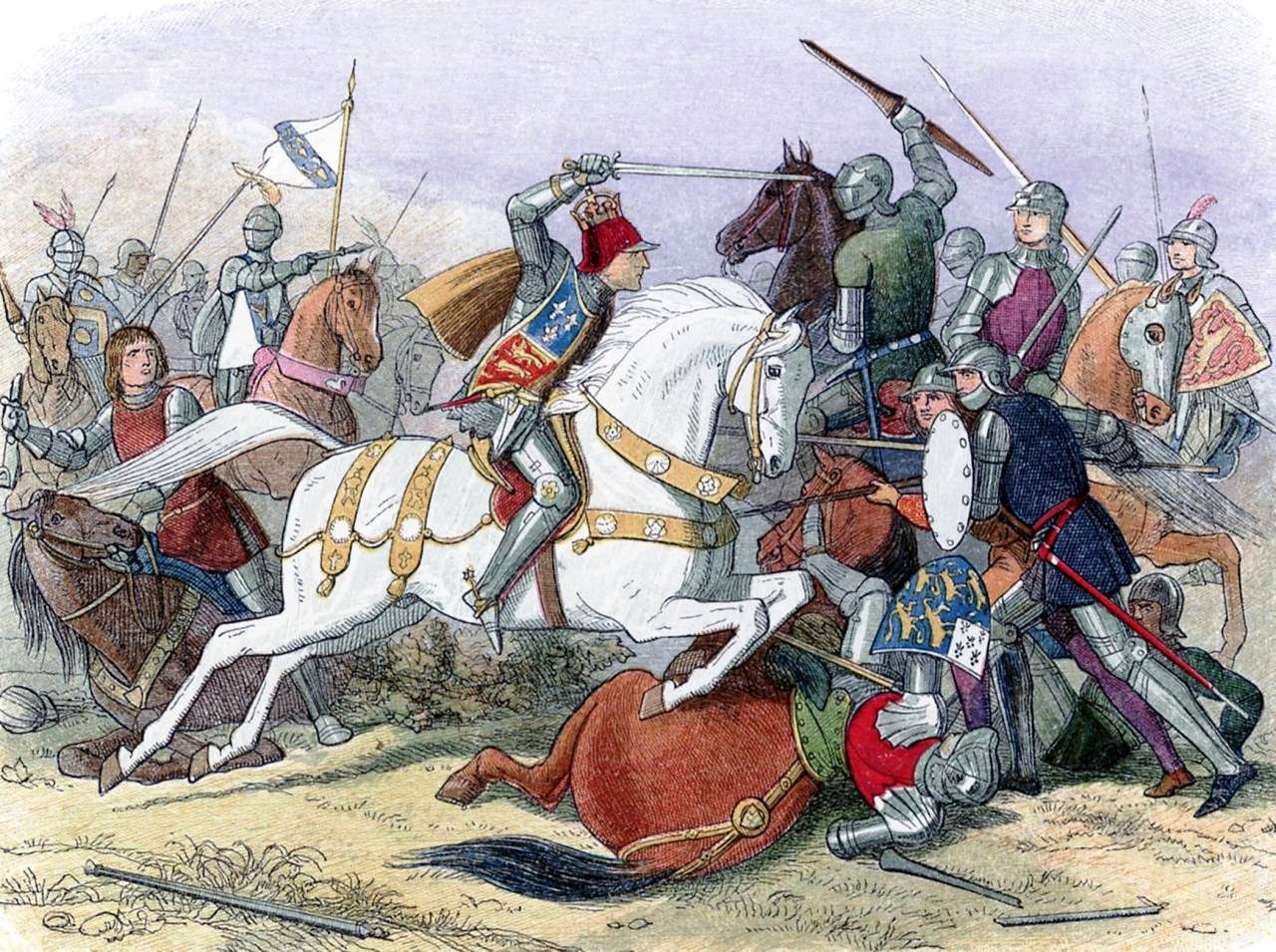
On 22 August 1485, on a Leicestershire field near Market Bosworth, England changed dynasties in a single morning. Henry Tudor, a 28-year-old exile with a thin claim to the throne through his mother, Margaret Beaufort, had landed in Wales a fortnight earlier with a small force of French mercenaries and Welsh supporters. Waiting for him was Richard III, king for just two years, whose seizure of the throne in 1483, and the disappearance of his nephews the Princes in the Tower, had split his own Yorkist party and driven defectors to Henry's camp.
Richard had the larger army, but numbers were not the whole story. The battle turned on loyalty. Richard's ally the Earl of Northumberland held his troops back, while the Stanley brothers, Henry's stepfather Thomas, Lord Stanley among them, watched from the flank with a private army of their own, committed to neither side. When Richard saw Henry exposed with a small bodyguard, he made the gambler's decision: a direct cavalry charge at his rival, killing Henry's standard-bearer and coming within a sword's length of deciding the crown in single combat.
It was then that Sir William Stanley's men finally intervened, against the king. Richard, unhorsed in marshy ground, was cut down fighting, the last English king to die in battle. Tradition holds that his crown was found in a hawthorn bush and placed on Henry's head on the field itself. Henry was crowned Henry VII that October, and the following January he married Elizabeth of York, uniting the rival houses whose badges, the red rose and the white, were combined into the Tudor rose.
Bosworth is conventionally taken as the end of the Wars of the Roses, the thirty years of intermittent civil war between Lancaster and York, and even as the end of medieval England. One Yorkist rising remained, crushed at Stoke Field in 1487, but the Tudor dynasty Henry founded lasted 118 years and produced Henry VIII and Elizabeth I. In 2012 Richard III's skeleton was found beneath a Leicester car park, on the site of the church where he had been buried after the battle; he was reburied in Leicester Cathedral in 2015.
Why this date matters
August 22 is a day on which orders end in fields and streets. A dynasty fell at Bosworth in 1485; another English war formally began at Nottingham in 1642; Ireland lost the man who might have ended its civil war in 1922. Yet the same date also carries the beginnings of repair: the Geneva Convention's promise that the wounded would be cared for whoever they were, Lincoln's careful letter holding a union together, and a broadcaster in London starting to speak to an empire. Endings dominate, but the day keeps planting alternatives beside them.
Sources
- Encyclopaedia Britannica — On This Day: August 22
- HISTORY — What Happened on August 22
- Wikipedia — Battle of Bosworth Field
- Historic England — Bosworth Battlefield archive
- Wikimedia Commons — Battle of Bosworth by James Doyle

The facts on this page were checked against these sources on 19 November 2026. The History Trail's permanent pages are researched and written for this site; the live profiles elsewhere on The History Trail are assembled automatically from Wikipedia and Wikidata.
About the Author
Researched and written by the The History Trail Editorial Team — the accountable editorial function behind this site's permanent story pages. The team works from the published sources cited on each page; it does not invent historians, reviewers or credentials, and it corrects errors openly.
Fact Check
Every load-bearing fact on this page traces to one of the sources listed above, and significant claims link to their source in the text. Our checking method is described on the methodology page; errors can be reported via the corrections page.
Sources & Citations
Cite this page as: The History Trail Editorial Team, The History Trail — this article's title, publication and update dates are shown beneath its headline. The full source list appears under Sources above; the site's source standards are on the sources page.