
Animals
African elephant
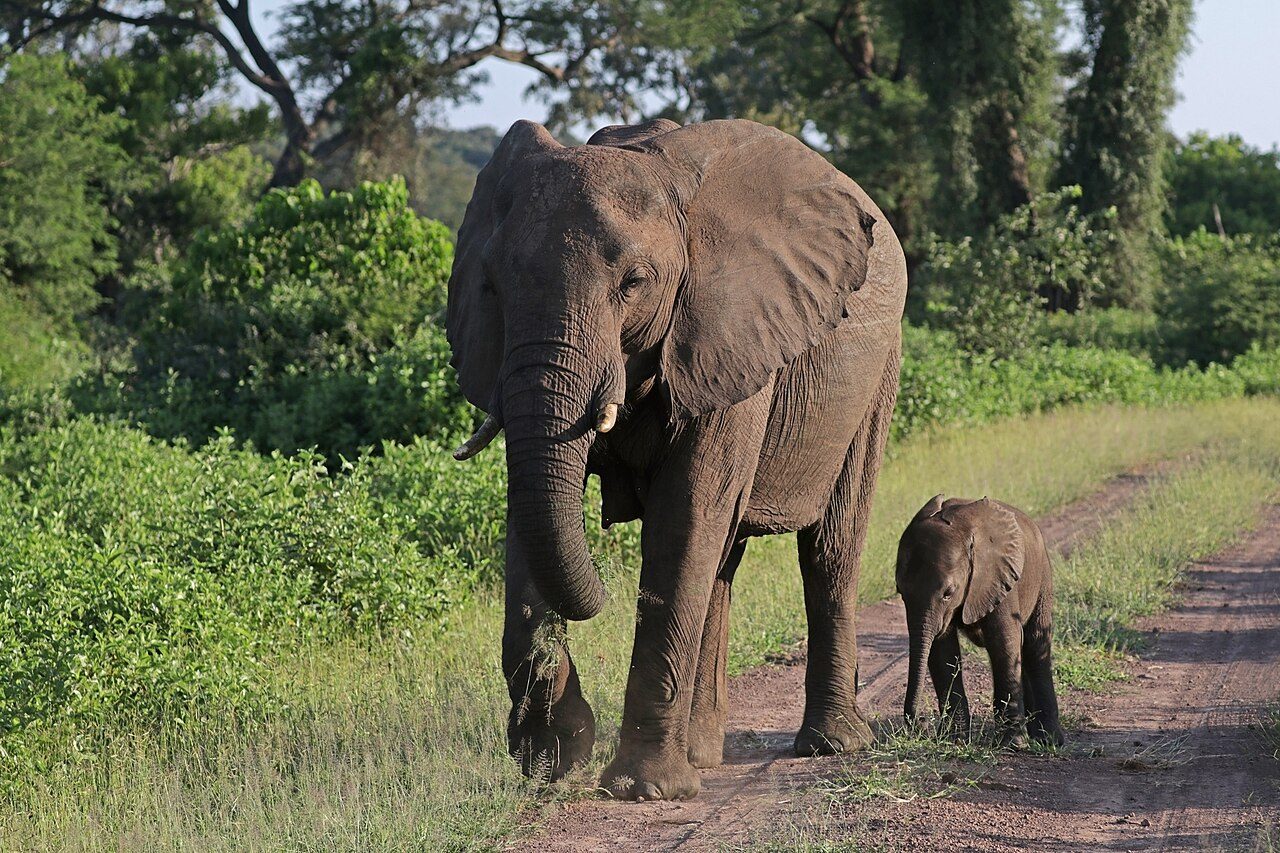
No land animal alive is bigger than an African elephant, and few are more social, more communicative or more dependent on memory. Led by an elderly matriarch whose knowledge of water and danger keeps the herd alive, it is also an animal in steep, human-driven decline.
At a Glance
- Scientific name
- Loxodonta africana (African savanna elephant)
- Size
- Males up to 7.5 tons (6.8 metric tons); 3 to 4 metres at the shoulder
- Largest on record
- About 24,000 pounds (10,886 kg) and 13 feet (3.96 m) at the shoulder
- Diet
- 165 to 330 pounds (75 to 150 kg) of vegetation a day, eating about 16 hours daily
- Range
- Eastern, central and southern Africa — forests, flood plains, woodland and savanna
- Social structure
- Herds of related females led by a matriarch, the oldest and most experienced female
- Conservation status
- Endangered (IUCN Red List); the African forest elephant is Critically Endangered
Introduction
The African elephant is the largest living land animal. A male African savanna elephant can weigh up to 7.5 tons, stand three to four metres at the shoulder, and carry a trunk containing some 150,000 separate muscle fascicles — an organ with no bones or cartilage that can lift a tree trunk or pick up a single piece of straw.
There are three living elephant species: the African savanna elephant, the African forest elephant and the Asian elephant. The savanna elephant ranges across eastern, central and southern Africa, inhabiting lowland and montane forests, flood plains and every type of woodland and savanna; the forest elephant lives in the Congo basin and the moist rainforests of western Africa.
Origins
An elephant's equipment is built for a life of eating. It consumes all kinds of vegetation — grass, fruit, leaves, roots and bark — some 165 to 330 pounds a day, roughly four to six percent of its body weight, and spends an average of sixteen hours a day doing it. Its tusks are its only incisor teeth, grown from milk tusks that fall out at about a year old; the permanent tusks emerge at two to three years and grow throughout life, serving for defence, digging for water and food, and lifting. Its molars are stranger still: an elephant gets up to six sets in a lifetime, each new set growing in from behind and pushing the worn teeth forward and out, like a conveyor.
The skin tells the same story of adaptation. It can be an inch thick in places, yet it is sensitive to touch and sunburn, and its wrinkles trap moisture that cools the animal as it evaporates. The huge ears are radiators: flapped on a hot day, they pass blood through a spread of vessels and cool it.
Timeline
- 1875
The pharyngeal pouch behind the elephant's tongue — long observed when elephants sprayed stored liquid over themselves — is described scientifically, a small mystery of elephant anatomy formally opened.
- 1979–1989
In a single decade the number of African elephants in the wild falls by more than half, from about 1,300,000 to 600,000, driven partly by commercial demand for ivory.
- 2000
The African forest elephant is recognised as a separate species from the savanna elephant — smaller, with slender, downward-pointing tusks.
- 2016
The African Elephant Status Report estimates about 415,000 elephants for the two African species combined.
- 2021
The IUCN assesses the two African elephants separately for the first time: the savanna elephant is listed Endangered, the forest elephant Critically Endangered, after savanna numbers fell by at least 60 percent over fifty years.
- 2020s
The combined African elephant population totals about 400,000 animals, with some southern African populations stable or growing while others continue to fall.
Significance
Elephant society is a memory bank with legs. Most elephants live in close herds of related females and their offspring, led by a matriarch — usually the oldest and most experienced female. It is her responsibility to remember where and how to find food and water, how to avoid predators and where shelter is best; she keeps the young in line and teaches them how to behave in elephant society. Males leave at adolescence to live alone or in small bachelor groups, visiting female herds only briefly to breed, and take no part in raising the young.
Ecologically, an animal that eats a hundred kilograms or more of vegetation a day, digs water holes in dry riverbeds with tusks, feet and trunk, and ranges across whole landscapes does not merely live in its ecosystem — it substantially alters it, opening woodland, dispersing seed and, in drought, excavating water that other animals then drink.
Legacy
Today's wild elephants face poaching, habitat loss and fragmentation, and conflict with people. Poaching drives decline in all elephants: although tusks are ordinary dentine, like our teeth, consumers continue to buy ivory illegally, and poachers continue to kill for it. As human populations expand, farms and infrastructure shrink and split elephant habitat, and displaced elephants competing with people for resources come into conflict with them. Asian and African savanna elephants are listed as Endangered on the IUCN Red List; the African forest elephant is Critically Endangered.
The elephant's story through time is therefore double. For most of it, this was simply the largest, longest-lived and most socially elaborate land animal on the planet, admired for centuries for its size and intelligence. In the last fifty years it has become something else as well: the test case for whether human beings can leave room — actual, connected, defended room — for a creature that needs so much of everything. The matriarchs still remember where the water is. The open question is whether the water, and the way to it, will still be there.
Sources
- San Diego Zoo Wildlife Alliance — Elephant
- Encyclopaedia Britannica — Elephant
- Smithsonian's National Zoo and Conservation Biology Institute — Elephants
- IUCN — African elephant species now Endangered and Critically Endangered (2021)
The facts on this page were checked against these sources on 19 November 2026. The History Trail's permanent pages are researched and written for this site; the live profiles elsewhere on The History Trail are assembled automatically from Wikipedia and Wikidata.
About the Author
Researched and written by the The History Trail Editorial Team — the accountable editorial function behind this site's permanent story pages. The team works from the published sources cited on each page; it does not invent historians, reviewers or credentials, and it corrects errors openly.
Fact Check
Every load-bearing fact on this page traces to one of the sources listed above, and significant claims link to their source in the text. Our checking method is described on the methodology page; errors can be reported via the corrections page.
Sources & Citations
Cite this page as: The History Trail Editorial Team, The History Trail — this article's title, publication and update dates are shown beneath its headline. The full source list appears under Sources above; the site's source standards are on the sources page.