
Years
1980 in History
1980 is remembered for an upset, an eruption and a murder. At Lake Placid, a team of American college students beat the Soviet Union's all-conquering hockey side 4–3 in the Miracle on Ice; Mount St. Helens blew its north face away and killed fifty-seven people; the World Health Organization declared smallpox eradicated, the first disease wiped out by human effort; and on 8 December John Lennon was shot dead outside his New York home.
At a Glance
- Defining event
- John Lennon is murdered outside the Dakota in New York, 8 December 1980
- Sporting upset
- The Miracle on Ice — United States college players beat the Soviet Union 4–3, 22 February
- Eruption
- Mount St. Helens erupts on 18 May, killing fifty-seven people
- Medical milestone
- The World Health Organization declares smallpox eradicated, 8 May
- Boycott
- President Carter announces a United States boycott of the Moscow Olympics, 21 March
- Union first
- Poland's government signs the Gdansk Agreement, legalising the Solidarity trade union, 31 August
The defining story: the murder of John Lennon
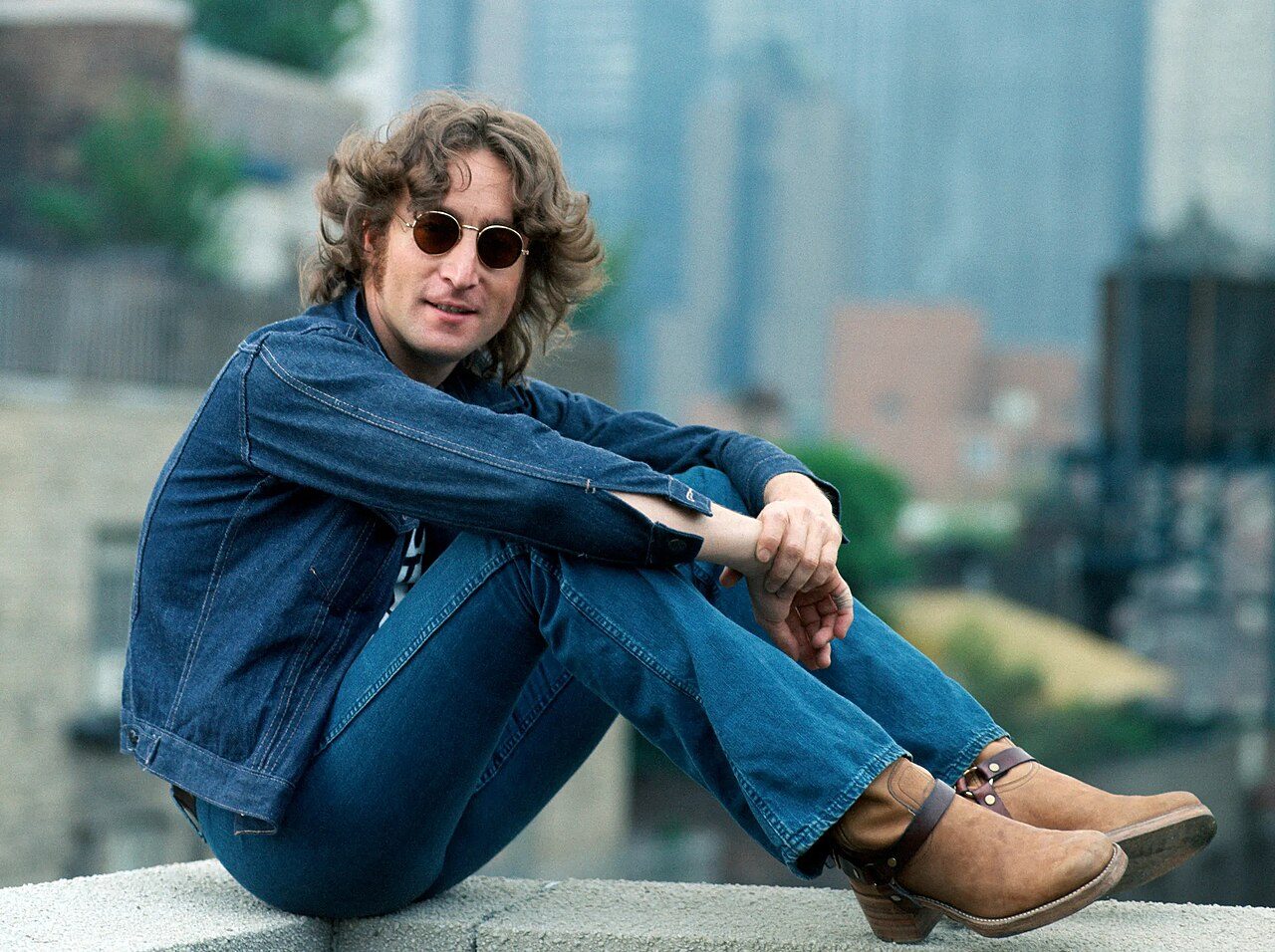
John Lennon's last day was, by his recent standards, an ordinary working one — which was itself the news. After five years retired at home in the Dakota, raising his son Sean, the 40-year-old had returned to music that autumn with Double Fantasy, the album he and Yoko Ono made as a dialogue between husband and wife. On 8 December 1980 he sat for Annie Leibovitz's Rolling Stone cover shoot, recorded a long radio interview, and in the early evening left for the Record Plant studio to work on Ono's song Walking on Thin Ice. Outside the Dakota's archway, as he left, a fan asked him to sign a copy of the album. He did. The press photograph on this page shows Lennon in 1974, six years before that evening.
The fan was Mark David Chapman, 25, a former security guard from Honolulu who had flown to New York with a revolver and a paperback of The Catcher in the Rye, and who had been stalking Lennon for days. Psychiatrists would later describe him as borderline psychotic, a Beatles fan turned against his idol, hungry, prosecutors argued, for the fame of killing a famous man. He had shaken hands with Lennon and taken the signed Double Fantasy. Then he stayed, waiting in the shadows of the archway for the couple to come home.
They returned at about 10:50 p.m. Ono walked ahead; Lennon followed, carrying cassettes. Chapman called out, took a combat stance and fired five hollow-point bullets; four hit Lennon in the back. Arriving police officers lifted him into the back of a squad car and raced him to Roosevelt Hospital, but the wounds were unsurvivable, and he was pronounced dead on arrival at about 11:15 p.m. Chapman did not run. He dropped the gun, took out his copy of Salinger, and was reading it calmly when police arrived.
The news broke to much of America through a football game: Howard Cosell, commentating on Monday Night Football, interrupted the play to announce that John Lennon had been shot and killed. Crowds gathered outside the Dakota within the hour and stayed for days, singing. Chapman pleaded guilty against his lawyer's advice and was sentenced to 20 years to life; eligible for parole since 2000, he has been refused again and again. Lennon was cremated, with no funeral; Ono asked the world instead for ten minutes of silence the following Sunday, which millions observed. The murder closed a year that had begun, in February, with the opposite kind of disbelief.
Timeline of 1980
- 22 January
Soviet dissident Andrei Sakharov is arrested in Moscow after criticising the invasion of Afghanistan, and is exiled to Gorky.
- 22 February
A team of American college players defeats the Soviet Union 4–3 at the Lake Placid Olympics in the Miracle on Ice.
- 21 March
President Jimmy Carter announces that the United States will boycott the Moscow Summer Olympics over the Soviet invasion of Afghanistan.
- 24 March
Archbishop Oscar Romero is shot dead while celebrating Mass in San Salvador.
- 18 April
Zimbabwe becomes independent of Britain, with Robert Mugabe as its first prime minister.
- 24 April
The American mission to rescue hostages in Tehran collapses in the Iranian desert; eight servicemen die during the withdrawal.
- 8 May
The World Health Organization declares smallpox eradicated — the first disease wiped out by human effort.
- 18 May
Mount St. Helens erupts in Washington state, killing fifty-seven people.
- 1 June
CNN begins broadcasting from Atlanta — the first 24-hour television news channel.
- 31 August
Poland's communist government signs the Gdansk Agreement, legalising the Solidarity trade union.
- 22 September
Iraq invades Iran, beginning the Iran-Iraq War, which lasts nearly eight years.
- 4 December
Led Zeppelin announce they are disbanding, six weeks after the death of drummer John Bonham.
- 8 December
John Lennon is shot dead outside the Dakota in New York, aged 40.
Why 1980 still matters
The Miracle on Ice did not itself win the gold medal — it was a medal-round game, not the final, and two days later the same young Americans had to come from behind against Finland to take the title. But it is the Soviet game the world remembers: Sports Illustrated ranked it the greatest sporting moment of the twentieth century, and it landed in an America worn down by inflation, energy shortages and the hostage crisis in Iran, as a story a country told itself about what was still possible. The boycott of the Moscow Olympics that Carter announced the following month showed the Games' other face in 1980 — sport as the Cold War's proxy.
Mount St. Helens changed the science that studied it: the first eruption in the continental United States monitored with modern instruments from unrest to climax, its lateral blast rewriting assumptions about how volcanoes kill — sideways, not upward. The blasted landscape then became a laboratory of return, recolonised by plants and elk faster than ecologists predicted. Smallpox's eradication, declared on 8 May, remains the benchmark every later disease campaign is measured against, and CNN's launch on 1 June began the 24-hour news cycle that has structured public life since.
In Poland, the Gdansk Agreement of 31 August and the founding of Solidarity that September created the first independent trade union in the Soviet bloc — the movement that, within the decade, would help end communist rule in Europe. Lennon's murder, closing the year, ended the musical partnership that had defined a generation; the signed album Chapman left at the scene was recovered by police and eventually sold at auction for over half a million dollars. 1980's mixture — student triumph, natural violence, a disease abolished and a singer killed — is why its December still overshadows its February.
1980 on The History Trail
The Miracle on Ice, Mount St. Helens and John Lennon's murder carry featured stories on The History Trail.
- February 22 in History — The Miracle on Ice: American students beat the Soviet Union 4–3.
- May 18 in History — Mount St. Helens erupts, killing fifty-seven people.
- December 8 in History — John Lennon is murdered outside the Dakota in New York.
- May 8 in History — The World Health Organization declares smallpox eradicated.
- June 1 in History — CNN begins broadcasting, the first 24-hour news channel.
- Olympic Games — The Games that hosted both the Miracle on Ice and the Moscow boycott.
Sources
- HISTORY — John Lennon shot (December 8, 1980)
- Encyclopaedia Britannica — On This Day: February 22
- HISTORY — What Happened on May 18
- Encyclopaedia Britannica — On This Day: May 8
- Encyclopaedia Britannica — On This Day: June 1
- Encyclopaedia Britannica — On This Day: August 31
- Encyclopaedia Britannica — On This Day: March 24
- Encyclopaedia Britannica — On This Day: April 18
The facts on this page were checked against these sources on 19 November 2026. The History Trail's permanent pages are researched and written for this site; the live profiles elsewhere on The History Trail are assembled automatically from Wikipedia and Wikidata.
About the Author
Researched and written by the The History Trail Editorial Team — the accountable editorial function behind this site's permanent story pages. The team works from the published sources cited on each page; it does not invent historians, reviewers or credentials, and it corrects errors openly.
Fact Check
Every load-bearing fact on this page traces to one of the sources listed above, and significant claims link to their source in the text. Our checking method is described on the methodology page; errors can be reported via the corrections page.
Sources & Citations
Cite this page as: The History Trail Editorial Team, The History Trail — this article's title, publication and update dates are shown beneath its headline. The full source list appears under Sources above; the site's source standards are on the sources page.