
Things
United States dollar
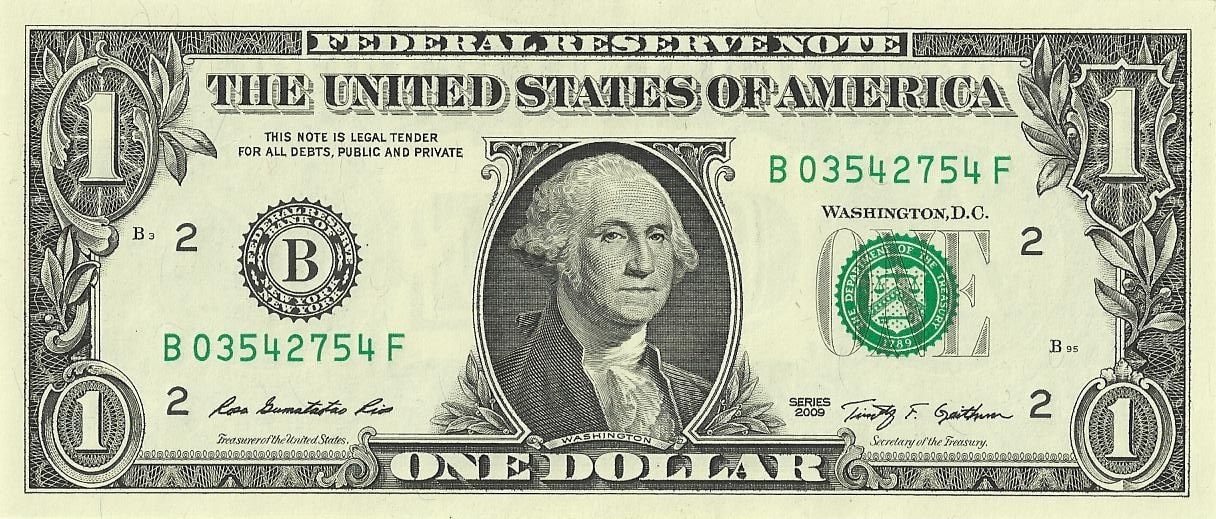
The dollar began as a legal definition — a specified weight of gold or silver, enacted by Congress in 1792. Two and a half centuries later it is the currency in which the world trades, borrows and keeps its reserves, a position formalised at Bretton Woods in 1944 and, remarkably, retained after the gold promise behind it was withdrawn in 1971.
At a Glance
- Defined
- Coinage Act of 1792
- Country
- United States
- ISO code
- USD
- Symbol
- $
- Issued by
- Federal Reserve (notes) and US Mint (coins)
- Bretton Woods role
- World's anchor currency, fixed to gold at $35 an ounce, 1944
- Gold convertibility ended
- 15 August 1971, for foreign governments
- Status
- The world's principal reserve currency
Introduction
The United States dollar is unusual among great currencies in having a birthday in a statute book. Before independence, Americans transacted largely in foreign coin — above all the Spanish dollar — but the new republic wanted a money of its own, and the Coinage Act of 1792 supplied it: the dollar was defined for legal purposes, in the Federal Reserve's summary, as either 0.05 ounces of gold or 0.77 ounces of silver, and a national mint was created to strike it. The world's future reserve currency began as a weight of metal written into law.
For its first century and a quarter the dollar was a regional currency in a sterling world. Its rise tracked the rise of the United States itself: industrialisation, the creation of the Federal Reserve in 1913 to issue a uniform national paper currency, and two world wars that left the United States the world's creditor. By 1944 the dollar was ready to be made, formally, what it had already become in fact — the centre of the system.
Background
The transformation came at a hotel in New Hampshire. In July 1944, delegates from forty-four nations met at Bretton Woods to design the post-war monetary order. The system they built fixed member currencies to the dollar, within a band of one per cent, and fixed the dollar to gold at $35 an ounce. The International Monetary Fund, created alongside it, would police the exchange rates and lend to countries in deficit. When the system became fully functional in 1958, countries settled their international balances in dollars, confident that dollars could be turned into gold at the fixed price.
The design contained its own undoing. World trade needed ever more dollars, but every dollar held abroad was a potential claim on a finite American gold stock. By the late 1960s foreign-held dollars exceeded that stock, and the promise could no longer be honoured for everyone. The end came on 15 August 1971, when President Richard Nixon ended the dollar's convertibility into gold. In 1973 the other major currencies floated, and the Bretton Woods system turned, in effect, into a fiat one.
Timeline
- 1792
The Coinage Act defines the dollar in law as a fixed weight of gold or silver and establishes the United States Mint.
- 1913
The Federal Reserve is created; its notes, first issued in 1914, become the uniform national paper currency.
- 1933–34
Amid the Great Depression, domestic gold convertibility is abandoned; the official gold price is reset at $35 an ounce in 1934.
- July 1944
At Bretton Woods, forty-four nations build the post-war system on the dollar: their currencies fixed to it, it fixed to gold at $35 an ounce.
- December 1945
The International Monetary Fund comes into formal existence as the first twenty-nine members sign its Articles of Agreement.
- 1958
The Bretton Woods system becomes fully functional as currencies become convertible and balances are settled in dollars.
- 15 August 1971
President Nixon ends the convertibility of the dollar into gold for foreign governments.
- March 1973
Foreign governments let their currencies float against the dollar, ending the Bretton Woods system of fixed rates.
- 2002
Federal Reserve Chairman Alan Greenspan notes that the dollar, despite many challenges, remains the principal international currency.
Significance
The dollar's significance is that the world's financial plumbing runs through it. Oil and most commodities are priced in dollars; most international trade is invoiced in dollars; central banks hold the largest share of their reserves in dollars; and in a crisis, the world's scramble is for dollars. That centrality survived the loss of the gold backing that originally justified it — the strongest evidence that a reserve currency rests on the depth of its markets, the rule of law behind it, and the sheer habit of universal use, as much as on any promise about metal.
Bretton Woods deserves the credit for the installation, if not the invention, of this order. By making the dollar the single bridge between national currencies and gold, the 1944 settlement taught two generations of bankers and traders to think in dollars by default. When the gold end of the bridge was demolished in 1971, the traffic simply kept crossing: the dollar standard outlived the dollar-gold standard, and no successor has displaced it.
Legacy
The dollar's legacy is the modern monetary world itself: floating fiat currencies managed by central banks, with one national money at the centre by consent and convenience rather than by treaty. The Federal Reserve's historians describe the post-1971 system as, in effect, a fiat one — and within it the dollar 'remains the principal international currency', in Greenspan's words, its notes a de facto world currency from Harare to Quito, where several countries have adopted it outright.
Whether that centrality is permanent is the great open question of international finance, debated whenever a rival bloc proposes an alternative. Sterling's reign looked eternal in 1900 and was over within two generations; the dollar has already survived the death of the system built to crown it. The coin Congress defined in 1792 has outlasted every arrangement made for it since.
Sources
- Federal Reserve — The History of Money (speech by Alan Greenspan, 2002)
- Federal Reserve — The Euro as an International Currency (speech by Alan Greenspan, 2001)
- Federal Reserve History — Creation of the Bretton Woods System
- Federal Reserve History — Launch of the Bretton Woods System
The facts on this page were checked against these sources on 19 November 2026. The History Trail's permanent pages are researched and written for this site; the live profiles elsewhere on The History Trail are assembled automatically from Wikipedia and Wikidata.
About the Author
Researched and written by the The History Trail Editorial Team — the accountable editorial function behind this site's permanent story pages. The team works from the published sources cited on each page; it does not invent historians, reviewers or credentials, and it corrects errors openly.
Fact Check
Every load-bearing fact on this page traces to one of the sources listed above, and significant claims link to their source in the text. Our checking method is described on the methodology page; errors can be reported via the corrections page.
Sources & Citations
Cite this page as: The History Trail Editorial Team, The History Trail — this article's title, publication and update dates are shown beneath its headline. The full source list appears under Sources above; the site's source standards are on the sources page.