
Things
The Riemann Hypothesis
The Riemann hypothesis, first posed by Bernhard Riemann in 1859, says that all the non-trivial zeros of the zeta function lie on a single line — a claim about the primes that has resisted proof for a hundred and sixty-seven years. On 20 November 2026, a mathematician working with an AI announced a proof, written not as a paper but as code no human has read.
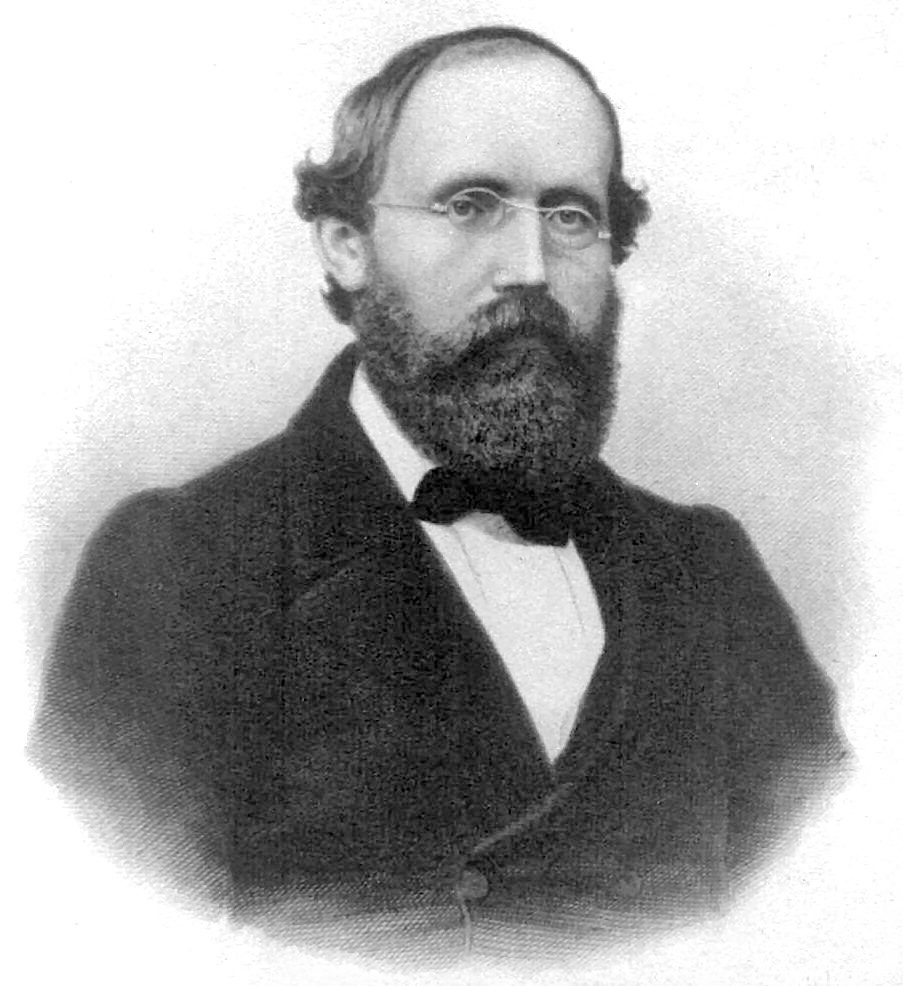
At a Glance
- What it is
- The claim that every non-trivial zero of the Riemann zeta function has real part 1/2 — a statement about how the prime numbers are distributed
- Posed
- 1859, by the German mathematician Bernhard Riemann
- Why it matters
- It would give the tightest possible bound on the error in estimating how many primes lie below any number; much of modern number theory depends on it
- The prize
- One of the seven Millennium Prize Problems of the Clay Mathematics Institute, carrying a US$1 million prize; part of Hilbert's eighth problem (1900)
- The evidence
- Checked for the first 12 trillion non-trivial zeros — and still unproven for 167 years
- The 2026 claim
- On 20 November 2026 Levent Alpöge, a mathematician at Anthropic, announced a proof developed with the AI model Claude, formalised in the proof assistant Lean
- Verification status
- Independently checked in Lean by MIT's Andrew Sutherland; endorsed by the Lean FRO and Mathlib Initiative on 21 November — but no natural-language proof has yet been published, and mathematicians say it is not yet fully understood
Introduction
The Riemann hypothesis, first posed by Bernhard Riemann in 1859, says that all the non-trivial zeros of the Riemann zeta function lie on a single line — a claim about the prime numbers that has resisted proof for a hundred and sixty-seven years. It is widely considered the most important unsolved problem in pure mathematics, and one of the seven Millennium Prize Problems, each carrying a prize of a million dollars.
On 20 November 2026, a mathematician working with an artificial intelligence announced a proof. Levent Alpöge, of the AI company Anthropic, released a formalisation of the argument in the proof assistant Lean — some seventeen million lines of code, which no human has read. Within days it had been checked by machine, endorsed by the organisations that maintain Lean, and greeted by mathematicians with a mixture of astonishment and caution. This page tells the story as it stood on 24 November 2026 — four days after the claim, while the verdict was still forming.
A Paper of Nine Pages
Riemann was thirty-three when he presented his paper, 'On the Number of Primes Less Than a Given Magnitude', to the Berlin Academy in 1859. It was nine pages long, and it contained a guess. The zeta function — a function that takes any complex number except 1 and returns another complex number — has zeros, points where its value is zero. Some of them are trivial: the negative even integers. All the others, Riemann suggested, lie on a single vertical line, the critical line, where the real part is one half.
The guess matters because the primes are encoded in the zeta function. If Riemann was right, the error in estimating how many primes lie below any given number is as small as it can possibly be — the tightest bound the mathematics allows. If he was wrong, a large part of modern number theory, which assumes the hypothesis in order to prove other things, would need rethinking. The problem became part of Hilbert's eighth problem in 1900, and in 2000 the Clay Mathematics Institute named it one of its seven Millennium Prize Problems. By 2026 the hypothesis had been checked for the first twelve trillion non-trivial zeros, and still nobody had proved it for all of them.
A Century of Attempts
The hypothesis has attracted attempted proofs for as long as it has existed, and every one of them has failed. An analogue for curves over finite fields was proved by André Weil around 1940, which showed the shape of a proof was possible in a neighbouring world — but the original, about the ordinary integers, stayed out of reach. The problem became a byword for the hardest thing in mathematics: the prize that no one could claim, the proof that no one could write.
That history is what made 20 November 2026 so startling. The claim did not arrive as a paper. It arrived as code.
20 November 2026
Alpöge, a mathematician at Anthropic and a junior fellow at the Harvard Society of Fellows, announced that he believed he had, working with Claude — Anthropic's large language model — discovered a proof of the Riemann hypothesis, and of its generalisation to Dirichlet L-functions. He published the argument as a formalisation in Lean, the proof assistant software that checks every step of a mathematical argument by machine: about 175,000 files, some seventeen million lines of code, developed over several months and finished, by his account, late on the night of Sunday 15 November.
The checking began immediately. Andrew Sutherland, a computational number theorist at the Massachusetts Institute of Technology, coordinated an independent verification, compiling the proof in Lean; a majority of his tests validated it, and by 23 November only one test was still running. A day after the release, the Lean Focused Research Organization and the Mathlib Initiative — the organisations behind Lean — endorsed the proof, saying they had 'full confidence' it was correct. On the same day a second claim appeared: Ravi Vakil, president of the American Mathematical Society, posted a preprint by the Stanford mathematician Alessandro Maria Masullo, a proof written entirely by a human, in a 940-page manuscript. Two proofs of the same problem, claimed on the same day, by opposite means.
What 'Proved' Means Here
A Lean formalisation is not the same as a proof a human has read. The machine checks that each step follows from the last; it does not explain why the argument works, and a formalisation can be correct in form while resting on a misunderstanding of what was meant to be proved. Mathematicians have said so plainly: as of November 2026, the proof is not yet fully understood by mathematicians, and no natural-language version of it has yet been published. Andrew Granville, a number theorist at the University of Montreal, criticised the four-page sketch Alpöge released alongside the code as garbled, and questioned the timing — the announcement came a day after Anthropic's stock market debut. Alpöge denied any cynicism in the timing.
Even the most quoted number in the story turned out to be a joke. Alpöge initially said that rendering the argument in prose would take more than 250,000 pages; on 23 November he said on social media that the figure had been a joke. What remains, underneath the noise, is the substance: a machine-checked formalisation that the people who maintain the checking software believe to be correct, a second human-written preprint still being examined, and a mathematical community that has not yet had time to understand either. Whether the Riemann hypothesis is now proved, in the sense mathematicians have meant for a hundred and sixty-seven years, is a question the coming months will answer.
Timeline
- 1859
Bernhard Riemann presents his paper on the primes to the Berlin Academy, and states the hypothesis about the zeros of the zeta function.
- 1900
David Hilbert includes the hypothesis in his eighth problem, his list of the great unsolved problems of mathematics.
- Around 1940
André Weil proves the analogue of the Riemann hypothesis for curves over finite fields.
- 2000
The Clay Mathematics Institute names the Riemann hypothesis one of its seven Millennium Prize Problems, each carrying a US$1 million prize.
- 15 November 2026
The final pieces of Alpöge's argument fall into place, late on a Sunday night, after months of work with Claude.
- 20 November 2026
Levent Alpöge releases the formal proof in Lean. On the same day, Ravi Vakil posts Alessandro Maria Masullo's human-written preprint claiming the same result.
- 21 November 2026
The Lean Focused Research Organization and the Mathlib Initiative endorse Alpöge's proof, saying they have full confidence it is correct.
- 23 November 2026
Alpöge says the 250,000-page figure was a joke; a natural-language proof has still not been published.
Significance
If the claim holds, the proof of the Riemann hypothesis will be remembered as one of the great events in the history of mathematics — and as the moment the way mathematics is done changed. A proof written as seventeen million lines of machine-checked code, assembled with an AI as collaborator, cannot be refereed the way a paper is refereed; it cannot be read, only compiled. The institutions of mathematics will have to decide what counts as a proof when no human can hold the whole argument in mind.
If it does not hold — if a flaw is found in the formalisation, or in what it formalises — the story will still matter, as the day the oldest problem in mathematics came closer to falling than ever before, and as a warning about the gap between what a machine can check and what a human can understand. Either way, 20 November 2026 is now a date in the history of the Riemann hypothesis, alongside 1859, 1900 and 2000.
Sources
- Wikipedia - Riemann hypothesis
- Wikipedia - Alpöge's proof of the Riemann hypothesis
- Nature - Mathematicians astounded by AI and human-written proofs of iconic Riemann hypothesis
- Wikidata - Riemann hypothesis (Q205966)
The facts on this page were checked against these sources on 24 November 2026. The History Trail's permanent pages are researched and written for this site; the live profiles elsewhere on The History Trail are assembled automatically from Wikipedia and Wikidata.
About the Author
Researched and written by the The History Trail Editorial Team — the accountable editorial function behind this site's permanent story pages. The team works from the published sources cited on each page; it does not invent historians, reviewers or credentials, and it corrects errors openly.
Fact Check
Every load-bearing fact on this page traces to one of the sources listed above, and significant claims link to their source in the text. Our checking method is described on the methodology page; errors can be reported via the corrections page.
Sources & Citations
Cite this page as: The History Trail Editorial Team, The History Trail — this article's title, publication and update dates are shown beneath its headline. The full source list appears under Sources above; the site's source standards are on the sources page.