
Things
Alzheimer's disease
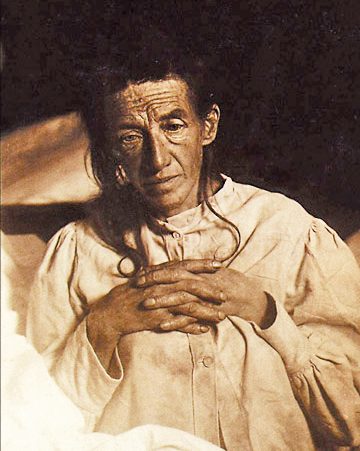
In 1906 a German physician described 'a peculiar disease' in the brain of a patient who had died after years of memory loss and suspicion of those around her. The case of Auguste Deter, written up by Alois Alzheimer, gave its name to what is now recognised as the most common cause of dementia in the world.
At a Glance
- First described
- 1906, by Dr Alois Alzheimer
- First described patient
- Auguste Deter ('Auguste D.'), Frankfurt
- Named
- 1910, by Emil Kraepelin, in his textbook Psychiatrie
- Brain hallmarks
- Amyloid plaques and tau tangles, with shrinkage of brain tissue
- Recognition
- Identified in 1976 as the most common cause of dementia
- Key institutions
- National Institute on Aging (1974); Alzheimer's Association (1980)
Introduction
Alzheimer's disease entered medicine through a single, carefully documented patient. In 1901 a 51-year-old woman, Auguste Deter, was admitted to the Frankfurt asylum with profound memory loss, unfounded suspicions about her family and worsening psychological changes that her doctors could not fit into the known categories. Her physician, Alois Alzheimer, followed her case closely — and when she died in 1906, he examined her brain. What he found there founded a field.
At autopsy Alzheimer saw dramatic shrinkage of the brain and abnormal deposits in and around its nerve cells — the features now known as plaques and tangles. In November 1906 he described the case as 'a peculiar disease', linking, as the Alzheimer's Association puts it, a patient's symptoms in life to microscopic changes in her brain after death. That method — close clinical attention joined to laboratory examination — was itself part of the discovery, and it set a new standard for the study of disorders of the brain.
Background
Alzheimer himself died in 1915, never suspecting, as the Association notes, that his encounter with Auguste D. would one day touch millions of lives. The disease got its name in 1910, when his senior colleague Emil Kraepelin included 'Alzheimer's Disease' in the eighth edition of his influential textbook Psychiatrie. For decades afterwards it was treated as a rare condition of middle age — a curiosity of the textbooks — while the far more common dementia of old age was filed separately as simple 'senility'.
That separation collapsed in the 1970s, and the modern history of the disease begins. In 1974 the United States Congress established the National Institute on Aging, which became the primary federal agency supporting Alzheimer's research. In 1976 the neurologist Robert Katzman argued in an influential editorial that Alzheimer's disease was in fact the most common cause of dementia and a major public health challenge. In 1980 families and carers founded the Alzheimer's Association, giving the disease an organised public voice for the first time.
Timeline
- 1906
Alois Alzheimer describes the case of Auguste D. — memory loss and psychological decline, with shrinkage and abnormal deposits in her brain at autopsy.
- 1910
Emil Kraepelin names 'Alzheimer's Disease' in the eighth edition of his textbook Psychiatrie.
- 1931
Max Knoll and Ernst Ruska co-invent the electron microscope, later allowing brain cells to be studied in far greater detail.
- 1968
Researchers develop the first validated scale for measuring cognitive and functional decline in older adults.
- 1974
The US Congress establishes the National Institute on Aging, the primary federal agency for Alzheimer's research.
- 1976
Neurologist Robert Katzman identifies Alzheimer's as the most common cause of dementia and a major public health challenge.
- 1980
The Alzheimer's Association is founded, with Jerome H. Stone as its founding president.
- 1984
George Glenner and Cai'ne Wong identify beta-amyloid, the chief component of Alzheimer's brain plaques; the NIA begins funding Alzheimer's Disease Centers.
- 1986
Researchers discover that the tau protein is a key component of the tangles — the disease's second pathological hallmark.
- 1987
The first gene linked to rare inherited Alzheimer's is identified, on chromosome 21, coding the amyloid precursor protein.
- 1993
Researchers identify APOE-e4 as the first gene that raises the risk of Alzheimer's without determining it.
Significance
The significance of Alzheimer's work in the 1980s was to give the disease a physical identity. The identification of beta-amyloid in 1984 named the substance of the plaques Alzheimer had seen; the recognition of tau in the tangles in 1986 completed the pair of hallmarks; and the gene discoveries that followed — the amyloid precursor protein gene in 1987, the APOE-e4 risk gene in 1993 — connected those hallmarks to heredity. A condition described from one woman's brain in 1906 acquired, within a decade, a molecular anatomy that research could target.
Just as important was the reframing Katzman forced in 1976. Once Alzheimer's was understood not as a rarity but as the main cause of dementia, it became a public health question demanding institutions, funding and measurement. The NIA's research centres, the diagnostic scales first validated in 1968, and the Association's advocacy all belong to that reframing: the disease did not change, but its recognised scale did, and resources followed recognition.
Legacy
Alzheimer's disease now stands among the defining health challenges of an ageing world: the most common cause of dementia, the focus of a permanent research infrastructure, and the subject each September of World Alzheimer's Day, first held in 1994. The milestones since the 1990s — imaging agents that can reveal amyloid in a living brain, international data-sharing initiatives, national plans mandated by law in the United States in 2011 — all descend from the framework built between 1906 and 1993.
The legacy is double-edged. Alzheimer's method — bind the symptoms of a life to the evidence of the brain — became the template for studying every neurodegenerative disease, and the plaques and tangles he described remain the disease's defining marks. Yet the condition that bears his name still has no cure, a fact the Alzheimer's Association's own timeline records plainly alongside its progress. A peculiar disease of one patient in 1906 became a century-long research effort that is, by its own account, unfinished.
Sources
- Alzheimer's Association — Alzheimer's and Brain Research Milestones
- MIT Press Reader — The Powerful Case for Redefining Alzheimer's Disease
- University of Minnesota — Brain Health: History of Alzheimer's Disease (presentation)
The facts on this page were checked against these sources on 19 November 2026. The History Trail's permanent pages are researched and written for this site; the live profiles elsewhere on The History Trail are assembled automatically from Wikipedia and Wikidata.
About the Author
Researched and written by the The History Trail Editorial Team — the accountable editorial function behind this site's permanent story pages. The team works from the published sources cited on each page; it does not invent historians, reviewers or credentials, and it corrects errors openly.
Fact Check
Every load-bearing fact on this page traces to one of the sources listed above, and significant claims link to their source in the text. Our checking method is described on the methodology page; errors can be reported via the corrections page.
Sources & Citations
Cite this page as: The History Trail Editorial Team, The History Trail — this article's title, publication and update dates are shown beneath its headline. The full source list appears under Sources above; the site's source standards are on the sources page.