
On This Day
November 25 in History
On 25 November 1970, Yukio Mishima — Japan's most famous living novelist, a three-time Nobel Prize nominee — led four followers into the Tokyo headquarters of the Self-Defense Forces, took its commander hostage, harangued a thousand assembled soldiers from a balcony in the name of the emperor and the old Japan, was jeered, and withdrew to commit seppuku. November 25 is also the day the Mirabal sisters were murdered in 1960, the last British troops left New York in 1783, and Fidel Castro and Diego Maradona died.
Choose another date: open the On This Day calendar to browse events, births and deaths for any day of the year.
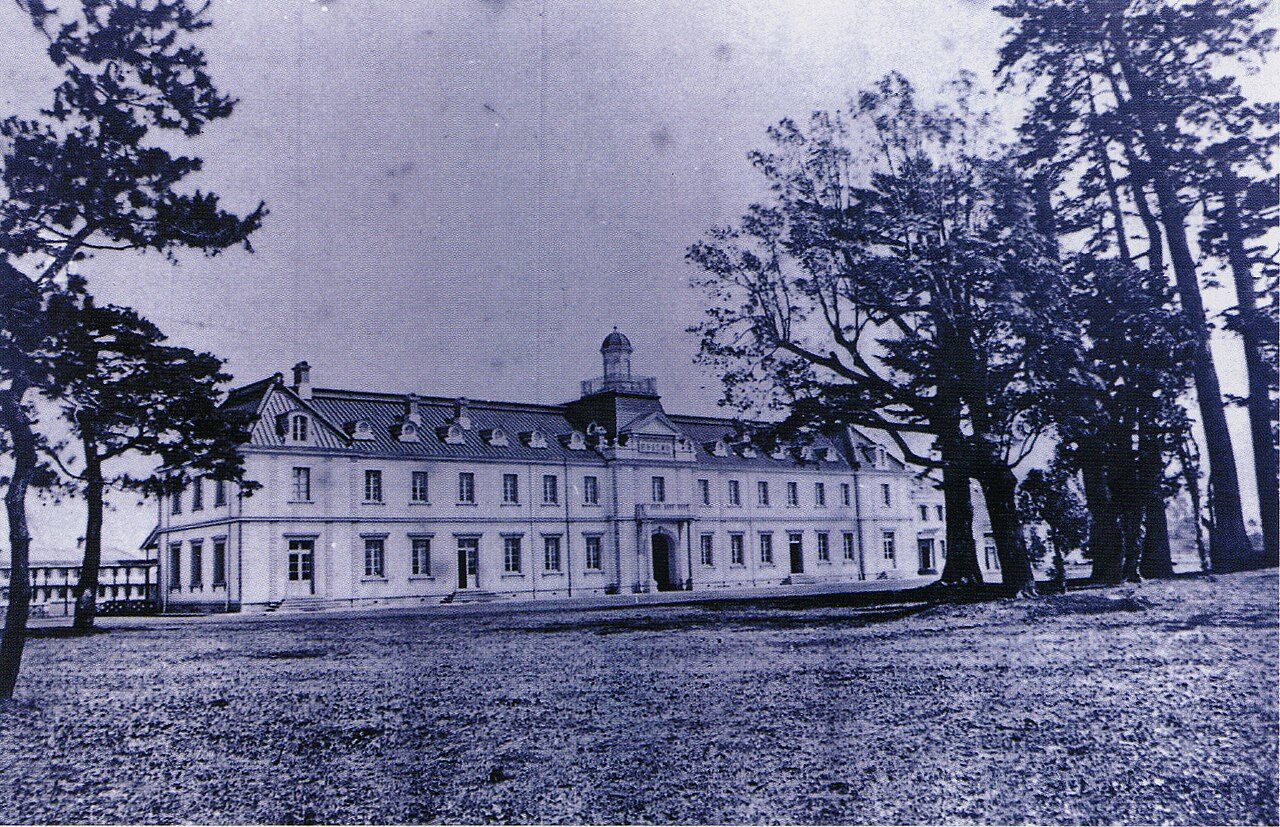
At a Glance
- The man
- Yukio Mishima, pen name of Kimitake Hiraoka, 45, author of Confessions of a Mask and The Sea of Fertility
- His private army
- The Tatenokai (Shield Society), some 100 students trained with the Self-Defense Forces, devoted to the emperor and traditional Japan
- The act
- Mishima and four men seized the Eastern Army commander's office at Ichigaya Camp, Tokyo, and held General Mashita hostage
- The speech
- From the balcony, Mishima called on the assembled soldiers to rise and restore the emperor and revise the pacifist constitution; they jeered and heckled him
- The death
- Mishima committed seppuku inside the office; his second, Morita, also died by the sword
- The reaction
- Japan reacted with shock and embarrassment; the incident changed no law and is remembered as literature's most theatrical political death
Events on this day
- 1120The White Ship, carrying William Adelin, the only legitimate son of Henry I of England, strikes a rock and sinks off Barfleur in Normandy; the heir's death plunges England toward civil war.
- 1277Nicholas III is elected pope, succeeding John XXI.
- 1783The last British troops evacuate New York City, the final British military position in the United States, and George Washington enters the city in triumph — Evacuation Day.
- 1876United States troops under General Ranald Mackenzie destroy the Northern Cheyenne village of Chief Dull Knife on the Powder River, in reprisal after the Little Bighorn.
- 1942The remote site at Los Alamos, New Mexico, is selected for the Manhattan Project's central weapons laboratory.
- 1952Agatha Christie's murder mystery The Mousetrap opens at the Ambassadors Theatre in London; it becomes the longest-running play in history.
- 1960The Mirabal sisters — Patria, Minerva and María Teresa — opponents of the Dominican dictator Rafael Trujillo, are murdered by his secret police; their deaths hasten the regime's fall.
- 1963President John F. Kennedy is buried at Arlington National Cemetery after a state funeral in Washington attended by leaders from around the world.
- 1970Yukio Mishima seizes a military headquarters in Tokyo and takes his own life — the featured story above.
- 1975Suriname becomes independent of the Netherlands, with Johan Ferrier as its first president.
- 1986United States Attorney General Edwin Meese reveals that profits from secret arms sales to Iran were diverted to the Contra rebels in Nicaragua — the heart of the Iran-Contra scandal.
Born on this day
- 1835Andrew Carnegie — Scottish-American steel magnate whose fortune later funded libraries across the English-speaking world.
- 1844Karl Benz — German engineer who built the first practical automobile powered by an internal combustion engine.
- 1846Carry Nation — American temperance campaigner famous for smashing saloons with a hatchet.
- 1914Joe DiMaggio — American baseball great of the New York Yankees, holder of the 56-game hitting streak.
- 1960John F. Kennedy Jr. — son of the assassinated president, born in the White House's final years, later a lawyer and magazine publisher.
Died on this day
- 1970Yukio Mishima — Japanese novelist, dead by seppuku at 45 after his failed appeal to the Self-Defense Forces — the featured story above.
- 1974U Thant — Burmese diplomat who served two terms as secretary-general of the United Nations through the crises of the 1960s.
- 2005George Best — Northern Irish footballer of Manchester United, one of the most gifted players of his generation, dead at 59.
- 2016Fidel Castro — Cuban revolutionary leader who governed Cuba for nearly half a century, dead at 90 in Havana.
- 2020Diego Maradona — Argentine footballer who captained his country to the 1986 World Cup, dead at 60 near Buenos Aires.
The featured story: Mishima seizes the Ichigaya headquarters, 25 November 1970
Mishima had been preparing the act for years. The novelist who had rebuilt his own body into a bodybuilder's physique also built a private militia, the Tatenokai or Shield Society, recruited from right-wing students and permitted, by a sympathetic establishment, to train with the Self-Defense Forces. His politics looked backward: he despised the materialistic, Westernised Japan of the economic miracle, worshipped the emperor as the sacred centre of Japanese culture, and demanded the revision of the American-written constitution that renounced war and reduced the armed forces to a 'self-defence' euphemism. On the morning of 25 November 1970 he delivered the final manuscript of his life's work, the tetralogy The Sea of Fertility, to his publisher — and then drove to Ichigaya Camp.
Mishima and four young followers, in the uniforms of the Shield Society, were admitted to the office of General Kanetoshi Mashita, commander of the Eastern Army, on the pretext of a courtesy visit. They produced swords, barricaded the doors with desks and chairs, tied the general to his chair and wounded several officers who tried to intervene. Their demand was that the garrison be assembled to hear Mishima speak. Fearing for the general's life, the command complied: some thousand soldiers gathered below the balcony of the headquarters building, with police and helicopters gathering outside.
At noon Mishima stepped onto the balcony in a headband bearing a rising-sun motif and spoke for about ten minutes over the noise of the helicopters, denouncing the constitution, calling the soldiers to rise as true samurai and restore the emperor. The soldiers, who had expected entertainment or explanation, responded with jeers, catcalls and laughter. Mishima ended with three shouts of 'Long live the Emperor', saluted, and went back inside. There, in the general's office, he knelt and disembowelled himself in the samurai rite of seppuku; his chosen second, Masakatsu Morita, struck off his head, then attempted the same rite himself and was also beheaded by another follower. The general was released unharmed.
Japan's reaction was bewilderment edging into disgust: the political right kept its distance, the press treated the affair as a grotesque anachronism, and the legal consequences fell on the three surviving followers. Mishima had staged his death as his final literary work — photographed, costumed, announced — and it is as a work of theatre that it survives, raising questions his novels had always asked about beauty, honour and a country that had chosen prosperity instead. The sword cuts his men made in the office door at Ichigaya are preserved to this day, the one physical trace of the morning Japan's greatest writer tried to argue his nation out of its own future — and lost the argument in ten minutes.
Why this date matters
November 25 is a day of dramatic exits and entrances staged for an audience. A novelist turns his death into a performance in Tokyo; three sisters' murder in the Dominican Republic becomes the symbol that eventually buries a dictatorship; an army sails away from New York in 1783 and a slain president is buried in 1963; and in 1952 a whodunit opens in London that audiences have kept alive, in an unbroken run, ever since. The date understands spectacle — and also its limits, since the loudest performance on this page changed nothing at all.
Sources
- Encyclopaedia Britannica — On This Day: November 25
- HISTORY — What Happened on November 25
- Encyclopaedia Britannica — Mishima Yukio
- Encyclopaedia Britannica — Mirabal sisters (topic coverage)
The facts on this page were checked against these sources on 19 November 2026. The History Trail's permanent pages are researched and written for this site; the live profiles elsewhere on The History Trail are assembled automatically from Wikipedia and Wikidata.
About the Author
Researched and written by the The History Trail Editorial Team — the accountable editorial function behind this site's permanent story pages. The team works from the published sources cited on each page; it does not invent historians, reviewers or credentials, and it corrects errors openly.
Fact Check
Every load-bearing fact on this page traces to one of the sources listed above, and significant claims link to their source in the text. Our checking method is described on the methodology page; errors can be reported via the corrections page.
Sources & Citations
Cite this page as: The History Trail Editorial Team, The History Trail — this article's title, publication and update dates are shown beneath its headline. The full source list appears under Sources above; the site's source standards are on the sources page.