
On This Day
November 13 in History
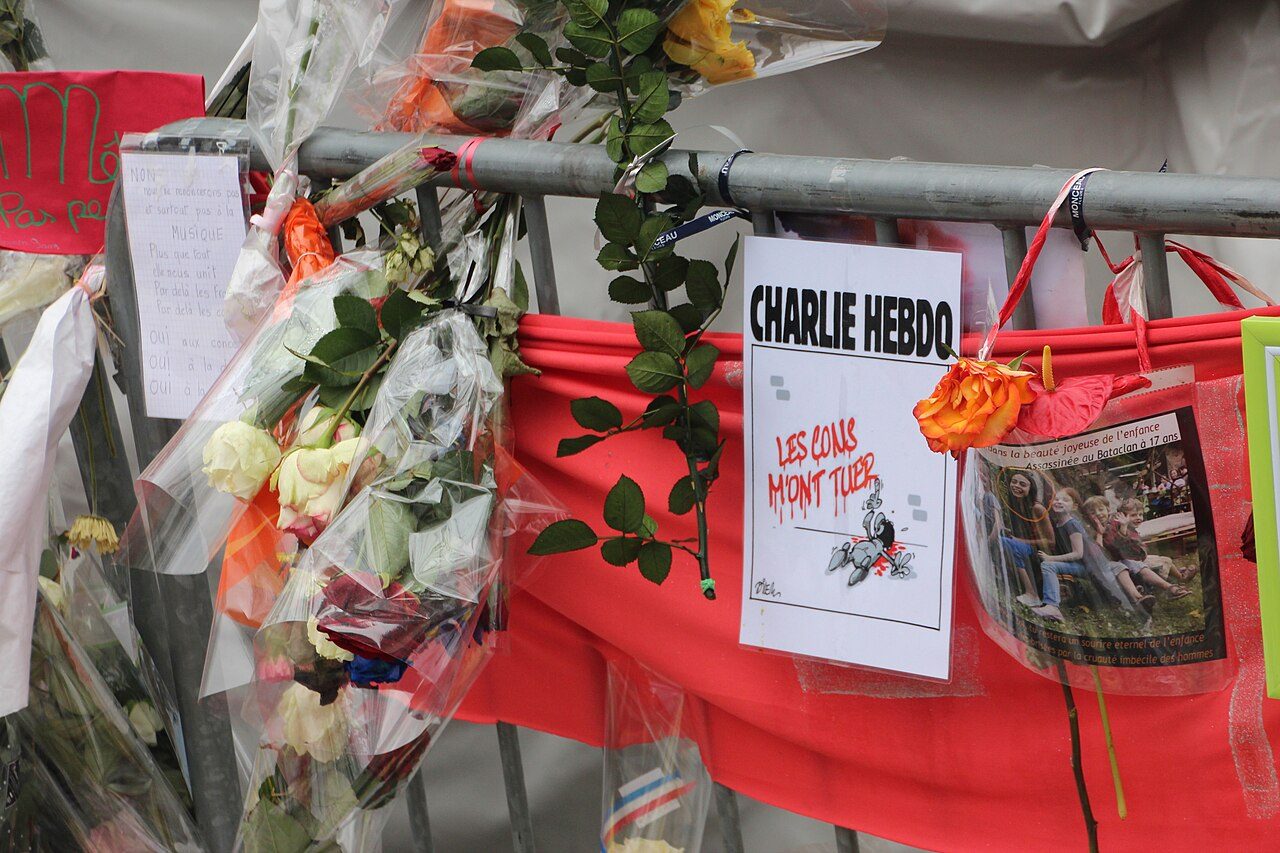
On the evening of Friday 13 November 2015, nine Islamic State attackers struck Paris in a coordinated series of suicide bombings and shootings — outside the Stade de France, at café terraces, and inside the Bataclan concert hall. At least 130 people were killed and more than 350 wounded, in the deadliest attack on France since the Second World War. November 13 is also the day Armero was buried by a volcano and Fantasia premiered.
Choose another date: open the On This Day calendar to browse events, births and deaths for any day of the year.
At a Glance
- When
- Evening of 13 November 2015, beginning at about 9:20 p.m. in Saint-Denis and Paris
- Attackers
- Nine men in three teams, acting for the Islamic State, which claimed responsibility the next day
- Targets
- The Stade de France, café and restaurant terraces in the 10th and 11th arrondissements, and the Bataclan theatre
- Toll
- At least 130 killed and more than 350 injured (Britannica); about 90 of the dead were at the Bataclan
- Response
- President François Hollande declared a state of emergency and closed France's borders that night
- Aftermath
- France intensified air strikes on Islamic State targets; the surviving attacker, Salah Abdeslam, was captured in Brussels in March 2016
Events on this day
- 1002King Æthelred II orders the St Brice's Day massacre of Danes living in England.
- 1553Lady Jane Grey, queen for nine days, is tried for high treason in London; she is executed the following February.
- 1775American forces capture Montreal during their invasion of Canada.
- 1902Joseph Conrad's Heart of Darkness is first published in book form.
- 1927The Holland Tunnel opens under the Hudson River, linking Manhattan with Jersey City.
- 1940Disney's Fantasia premieres in New York, the first commercial film released in stereophonic sound.
- 1956The U.S. Supreme Court rules that segregated buses in Alabama are unconstitutional, ending the Montgomery bus boycott.
- 1974Ronald DeFeo Jr. murders six members of his family in Amityville, New York — the killings behind The Amityville Horror.
- 1982The Vietnam Veterans Memorial is dedicated in Washington, D.C.
- 1985Nevado del Ruiz erupts in Colombia; a volcanic mudflow buries Armero, killing more than 23,000 people.
- 2001Northern Alliance forces enter Kabul as the Taliban flee the Afghan capital.
- 2015Islamic State gunmen and bombers carry out coordinated attacks across Paris, killing 130 people — the featured story above.
Born on this day
- 354Augustine of Hippo — North African bishop and theologian whose Confessions shaped Western Christianity.
- 1312Edward III — king of England whose 50-year reign opened the Hundred Years' War.
- 1850Robert Louis Stevenson — Scottish author of Treasure Island and Dr Jekyll and Mr Hyde.
- 1856Louis Brandeis — first Jewish justice of the U.S. Supreme Court and champion of the right to privacy.
- 1955Whoopi Goldberg — American comedian and actress, an EGOT winner.
- 1967Jimmy Kimmel — American comedian and late-night television host.
- 1969Gerard Butler — Scottish actor of 300 and Olympus Has Fallen.
Died on this day
- 1868Gioachino Rossini — Italian composer of The Barber of Seville, dead in Paris at 76.
- 1903Camille Pissarro — Danish-French painter, the father figure of Impressionism.
- 1974Vittorio De Sica — Italian director of Bicycle Thieves and pioneer of neorealist cinema.
- 1974Karen Silkwood — American laboratory technician and union activist, killed in a car crash while investigating safety at a plutonium plant.
The featured story: the Paris attacks, 13 November 2015
Paris on that Friday night was doing ordinary things. France was playing Germany at football at the Stade de France in Saint-Denis, with President François Hollande in the crowd. In the 10th and 11th arrondissements, among the busiest nightlife districts in the city, café terraces were full. At the Bataclan theatre, some 1,500 people were watching the American rock band Eagles of Death Metal. The nine attackers, organised in three teams by a cell based largely in Belgium and directed from Syria, had chosen their targets to make the ordinary feel unsafe.
The attacks began at about 9:20 p.m., as Britannica's account records, when a suicide bomber, unable to enter the stadium, detonated his belt outside it; two more stadium bombers followed. Across the city a second team drove from terrace to terrace — Le Carillon, Le Petit Cambodge, Café Bonne Bière, La Casa Nostra, La Belle Équipe — shooting diners with assault rifles. The third team entered the Bataclan at about 9:47 p.m. and fired into the crowd; at least 89 people were killed there, Britannica records, in an siege that lasted more than two hours before police stormed the hall shortly after midnight. By then the night's toll stood at 130 dead and more than 350 injured — the figures Britannica gives — making it the deadliest day in France since the Second World War and, as HISTORY notes, the deadliest operation the Islamic State had carried out in Europe.
Hollande, evacuated from the stadium, declared a state of emergency before the Bataclan siege had even ended — the first nationwide emergency since 1961 — and ordered the borders closed. The next day the Islamic State claimed the attacks as retaliation for French air strikes in Syria and Iraq, and Hollande called them an act of war. France answered with its largest air strikes of the campaign and with a manhunt across two countries: the suspected organiser, Abdelhamid Abaaoud, was killed in a police raid in Saint-Denis five days later, and the one attacker who survived, Salah Abdeslam, was captured in Brussels in March 2016 after a shoot-out.
The attacks changed France durably. The state of emergency lasted, in renewed forms, almost two years, and much of it was later written into ordinary law; soldiers patrolling stations and streets became a fixture of French life. The Bataclan reopened a year later, and the trials of 2021–22, among the largest in French history, ended with Abdeslam sentenced to life imprisonment. In Paris the date is kept the way the city keeps its other wounds: with names read aloud, candles on pavements, and terraces that filled again the following weekend in deliberate defiance.
Why this date matters
November 13 has an unlucky reputation it did nothing to earn and then, in 2015, tragically confirmed. Yet the date's deeper pattern is not superstition but exposure: a massacre ordered by a frightened king in 1002, a nine-days' queen tried for treason, a town erased by a mudflow in 1985, a whistleblower dead on a dark road in 1974. Against that stand its counterweights — a tunnel opened, a film premiered, a court ruling that ended a boycott. It is a date that measures how fragile ordinary life is, and how stubbornly it restarts.
Sources
- Encyclopaedia Britannica — On This Day: November 13
- HISTORY — What Happened on November 13
- Encyclopaedia Britannica — Paris attacks of 2015
- Wikimedia — On This Day feed: November 13
The facts on this page were checked against these sources on 19 November 2026. The History Trail's permanent pages are researched and written for this site; the live profiles elsewhere on The History Trail are assembled automatically from Wikipedia and Wikidata.
About the Author
Researched and written by the The History Trail Editorial Team — the accountable editorial function behind this site's permanent story pages. The team works from the published sources cited on each page; it does not invent historians, reviewers or credentials, and it corrects errors openly.
Fact Check
Every load-bearing fact on this page traces to one of the sources listed above, and significant claims link to their source in the text. Our checking method is described on the methodology page; errors can be reported via the corrections page.
Sources & Citations
Cite this page as: The History Trail Editorial Team, The History Trail — this article's title, publication and update dates are shown beneath its headline. The full source list appears under Sources above; the site's source standards are on the sources page.