
On This Day
May 27 in History
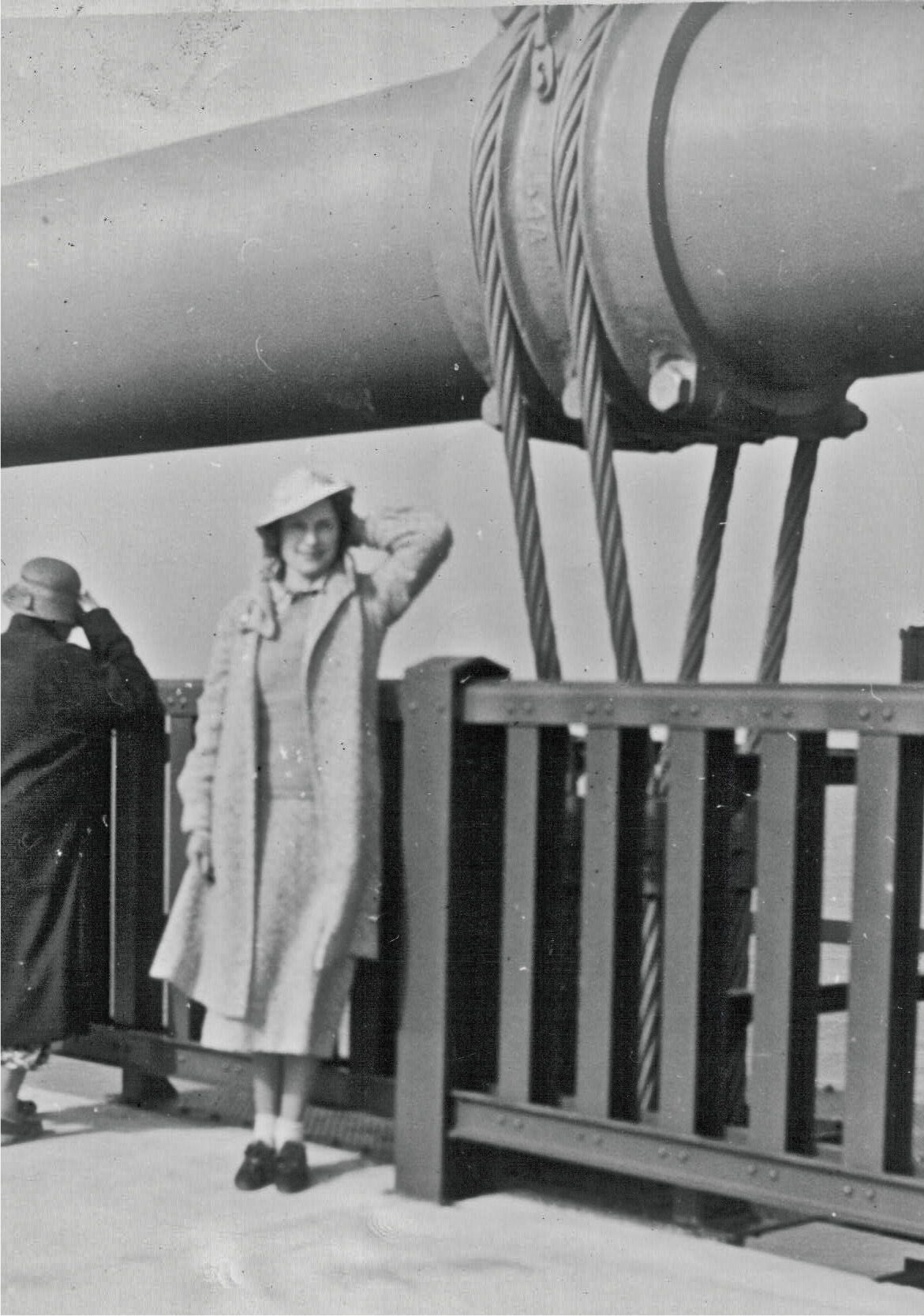
May 27 is the day San Francisco walked to Marin. On this day in 1937 the Golden Gate Bridge opened to pedestrians, and some 200,000 people streamed across on foot and on roller skates before the first car was allowed over. At 4,200 feet, its main span was the longest in the world, an International Orange arc across a strait long thought unbridgeable, completed in the depths of the Great Depression. The date also marks the founding of St. Petersburg in 1703 and the opening of the Chrysler Building in 1930.
Choose another date: open the On This Day calendar to browse events, births and deaths for any day of the year.
At a Glance
- Date opened
- 27 May 1937 (pedestrians); 28 May 1937 (vehicles)
- Main span
- 4,200 feet
- Chief engineer
- Joseph B. Strauss
- Construction
- 5 January 1933 to April 1937
- Pedestrian Day crowd
- Some 200,000 people
- Record held
- Longest suspension span in the world until 1964
Events on this day
- 1679England's Habeas Corpus Act becomes law, strengthening the right not to be imprisoned unlawfully.
- 1703Peter the Great founds St. Petersburg on the Neva delta; it becomes Russia's capital in 1712.
- 1930The Chrysler Building opens in New York; at 1,046 feet it is briefly the tallest building in the world.
- 1933Walt Disney's cartoon The Three Little Pigs is released, a landmark of animated character and song.
- 1937The Golden Gate Bridge opens to pedestrians, who cross a day before the first cars — the featured story above.
- 1941British warships sink the German battleship Bismarck in the North Atlantic, with the loss of more than 2,000 of her crew.
- 1963Jomo Kenyatta is elected prime minister of Kenya as the country moves toward independence.
- 1999The UN war crimes tribunal at The Hague indicts Yugoslav president Slobodan Milosevic for crimes in Kosovo.
- 2006An earthquake near Yogyakarta on the Indonesian island of Java kills more than 5,000 people.
Born on this day
- 1911Vincent Price — American actor whose elegant menace defined a generation of horror films
- 1923Henry Kissinger — German-born American statesman, national security adviser and secretary of state under Presidents Nixon and Ford, and a central figure of Cold War diplomacy.
- 1943Cilla Black — English singer and television presenter who rose from the Cavern Club scene in Liverpool
- 1970Tim Farron — British politician who led the Liberal Democrats from 2015 to 2017
Died on this day
- 1840Niccolò Paganini — Italian violinist and composer whose virtuosity set the model for the modern concert soloist.
- 1949Robert Ripley — American cartoonist and entrepreneur who created Ripley's Believe It or Not!.
- 1964Jawaharlal Nehru — first prime minister of independent India, who led the country from 1947 until his death
The featured story: A city walks across the Golden Gate, 27 May 1937
The Golden Gate, the mile-wide strait where San Francisco Bay meets the Pacific, was famous for everything that makes bridge-building miserable: deep water, violent tides, fog and wind. Ferries ruled the crossing, and many engineers doubted a bridge could be built there at all. Joseph B. Strauss, a tireless promoter as much as an engineer, campaigned for the project for more than a decade before construction finally began on 5 January 1933, in the depths of the Great Depression, when the work itself was a lifeline for the region.
The bridge that rose over the next four years was a record-breaker. Its two towers stood 746 feet above the water, and its main span of 4,200 feet was the longest suspension span in the world, a record it would hold until New York's Verrazzano-Narrows Bridge opened in 1964. The design team around Strauss, including engineer Charles Ellis and architect Irving Morrow, gave the towers their stepped Art Deco profile, and Morrow chose the famous colour, International Orange, both for visibility in fog and for the way it sat in the landscape. A safety net strung beneath the work saved the lives of 19 men who fell during construction.
Behind the famous silhouette lay a quieter injustice of credit. The bridge's structural mathematics was largely the work of Charles Alton Ellis, a professor of engineering who spent three years on the calculations that made the design buildable, only to be dismissed by Strauss in 1931 and written out of the official story for decades. Irving Morrow, the consulting architect, shaped the stepped towers, the lighting and the railings, and chose the colour that made the bridge beloved. Modern accounts restore both men to their places beside Strauss, whose genius lay in promotion, organisation and an unshakeable refusal to let the project die.
The opening celebration began at six in the morning on 27 May 1937 and lasted a week. The first day belonged to people on foot: Pedestrian Day drew some 200,000 walkers, runners and roller skaters onto the span, among them people who crossed on stilts, on unicycles and pushing prams, all marvelling at a roadway hung in the sky where only ferries had gone before. Cars were admitted the next day, 28 May, after President Franklin D. Roosevelt pressed a telegraph key in Washington to signal the bridge officially open.
The Golden Gate Bridge quickly became more than transport. It was proof, delivered in the Depression's hardest decade, that public works could be both useful and beautiful, and it became the image by which much of the world recognises California. Nearly ninety years on, painted continually against the salt air, it remains one of the most admired bridges ever built.
Why this date matters
May 27 is a date of spans and crossings, literal and legal. Its centrepiece hangs a roadway across an 'unbridgeable' strait, but the same date gives England the Habeas Corpus Act, a legal bridge between the prisoner and the courts, and gives Russia a new window on the sea at St. Petersburg. It is also a day when heights were claimed and lost: the Chrysler Building briefly stood tallest in the world, the Bismarck went to the bottom of the Atlantic, and an international tribunal reached, for the first time, for a sitting head of state. May 27 keeps building ways over water and over impunity alike. Even its tragedies point the same way: an eclipse that stopped a war in 585 BC opens the date, and the century's engineering answers war's chaos with a roadway in the air.
Sources
- Encyclopaedia Britannica — On This Day: May 27
- HISTORY — This Day in History: May 27
- HISTORY — Golden Gate Bridge Opens
- Wikimedia Commons — Golden Gate Bridge opening day file page

The facts on this page were checked against these sources on 19 November 2026. The History Trail's permanent pages are researched and written for this site; the live profiles elsewhere on The History Trail are assembled automatically from Wikipedia and Wikidata.
About the Author
Researched and written by the The History Trail Editorial Team — the accountable editorial function behind this site's permanent story pages. The team works from the published sources cited on each page; it does not invent historians, reviewers or credentials, and it corrects errors openly.
Fact Check
Every load-bearing fact on this page traces to one of the sources listed above, and significant claims link to their source in the text. Our checking method is described on the methodology page; errors can be reported via the corrections page.
Sources & Citations
Cite this page as: The History Trail Editorial Team, The History Trail — this article's title, publication and update dates are shown beneath its headline. The full source list appears under Sources above; the site's source standards are on the sources page.